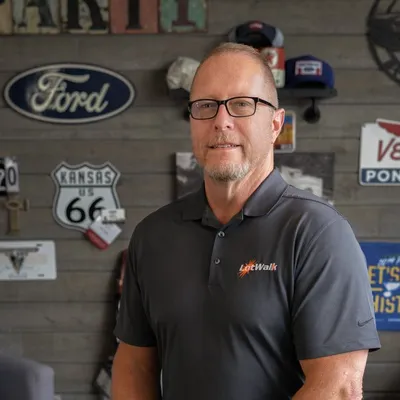
LotTalk — Listen on Spotify
Three dealers, three markets, one playbook. Listen to the full conversation on the LotTalk podcast.
The Three Dealers, the Three Markets
When dealers tell you "my market is different," they're usually right about one thing: their market is different. But they're wrong about what that means.
On this week's episode of LotTalk, we sat down with three dealers from three genuinely different markets and the results were almost eerie in their similarity. Bobby Albert runs Eastchester CDJR in the Bronx — urban, heavily regulated, franchise, high foot traffic, competitive. Justin Williams at Bozard Ford Lincoln in suburban Florida — saturated market, high average price, plenty of competition, franchise constraints. And James Paye with Delz Auto in rural South Dakota — independent, no franchise pressure, low average price point, thin customer base, working with what comes.
Three completely different operational contexts. Three completely different customer bases. Three completely different economics. And yet when you sit them in a room and ask them what's working, you hear the same playbook repeated back to you. Daily accountability. Recon discipline. Inventory management before pricing strategy. Culture that survives slow months. And most importantly: a refusal to treat their market conditions as an excuse to stop executing the fundamentals.
By the end of the conversation, the "my market is different" excuse had died on the spot.
What Does Bleed-Through Actually Mean in Used Cars?
Bleed-through is the silent profit killer that most dealers feel but can't name. It's what happens when a car sits in your lot and ages out of its fastest-selling window — typically the first 30 days — because your team didn't actively push it forward. Every single day that car sits past day 30, two things happen at once: your gross margin starts dropping as you become a motivated seller, and your floorplan cost compounds. By day 60 or 70, you're bleeding on that unit even before you drop the price.
James Paye described it perfectly. He had a car that had been sitting and aging. The team was about to take a wholesale loss on it, ready to dump it at auction. That's when they started the daily LotWalk — a structured daily review of both the physical lot and the virtual lot. They pulled the car's CRM data and found 9 active leads sitting on it. Nine hand-raisers. The car wasn't a problem. The process was. They worked those leads, sold the car days before they would have wholesaled it, and saved thousands in gross profit.
That's bleed-through. And the fix is brutally simple: walk your lot daily. Understand what's aged. Understand what leads are sitting on aged inventory. And move those cars before the math turns against you.
Bobby Albert described his version. He's running daily audits — a 5 to 10 minute walk-through each morning where he looks at what aged overnight, what's moving, what's stalled. Why daily? Because the market changes every single day. Interest rates shift. Transaction prices move. Credit availability changes. Customer mix evolves. And dealers who wait until their quarterly post-mortem are always reacting too late. By the time you know you have a problem, it's already cost you thousands in margin.
Want a coach to walk through this with you?
Our Performance Engineers work with dealers every week to turn these strategies into measurable results on the lot.
Why Should Recon Have an Open Checkbook?
Justin Williams at Bozard Ford Lincoln in Florida runs what he calls an "open checkbook" recon process. There's no cap. No $2,000 ceiling. No artificial limit on what it costs to recondition a unit. The reason is simple: when you cap recon at an arbitrary number, you're incentivizing appraiser guessing instead of appraiser accuracy.
An appraiser at Bozard knows that if they find $2,500 worth of real work needed on a trade-in, they can't approve it because the cap is $2,000. So what happens? They guess. They underestimate what needs to be fixed. The car gets minimal work done. It hits the lot with hidden issues. Comebacks happen. Customer complaints happen. And that unit that was supposed to be reconned properly now needs a second pass through recon, which doubles the cost and delays the sale.
Bobby Albert took a different approach with his appraiser team. He narrowed the appraisal team and taught them with precision. When you have fewer appraisers and they know their judgment is trusted, the quality of the appraisal goes up. The accuracy goes up. And the number reflects the true cost of the car, not a capped estimate.
James Paye calls his coach Eric every Wednesday. One of those conversations is always about recon. What came in? What's the honest cost? What does this car need? The appraisal number is the most important number you generate in your operation because it drives everything downstream — your cost basis, your pricing window, your hold timeline, your gross potential. Get the appraisal wrong and you're fighting an uphill battle on that unit for the rest of its lifecycle.
The Cross-Market Operator Audit
21 questions to ask yourself before you ever blame your market again. Score your inventory discipline, recon accuracy, lead follow-up, and accountability culture — built from the three dealers featured in this episode.
Enter your email and we'll send the PDF straight to your inbox. No spam, ever.
What Is the Biggest Lesson From a Sales Slowdown?
James Paye shared a story that stuck with us. Last month his store was running a 75% sell-through rate. That's high. That sounds good on paper — cars are flying off the lot, margins are strong, things feel fast. Then April hit and shopper counts dropped 31%. Suddenly he wasn't sure if the discipline was still there. Was the team still capable? Was the culture going to hold?
He called Eric, his coach. Eric's advice: stay the course. Don't panic. Don't change the system. The system works. And by mid-May, they'd climbed back to a 51% sell-through rate and climbing. What had looked like a crisis was just a temporary market shift that revealed how strong the fundamentals actually were.
The lesson underneath is this: more does not mean better. A 75% sell-through rate might feel like success, but it's actually a warning flag that you're under-stocked relative to demand. You're inventory-constrained. Your acquisition needs to accelerate or you're leaving money on the table. A healthy operation targets 50-60% sell-through. That's the Goldilocks zone where you have enough inventory to give customers choice, but not so much that you're financing aged metal.
When it slowed and they dropped back to 51%, that wasn't failure. That was the system working exactly as designed. The discipline held. The culture held. The process was repeatable.
Get insights like this every week
Join the Insider Newsletter — inventory tactics, podcast recaps, and dealer strategies. No fluff.
How Do You Build a Culture That Survives Bad Months?
Justin Williams at Bozard Ford Lincoln has a phrase that captures everything: "Culture is our currency."
That's not motivational poster language. That's operational reality. When the market gets tight and customers slow down and margins compress, the teams that survive are the ones with culture. And culture doesn't build itself. It comes from three specific things that all three of these dealers mentioned.
Cross-departmental accountability. Bobby Albert runs what he calls the Big Rocks meeting — a weekly gathering where BDC, sales, service, and recon all sit in the same room with the same metrics in front of them. Why? Because when the BDC owns only "leads," sales owns only "deals," recon owns only "cars," and service owns only "service," everyone optimizes for their own metric and friction explodes between departments. Cross-departmental meetings force everyone to see how their decisions ripple downstream.
Permission to make mistakes. James Paye has four employees. He empowers all four of them to make decisions on the lot without waiting for approval. Why? Because if people are afraid of failing, they don't try things. If they don't try things, the operation stagnates. Permission to fail (within guardrails) builds ownership.
A publicly visible top priority that everyone tracks together. Every single store mentioned having one thing that everyone knew was the priority for that month or quarter. Not five priorities. Not a balanced scorecard. One thing that mattered most right now. And everyone tracked it. That focus reduces friction and creates alignment.
"Encourage them when they did something correct, so they do it again. So you have people to do things the way you want it done." — Bobby Albert
The common thread across all three dealers wasn't their market. It was their culture. And culture survives bad months because the team understands the why behind the work, not just the what.
What Is the Difference Between a "Know" Problem and a "No" Problem?
This is Chris Keene's framework for coaching, and it's the difference between an employee you can fix and an employee you have to replace.
A "know" problem (K-N-O-W) is when an employee lacks the training, information, or framework to do the job. A salesperson who doesn't know how to handle a financing-first lead? Know problem. Fixable through coaching. Show them how to do it, model it, let them try it, build confidence. Problem solved within days.
A "no" problem (N-O) is when an employee has the information and refuses to use it. They know how to follow up. They know the lead is sitting. They choose not to work it. That's a no problem. And it's a different conversation. It's a shorter conversation. It ends differently.
The mistake most dealers make: they treat no problems like know problems. They spend months coaching someone who has already decided not to do the work. Meanwhile the profit is leaking everywhere.
All three dealers mentioned this. They coach the know problems aggressively because those are fixable. But they don't tolerate the no problems because those aren't.
The Bottom Line
Your market is not different. Not really. The cars are the same. The customers follow the same patterns. The math works the same way. What's different is the culture inside your building. And culture beats geography every single time.
Walk your lot daily. Walk your virtual lot daily. Know what aged overnight. Know what leads are sitting. Know what's your know problem and what's your no problem. Build cross-departmental accountability so friction stops. Give people permission to try things. Track one priority that everyone understands. And when the market gets tight, your team survives because they've been walking the discipline every single day.
That's not a Bronx playbook or a Florida playbook or a South Dakota playbook. That's the playbook. And the dealers who run it get the same results regardless of where they are.
If you want a coach walking your lot every week and holding your team to that standard, see pricing or book a Lot Audit — we'll show you exactly where the friction is and how to build a culture that survives.
Transcript: Full episode transcript will be added once the episode goes live.