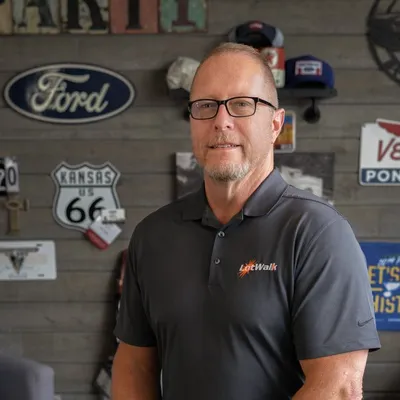
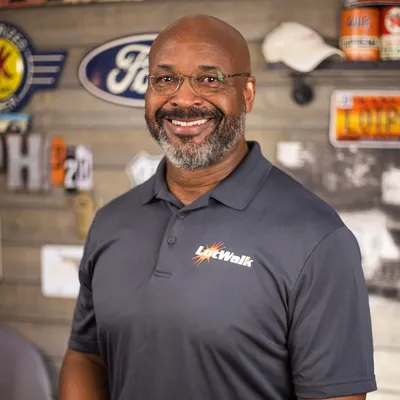
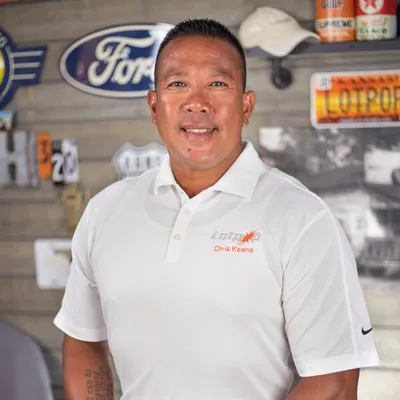
Full video episodes now live on the LotTalk YouTube channel.
Watch on YouTubeRolling AI into a dealership's F&I process is a leadership project, not a software install. Guests Danielle Mills Walden and Phillip Greer of Upstart lay out three rules: partner with a provider that has a real team of trainers and strategy, not set-it-and-forget-it; identify a champion in the store, ideally a leader who is bought in and can drive adoption down through the building; and stay coachable, raising your hand the moment something is not landing. Before signing anything, bring the finance managers and sales managers who will actually use the tool into the vetting so they own the decision. And if adoption stalls at 90 days, hold a relaunch meeting, hear the loudest detractor out, fit the tool to the store's process, and get a committed two-week reset. Upstart reports over 80 percent of new installs hitting their minimum deal and rate-check launch targets by planning with the end in mind.
What you'll walk away with
- Three leadership rules decide whether AI sticks: a trainer-backed partner, an in-store champion, and coachability. Danielle Mills Walden's checklist for any new tool, AI or otherwise. Miss one of the three and the install starts dying the day the trainer leaves.
- Do not sign until the end users have seen the product. Dealers with the most success bring finance managers and sales managers into the vetting before the decision maker signs. People support what they helped choose; a tool dropped on them from above feels like someone else's idea.
- Pick the right champion, not five-car Fred. Phillip Greer's screwdriver rule: a flathead can technically turn a Phillips screw, but you strip it. Hand the tool to the person already pushing for better photos and faster process, and empower them to teach everyone else.
- When adoption stalls at 90 days, relaunch instead of cancel. Get the decision maker and every manager in one room, let the biggest detractor shoot straight, refit the tool to the store's process instead of the reverse, and ask for two fully committed weeks before reassessing.
- Planning with the end in mind gets 80 percent of installs to target. Upstart defines launch success up front, the deal counts and rate checks that mark a performing store at 120 days, then works backward. Over 80 percent of new installs are hitting it, the highest rate they have seen.
Episode chapters
Jump to the part you need. Timestamps match the audio and video.
- 00:04Cold openPicking up part two with the Upstart crew
- 00:35Setting the tableRecapping part one, plus the Leadership in the Dealership podcast
- 03:36Danielle's three leadership rulesTrainer-backed partner, in-store champion, stay coachable
- 06:01Buttonology and the religionTrain the how to navigate, then train the why
- 08:06The screwdriver rulePhillip on picking and empowering the right champion
- 11:20Permission to raise your handRenaldo on why coachability is the crucial third rule
- 12:43The 100-salesperson training storyHow Phillip won a lecture hall that would not listen
- 17:07John's GM lessonsSet it and forget it is a precursor for failure
- 20:45The million dollar questionWhat happens when adoption stalls at 60, 90, 120 days
- 23:04Involve the end users before you signDanielle on vetting with the whole team
- 26:32Planning with the end in mindHow Upstart's launch team gets 80 percent of installs to target
- 35:59Recap and final wordEmpower the champion, be open to change, be part of the future
Part two: the leadership side of AI adoption
Yesterday's episode covered what AI can do inside the F&I office. This one covers the part most dealerships get wrong: the leadership work that decides whether any new tool, AI or otherwise, actually gets used. Chris Keene, John Anderson, and Renaldo Leonard bring back Danielle Mills Walden, head of operations for Upstart's automotive side, and Phillip Greer from Upstart's dealer success team, and put one question on the table: what does it take to lead a store through a technology change instead of just buying one?
Danielle's three rules for any new tool
Asked for her three leadership bullet points, Danielle does not hesitate:
- Partner with a company that has a team: real trainers and real strategy, not a crockpot you set and forget. If you raise your hand for help and there is no one to call, the other two rules cannot save you.
- Identify a champion: someone in the store who owns the tool, believes in it, and ideally sits high enough in leadership to drive adoption down through the building when the detractors get loud.
- Be coachable: if something is not working, call it out. Raise your concerns and your praises. Do not suffer in silence, because silence is how installs die.
Chris adds the Lotpop framing: every tool needs two kinds of training, the buttonology (how to navigate it) and the religion (why it matters). Most stores only ever get the first one.
Pick the right champion, not five-car Fred
Phillip's analogy sticks. You can technically turn a Phillips head screw with a flathead screwdriver, but you strip the screw and waste everyone's time. The right champion is the person already coming to you saying let's get on Instagram, let's shoot these cars faster. Hand that person the new tool, give them real ownership, and they will teach the rest of the building. As Phillip puts it, give me one champion and I can make everybody else a champion.
He backs it with a story from his CRM training days: a lecture hall of 75 salespeople at a 100-salesperson Toyota store, nobody giving him the time of day, and the store's untouchable 40-car ego walking in late announcing himself as the big dog. One unorthodox line later, the room flipped, the training landed, and six years on that store is still using the product at a high level. The lesson is not the joke, it is the inflection point: a trainer who wins the room's attention ties the product to a moment people remember, and adoption follows.
The 90-day stall, and how to fix it
Chris asks the million dollar question: the decision maker signs, goes home excited, and 90 or 120 days later says it is not working, I cannot get my people to use it. Danielle's prevention is simple and most dealers skip it because of ego:
Make sure that you do not move forward until you bring in some key members of your team to see the product and to interact with the team before you actually sign.
People who help vet a decision feel like part of the ride instead of passengers. And when it has already failed, she relaunches it: get the decision maker and all the managers in one room, ask the person who hates it the most to shoot straight, study the store's process from A to Z and fit the tool into it rather than forcing the store into the tool, then ask everyone to look you in the eye and commit to two fully engaged weeks before reassessing.
Phillip shows what that looks like as a system. Upstart's launch team plans with the end in mind, defining up front the deal counts and rate checks that mark a performing store at 120 days, mapping the store's pain points and detractors before the first training, and keeping the original seller on the account instead of vanishing after the signature. The result: over 80 percent of new installs hitting their launch performance targets, the highest rate they have seen. As Chris tells listeners, whether it is Upstart, LotWalk, or anyone else, if the person who promised you the golden ticket disappears after the sale, reconsider the partner.
John's general manager translation
John puts his GM hat back on and owns the old habit: bringing in a shiny object and pushing it down to the guys to deal with is a precursor for failure. The wise-man line he carries from his own career applies: the dealership can only run as fast as you can, and you cannot run very fast, son. Involve the power players up front, go straight at the biggest dissenter and pick their brain, and remember why this matters right now: with AI search growing and Google usage projected to drop 25 percent by the end of 2026, the stores that find their champion early are the ones that will not be catching up later. This is the same alignment problem dealers face on inventory management: the tool only works when the whole store runs the same play.
The Monday-morning action plan
The closing recap, straight from the episode:
- Audit your partners: for every tool in the building, ask who trains us, who supports us, and whether the seller is still in the conversation. If the answer is nobody, that is your problem, not the software.
- Name a champion this week: pick the person already pushing for better, give them real ownership of one tool, and let them teach it.
- Run the pre-signature play: before the next contract, put the end users in the demo and let them help make the call.
- Relaunch your stalled tool: one meeting, the loudest detractor speaks first, refit the process, two committed weeks, then reassess.
- Stay open to change: Danielle's final word. AI is not going away. Be the person learning and doing more, and you will be part of the future, not part of the problem.
Get insights like this every week
Join the Insider Newsletter. Inventory tactics, podcast recaps, and dealer strategies. No fluff.
Transcript is auto-generated from the episode recording and lightly formatted. It may contain transcription errors.
Chris Keene (00:04): Hey folks, you have tuned back in. is Lot Talk powered by LotPop. I'm Chris Keen, one of the co-hosts joined our great new friends from Upstart. You heard him yesterday. You're going to hear from him again today, but we also, of got the all famous Mr. John Anderson. And the most esteemed gentlemen on this screen today, Mr. Ronaldo Leonard. Folks, how are we doing? Are we ready to go? Are we ready to pick back up? I don't know about y'all, but I'm ready to get into some leadership and some why you guys ready?
John Anderson (00:04): Let's go. Let's go.
Renaldo Leonard (00:04): Let's dive, bro. Let's dive.
Chris Keene (00:35): Let's do it. Let's do it. So we talked yesterday and like I said, you know, we kind of went Steve and Covey. We began with the end in mind and I loved the end results. I love what you guys are doing at upstart. I love how you guys are taking the AI pieces and really reducing so much of that friction in this FNI process. I love that. And we talked a little bit about Danielle, you were talking about how you'll upstart before, cause John asked a really good question. I'm like, know, Hey, why'd you guys get into automotive? Well, you pointed it out. You called the ACE, the ACE and the spade, the spade because automotive is a gajillion light years behind and very slow to adapt to change. Okay. It is what it is. And you guys have been successfully doing this, with AI before. Y'all ventured off into automotive and now we're plugging that same thing in to the automotive sector. But like I talked about yesterday, listeners and viewers, you're one of the things that is really impressive about Danielle and Philip is not only do they represent, you know, a pretty darn good company with upstart. One of the things they do with their podcast, which I highly recommend that you folks tune into it. You know, that is a podcast that they've got running called, uh, uh, leadership in the dealership short, sweet to the point leadership in the dealership. Definitely suggest find that one. know y'all got a lot talk powered by a lot pop saved. Go get that leadership in the dealership. Go save that in your Apple, save it in your Spotify, save it on your YouTube. And let's, let's join that podcast as well. Because what we've learned so far from Danielle and Philip, they've got some leadership skill here. And Danielle's actually even, you know, she's a writer. You know, she got a book out there and I know we don't want to blur the lines too much, but you do got a book out there, Danielle scratching the surface lessons. Okay. Lessons there that you're, you're just throwing out there about some elite training, which I'm confident, Danielle, that in y'all's podcast, when you're throwing that leadership in the dealership, that book might've been inspired by the dealership leadership, or you may be taking some of that book and pouring it into the dealership said into you guys's podcast. that being said, thinking about AI, thinking about FNI. If you, had three major bullet points that you wanted to share with another group of audience here on Lot Talk in terms of forging that way in that adoption of AI within the FNI department, that's going to take some leadership. If there were three bullet points of leadership that you had to give, what would they be?
Danielle Mills Walden (03:36): Okay, three. So the first thing that I would.
Chris Keene (03:36): Like I got 10, but I'll give you three.
Danielle Mills Walden (03:36): No, well, I'm just trying to make sure this is good. All right. So the first thing that I would recommend if you're a dealer listening to this incredible podcast and you're thinking about implementing something new or a provider with AI into your dealership, I would recommend three things. Number one, make sure that you're partnering with a company who has a team in place that is willing to train you and to truly give you strategy, not just a set it and forget it. Number one, number two, you need to identify a champion. This is somebody at your dealership who is going to truly own and be accountable for this. And they need to be a believer and to be excited about it because when things are tough and as you and all, you all know with when you're implementing something new at a dealership, there's always a detractor. There's always somebody who's not sure we need to have a champion in place and preferably that champion be at a higher level of leadership so that they can drive that leadership down throughout the store. And that way everybody's bought in. Cause when times get rough, you look towards that leader to get you through those hard times. So that would be number two. And then number three, it is to ask for help. If you get stuck, be coachable in this whole experience, go back to the provider and make sure if something's not working, call it out. Make sure that everybody is aware that when you're installing something new, it's not going to happen overnight, but that provider should have the type of team in place. to want to ensure your success. So make sure that that feedback loop is open and honest. Don't just suffer in silence. Be a voice, raise your concerns, raise your appraises too. When things are going well, let's scream it out in the meetings on Saturdays. Let's highlight things that are going well. That's the only thing that makes it sticky as we try to implement.
Phillip Greer (03:36): Yeah.
Danielle Mills Walden (05:23): and go forward. So those would be the three things that I'd focus on. Leadership is something that myself and Philip are extremely passionate about. And we love highlighting dealers who have great leadership in their stores and to be a resource. But those are three that I thought of.
John Anderson (05:35): Daniel bringing the heat! Come on! Come on!
Chris Keene (05:35): So Mike dropped. mean, there it went, but honestly though, hold on listeners and viewers think about this for a minute. Okay. Because you know, John, as usual, I got the notepad going like crazy over here. So I want y'all to think about this for a bit. Listen to what she just said. Partner with someone that has a team of traders support. It ain't a crockpot. It ain't a set it, forget it.
Renaldo Leonard (05:35): Yeah
Chris Keene (06:01): Okay. It ain't no magic bullet. It ain't no silver bullet. Partner with somebody that has a team of trainers. But if you go to her third point of being coachable and raising your hand saying, Hey, I don't get it. I don't understand. Well, if you partner with somebody that doesn't have a team of trainers and support to be able to guide you through the program and you raise your hand because you are coachable. Well, you only got two of the three things. Who are you going to call? I mean, so make sure listeners and viewers that you got number one out the way, partner with somebody that has a team of professionals that has a team of, of trainers that ain't going to beat you over the head in ancillary dollar you to death, but make sure from day one, whoever you are partnered with and listen, I'm to get out the world FNI for a minute. I'm going to get out of the world of upstart AI, everything else. I don't care. what it is that you're installing into your dealership. Make sure that there is a team of people that can train you on what we call here a lot pop the button ology. In the religion, OK, because there's two different things that you need trained on. First off, you got to understand at least how to navigate through. But then when you get to some of that, you got to understand why. Okay. And that, that is probably one of the largest things. Uh, I loved the second point and Danielle and I'm going to, I'm going to ask because I want Philip, I want you to, she talked about identify a champion in the store. Okay. In your experience, whether it's with upstart, previous companies, you know, your time inside the dealership, identify a champion in the store. With this new process, this new procedure, this new venture unpack that a little bit more, Philip and explain to our viewers and listeners what that truly looks like. And let's not take five car Fred. And all of a sudden he becomes the expert on this. Okay.
Phillip Greer (08:06): Right. Yeah. because that's a great point that you bring up. Think of it like this. You got a Phillips head screw and you have a flathead screw. Technically I can find a flathead screwdriver small enough to turn the Phillips screw, right? So I could make it work, but then what happens? You get a stripped out screw. You spend extra time working with it, all those things. Whereas if I take my person in the dealership who's always coming to me and saying, hey, let's get on Instagram. Let's get more of these cars up. Let's find a faster way to take these pictures. That's the person who's more likely gonna be involved in the AI conversation. So what if I say, hey, what about this company Upstart? Can you help them? Can you help us understand what it's gonna do for our dealership? Can you put us in the right place to be successful? Empower those champions at your dealership. So often in a dealership, we work incredibly quickly. We have three million things to do. And every now and again, I don't know if you guys have experienced this, you have somebody who is a control freak and doesn't wanna let go of things because they're worried about it. They're worried about the process change. They're worried about changing from a four square. They want to sign it, sign in green Sharpie, yada, yada, yada, right? All the things that we know. But if I take somebody and I say, hey, I trust you to take this over and give it to them and allow them to be the champion of it, what's it going to do? It's going to empower them. They're going to feel like they have more buy-in in the process. They're going to be more excited about it. They're going to dive deep because they got a challenge opened up to them. They're going to bring you more dollars if you give that to a champion. And also it helps us when we come in to train you. know that we're talking to somebody who already has a relationship and can disseminate information to everyone. So that champion piece might be the, for me personally, because I do a lot of training and I was a teacher, it's like my favorite thing, because if you give me one champion, I can make everybody else a champion. If you give me somebody who doesn't like it, I can still get them bought in, but the time is the piece that we're talking about here. That's the tangible thing we can't replace. Give me a champion, give them the power to do it, let them learn the process with me, and then you will make
Chris Keene (08:06): Mm-hmm.
Phillip Greer (09:57): Thousands more dollars every month. It's a no-brainer when you can explain it that way and I feel like it's the thing when we talk about antiquated thought processes in a dealership It's one of the things that I see over and over and over again where I'm like, is how I would improve this This is the person who needs to be put in this area Here's a person that I can see that could be a real strong Worker if you gave them a shot So everybody should be embracing that have that champion who can own that process and make it their Mona Lisa Right? Like that's the thing that they specialize in that nobody else could do. And then you let them, you you give them the opportunity to teach other people how to paint. I mean, it's as simple as that, but don't try and use that flathead screwdriver, turn that Phillips screw because you're wasting everybody's.
Chris Keene (10:39): Mm-hmm. Mm-hmm. Yeah, there's no doubt. No doubt. Ronaldo from your vantage point, you know, for lot pop with, you know, being our director of training here. Back to Danielle's first point, partnering with your team, the, that has the traders that has the support things of that nature. When she said that I kind of watched your, your wheels just like go 7,000 miles an hour and a lot of excitement in there. You know, what, what follow up to that?
Renaldo Leonard (10:39): you
Chris Keene (11:07): Do you have any depth of question for either Danielle or Philip there? Because I know our viewers and listeners, sometimes they don't even know what question to ask with a third party company coming in to partner with them. Go ahead and fly away with it.
Renaldo Leonard (11:20): Right. Yeah. Well, I mean, not so much, you know, drilling into that first point, but I think that the third is most crucial. Having someone feel that comfort level to be able to raise their hand and say, it's not landing here. Can we back it up a little bit and maybe step into it a little bit, you know, a little slower so that I make sure that we are connecting all the dots and I don't miss.
Chris Keene (11:20): Mm-hmm.
Renaldo Leonard (11:48): D, E, and F, I'm already down to W, Y, Was that in order? Yeah. So I want to make sure that, you know, that's just a, that's a crucial step because if they don't feel like they have the ability to raise their hand and slow things down for a little bit, they will just kind of sit there and smile and nod and you walk out the door and you have not accomplished anything because that particular champion is not landing on what they need.
Chris Keene (11:48): Mm-hmm. you
Renaldo Leonard (12:17): I had a question and it slipped out of my head. Philip, as you were talking about explaining it in such a way that if I have that champion, I'm going to be able to increase everybody else in the store. Give me an example where that kind of stumbled for you and how you were able to kind of go back and kind of regroup, maybe call an audible.
Phillip Greer (12:43): I I don't know how deep you want this story to get, but I can go. I used to train another CRM product. Okay. Okay. I used to train another CRM product and I would go, had to go into the store that had a hundred salespeople. So it was absolutely massive and it was really tricky. Right. And so you come in there and you are a little bit nervous having to present, you're getting your feelings about you, whatever the case may be. And I went in there.
Renaldo Leonard (12:43): three minutes deep three minutes deep that's
Chris Keene (12:43): Hahaha
Phillip Greer (13:09): And I had my plan. I knew exactly what I was gonna talk about. I knew exactly what I was gonna train. I had the groups broken down and all this stuff. But I didn't have somebody who was giving me the time of day. Everybody's like, we have so many salespeople, we sell a million Toyotas. Nobody cares about you and your little CRM, move along. And you know, my personality is pretty small, but sometimes it comes out and it gets a little bit bigger. And I'm like, hey, I need to have an impact here immediately. Because if I don't get these people involved, I'm not going to be able to give a good training. Now this is where if you have like sensitive ears, you might wanna tune out, but. I was walking into this class and I couldn't start. I'm at the bottom of a lecture hall, so I'm looking up at like 75 people in this first class and I couldn't start because they were waiting on people to like walk in. So there's this one guy who is a sales leader. He's that guy, does 20 or 40 units a month every month. He can go in and cuss out anybody he wants and you're like, how can he get away with it? It's like, hey, he sells all the cars. So whatever's gonna happen is gonna happen. He'll quit this week, he'll be back next week, it's fine. And he comes in late to my class. And this is one of those moments that you identify where if you're trying to make yourself a real good influencer or you want to have everybody's attention, you have to do something that's a little bit unorthodox to get people bought in. So at this point, we're already like 45 minutes late for training. I got to get through all these trainings. People aren't giving me the time of day. He walks in and I say to him as he's walking across the top, right, way far away, I'm like, excuse me, are we ready to start class? And he says, yes, we are. And I said, okay, what's your name? Right? And he said to me, and this is a true story, he said to me, I'm the big God around here. Right? And so like, you can think of that ego, like we've heard that at a dealership, right? And in this moment, this is my one moment, I say, okay, fat Jesus, I need you to sit down so we can start class. Now, the eruption that came from the rest of his salespeople, all these people that he had been putting down over time and beating throughout this sales cycle, he had nothing to say. He could not recover from it. And all of a sudden people are like, this guy is not somebody to mess with, we should listen. What does that turn into? This one piece of levity, which is actually one of the cleaner things I've said, this little levity got buy-in from everybody around me. Now when I went to classes to give them or I went to one-on-ones, they're like, Philip, come over here, train me, I wanna know how to use it. And they're like, dude, you roasted that guy and he never gets made fun of. But what are you selling? What are you doing? What's all of it? I use this one moment as an inflection point. get everybody's focus back on what should be done. That customer, six years later, still using the product at a high level, those salespeople that were there, the managers that were there, they're going to remember it forever and you tie your impact to your product, people don't forget it, you have a much higher level of adoption. And that is the thing that happened in that moment. And I knew it was going off the rails and I had to take a chance, take a flyer, do something completely wild, but it worked. And that is kind of the stuff that makes it more effective. gets your product that credibility is. How are you tying that to a real world, real life experience and getting people to really focus on you? Think about that.
Chris Keene (13:09): Mm-hmm. Mm-hmm.
Renaldo Leonard (13:09): yeah.
Chris Keene (16:10): Anderson Anderson. I've seen your head. I've seen your head look down and I've seen the fist bumps. You know, you got, you got something. You got something for him, baby. Okay. As, as the very season. Yeah. He got, got all I could think. All I could think about was Alan off of, you know, I thought about was Alan is, you know, sit down. You know,
Renaldo Leonard (16:21): He's got images of fat Jesus running through his head. Yeah, in the face.
Chris Keene (16:36): But, Anderson, as the very seasoned veteran on this call, that was, yes. Well, I'm trying to be polite with, yeah. All right. As the old guy on this call, you got pretty excited when Danielle talked about the part of with the team of, of trainers and being coachable. What were your thoughts around that?
John Anderson (16:42): You can call me old dude, that's fine. You do it every other time.
Renaldo Leonard (16:42): seasoned.
Chris Keene (17:02): And how much deeper are you looking for Danielle and Philip to go there?
John Anderson (17:07): I I think what triggered me is I hope every, I hope every listener and everybody that's watching this pod understands what kind of leadership lessons were just delivered to you by Danielle and Philip. mean, seriously, I mean, look, I've, I've made fun of myself many times on this podcast about my 20 groups saying you want to know something about a new product. Ask John, he tries every shiny object. Right. And so.
Chris Keene (17:07): Mmm.
John Anderson (17:34): You know, if, if, if I'm going out there trying things that I think can help the dealership become more successful, why in the world would you ever, why in the world would you ever implement something that you've got to, you've got a mentality of set it and forget it? Why would you ever do something like that? Right? What, how much success are you setting yourself up for or how little success if you're, if you're implementing something that you're just, you're bound to determine, I'm just going to bring it in and let the let these guys deal with it and use it. That's a precursor for failure. Right. And so, you know, when I hear, when I heard them talk about, you know, first of all, finding up, getting a product that you have support and partnership with the, the, team's going to be there to help you. You know, I listened, Chris, in all honesty, I was thinking about, when, when Daniel was laying that out. I was thinking about us, right? And, you know, at our, at our company and, and how much we talk about that, you know, and, and, you know, the other thing. that I was thinking about. And I've said that on here before too, is, you know, general managers and, owners, a wise man once told me, cause when you talk about a guy that tried to have his hand and everything and try to manage everything, that was me at one time when I first became a general manager. Right. And, and, and, a wise man that we had on this podcast once told me, Hey, John,
Chris Keene (17:34): Mm-hmm.
John Anderson (19:01): The deal, when you're doing that kind of stuff, the dealership can only run as fast as you can and you can't run very fast son. Right. So, so right. So finding that champion in your store. That's going to help promote this. Also, how important is that to have a, have a champion in your store that that peer group can relate to, right? They're not always comfortable going to that upper level management or relating to that upper level management.
Phillip Greer (19:01): Thank you.
Chris Keene (19:01): Mr. F. Rich. Yes.
John Anderson (19:29): So if I find that champion and they can relate to, that can be an encourager for them, then they're more apt down the road to ask those difficult questions when they need help, instead of sitting in a room with 30 other salespeople going, I don't want to ask this question because it's going to sound stupid. you know, that's Chris, honestly, that's what I was thinking about. I hope that the listeners and the viewers are really taking some of these nuggets.
Phillip Greer (19:29): Mm-hmm. you
Chris Keene (19:29): Mm-hmm.
Phillip Greer (19:29): Thank you.
John Anderson (19:57): And if you're not applying them, it's excellent leadership. listen, what we've been talking about the last three to four weeks with AI, right? That's all about finding that right person in your store. That's going to help that, right? It's going to help promote that AI, that changing of the guard, so to speak, and how important it is. You know, when we talked about 25 % less Google usage by the end of Google search, by the end of 2026, right? These are some of the things that look,
Phillip Greer (19:57): Thank you. Thank you.
Chris Keene (19:57): Yeah.
John Anderson (20:26): This isn't something down the road. This is happening right now, right now. So, you know, some of these nuggets that Danielle and Phillip have laid out here, hope, I hope everyone's taken seriously and taking notes like I was because we need to start implementing this stuff right now. That's how important it is. And it's great leadership. It's great leadership.
Phillip Greer (20:26): Okay.
Chris Keene (20:45): it's, it's And I think this now leads me to the million dollar question, Danielle and Philip that we ask every thought leader, every had guys like Ed French on here, you know, which was one of John's mentors that he worked for, you know, when, he was on the retail side of the business, we've had great. We've, we've had great, great leaders on here, like Ed Roberts and Letty Bozard from Bozard Ford Lincoln out of St. Augustine. You know, we've had guys like Frank Knox. mean, uh, we had one of my old mentors, uh, on this call that just a bunch of great leaders. So here's the million dollar question I have for both of y'all. And I want both your takes on this, but Danielle, we're going to go ladies first here. It let's fast forward to, okay. We'll use your product, for example. You've got a decision maker that you guys have spent time with. They've looked at your product. They're a little bit more forward progressive thinking. Or maybe they're not even forward thinking, but they're like, OK, this AI thing's not going anywhere. And they've got AI built into their F &I. I like this. I like, as we talked about yesterday, you know, I like the time that it gives back throughout that F and I process, the reduction of the friction, the ability to gain more trust from the consumer public out there because they're inundated with so many different things. And they're all fired up and they want to use you guys. And I want both your takes on this because you're, both viewing this from two different vantage points, but holistically the same. They like it, they sign up for it. They're the decision maker. They're all for it. They're going home. Then you get 60, 90, 120 days down the road and they look at you and say, Hey, let's say working out. I can't get my people to use it. How do you prevent that? And what are some things that you're doing to empower those decision makers to not get caught?
Phillip Greer (20:45): Thank you.
Chris Keene (20:45): in that position.
Danielle Mills Walden (22:46): That's the question? I'm ready. Okay. All right. So as you were talking, it got me really excited because this is something that we see all the time. And since I have the opportunity to speak to your lovely audience, I'm going to hit them straight between the eyes. All right. You ready?
Chris Keene (22:46): That's the question. Fire away. Please do.
John Anderson (22:46): Please do. Please do.
Danielle Mills Walden (23:04): So if you're a key decision maker, a GM, a dealer principal, a finance director, whoever, and you have the ability to truly implement and buy and sign on the dotted line for this product, make sure that you do not move forward until you bring in some key members of your team to see the product and to interact with the team before you actually sign. Why this is important is
Phillip Greer (23:04): it.
Danielle Mills Walden (23:29): Isn't it the worst feeling in the world if you're working for a company and then they bring in some shiny new object, they're like, you're gonna buy and you're gonna use it. And you feel like you weren't a part of the process of even vetting the company, hearing about them. I found that the dealers that we work with that have the most success, once that key decision maker is bought in and excited and amped up, before we even move on to close them and to sign them, we actually encourage them to get. other finance managers to see it, other sales managers to see it. We want everybody to feel like they're a part of this decision. That's how you're going to have long lasting success because then people feel like they're a part of the ride instead of just being brought there. So that'd be the first thing I'd do. I have a different perspective on what you do after the fact when it's already kind of failed, but I'll pause there. Where would you like to go from here based on what I just said?
Phillip Greer (23:29): Thank
Renaldo Leonard (23:29): .
Chris Keene (24:17): Exactly where you were going when it has failed.
Danielle Mills Walden (24:20): Okay. I'll do a take and I'm sure Philip has a slightly different tape, but maybe similar because you know, we do have the same brain a little bit a lot of the time. So what, what we would do typically, and this does happen on occasion because most, a lot of dealers, cause they have egos, they say, well, I'm the decision maker. This is my call and we're just going to do it. So, then 90 days later, maybe there's not, they're not performing. So what I would do if I was in charge and I could get them back on track is I would have a meeting. with that key decision maker and all the managers. And I want to hear from the person in the room who hates it the most. I want to hear the detractor. I want to hear the people who are not bought in and I want them to shoot me straight. Tell me all the reasons why it's not working. And then what I'm going to do is look at their entire process. And instead of trying to make us, instead of trying to make them fit into our process, I want to make us fit into their process. I need to understand from A to Z exactly how they do things so that we can see
Phillip Greer (24:20): What? All right.
Danielle Mills Walden (25:13): the best way that we could fit into that process. And I'm going to say, Hey, are you going to be able to give us another two weeks of you fully committing, not a month, two weeks of you fully committing to using this product day in, day out? I'm going to be here to support you. I have a team that's going to support you. And you have to give me a true shot, not just doing it because we're telling you, but your full shot. I get everybody to look me in the eye and say, yes. And then after two weeks, we reassess, but a meeting is super important after the fact.
Phillip Greer (25:13): Come on.
Danielle Mills Walden (25:42): just to make sure that everybody is back on page. You're almost relaunching them. You have to resell them on the value of the why. Why did they sign up? What did they see as a point that's gonna make their life easier? So those would be the things that I would do. Thoughts on that.
Chris Keene (25:57): I think the biggest thing that you said in Ronaldo and John, I think you heard it as well is meeting with that naysayer decision maker and find out where we missed in alignment. And how do we, how do we run this amoeba defense and really fit around their process, their agenda versus our agenda.
Phillip Greer (25:57): Thank with.
Chris Keene (25:57): So Phillips, same questions. want your, I want your input. know you're sitting there chopping up the bit, but I want to hear your input and then you John and Ronaldo afterward.
Phillip Greer (26:32): Thank I I don't really have anything else to say because Danielle touched on everything, so I'm going to be quiet. Just kidding. She did touch on everything, right? And I fully agree with everything that Danielle said. I mean, so let's start with what Upstart does really well for this question. I think it's very impactful. When it comes to getting you bought in, our AEs are going to sit with you and make sure that you understand exactly what you're getting. It starts at the top of that funnel. Do you know what the product has to offer? And one of the things that my team works on were the We're the launch team. So we go in and we launch dealers across the country. We align with AEs internally to make sure that we understand pain points of that dealership, to make sure that we know what we're going to talk about when we show up, not just, Philip, go train that dealership because they're ready. It's who'd you talk to? Who's the person that I need to know about? Who is the detractor? Who is the fat Jesus that I have to break when I walk into that store to make sure that I get the rest of the buy-in? And in all seriousness, if you're identified and you're hyper-focused on that, you're have a very high success rate. We are currently seeing over 80 % of our new installs launching with a success rate of doing the minimum amount of deals and the minimum amount of rate checks that we need to qualify them as performing. That is higher than we've ever seen before. And the question that I always look at is, what did we do? We started planning with the end in mind. We said, if we want to have 120 days of success with this customer, this is what the amount of rate checks and this is what the amount of retail installment contracts that are signed looks like. These are the people that are gonna use it. Here's how we're gonna give them the tools they need to have buy-in, and we're gonna send them unique gifts to keep us front of mind so they don't keep using us. It's not a bribery business, but the thing about it is, if I like you, and I know that you take care of me, and we're working together, right? It's family, as Vin would say. That's the thing that keeps you coming back for more, okay? So we don't wanna get to 120 days and see that failure. Does it happen? Of course, but it's much less with us, because in addition to us, making sure that your training was adequate and knowing our customer, right? It's just like, let's say right now I wanted to take my wife out and I'm like, hey, let's go out for seafood. And she tells me I'm allergic to shrimp. I didn't know what she was after, right? We don't wanna have that. That's how you get to 120 days and you think, I don't know if this is the person for me. That's not where we go as Upstart. But beyond that, when we are in your dealership, you know who we are. We have a presence. We put more effort than other banks will. into training your staff and showing you how our product works. We also are constantly redefining what success looks like and what that value prop is for you and explaining it to anybody who will listen. The handoffs that we have aren't truly handoffs. It's a way for all of us to support you. So our AE stays involved. Our launch team will stay involved. The DRM or who does your long-term success, they know about your pain points. They know the people they need to come and visit. They know the cadence that they should be in your dealership. They'll offer you phone calls. And if you need to some extra training or I have three new people that I brought in to start and you call me, I'm not gonna say you're not my responsibility. I'm gonna say, cool, let me get a session set up for you and let me make sure your DRM is present so they can meet them. Boom, session's done. You know you're gonna get out of me exactly what you got from day one. That's why we see a lower attrition as we go through this because we put the time and effort into training these lovely individuals and making sure they know how to use the software.
Chris Keene (29:49): So does your seller all the way to your person that is your account rep or what have you, is everybody involved with the decision maker? Does the seller just all of sudden disappear or does the seller stay involved?
Phillip Greer (30:07): Seller stays involved. They will join our launch calls. Can we do virtual and in-person launches? They'll join our calls, talk to that dealer principal, the owner, et cetera. They'll CC us on the emails. They're going to let you know that we have a new team being added into the fray to support you. Not I'm giving you to this person. They're being added in to make sure that you see success. OK? So we.
Chris Keene (30:26): Listeners and viewers, I want y'all to hear that very closely. You know, and I want to tie this back together of the reason why I'm asking these questions, because whether it's upstart, whether it's lot walk, whether it's, you know, this Cox automotive product, that Solera product, you know, this company, that company, it does not matter. Okay. If you are not bringing in a company as you are navigating through how to leverage this new power tool called AI within your business. If you don't still have communication with the guy who promised you the golden ticket, which was the salesperson, all the way through to the guy that's managing the new said power tool with you.
John Anderson (30:26): you
Chris Keene (31:14): If you haven't established that that's the type of partner that you're getting from day one, you might want to reconsider using them as a partner. You really might want to reconsider that. John, take it over to you because Philip and Danielle just threw some major nuggets out there. Feedback thoughts.
John Anderson (31:33): Well, I think I'm putting my general manager's hat back on. We, as we've discussed on this call that. Auto dealers are just a little bit antiquated and, just, it, it, it can't, it can't be emphasized enough how important it is when you're making decisions like these to get the power players at your store involved in the process. in this instance with upstart, all those people that are going to be using this product need to be involved in the, in the process. so they understand why we're bringing them on then two, you know, the, the result of us bringing them on the potential result. And, so to me, that's, know, a lot of what was just discussed is excellent. from a, from a partner standpoint on the, on the vendor side, I hate using that word. That's why, but on the vendor side, it's that partner, right? It's excellent. excellent advice and excellent, you know, Philip and Daniel laid out, and as to why they have the success that they have. but. You know, I always try to relate things because we have, uh, you know, the main content of our podcast is to dealers. so don't set yourself up for failure by go back to that. You know, I'm, um, I'm, I'm engaging with a product and in the back of my mind, I'm thinking, well, I'll just get it and push it down to the guys and let them run with it. It just, it just doesn't. things don't work like that. And that's old school mentality. And we got to bring ourselves, we got to bring ourselves forward, right? To, to involving. loved, I love that involving the power players and, right up front, know, and, and to Phillips point, I'm going to, I'm going to go right after that person. And Danielle, I'm going to go right after that person. That is the big dissenter. I want to, I want to pick their brain. I want to find out what is, why it is that, that they're there. uh, pushing back on this platform. Right. So I think, you know, Chris, to the question you ask from, from a dealer's perspective, but you know, as a GM, that's what I want to do. I want to get it. I want to get everybody in a room and let's truly vet this thing out. Right. This will vet it out. Um, because my expectation is, uh, we're going to use it.
Chris Keene (31:33): Mm-hmm.
John Anderson (34:08): And we're going to, we're going to learn how to use it and get the full extent. Right. We hear, we hear it all the time. Right. This is just another tab that I need to open up. Right. And that, in that list of things that I have on my computer every day, when I'm working a sales desk, I've got to go here. I've got to go here. I've got to, that's what I love about what these guys do. Right. Anytime you start bringing in AI, right. That saves you time, energy, and effort. Right. And that's what I love about, that's what I love about what they've talked about is right as a sales manager.
Chris Keene (34:08): Here's one more.
John Anderson (34:08): or a F &I manager and all my responsibilities, I'm looking for something that can save me time, energy and effort and still produce a fantastic result for my customer, right? All this stuff we're talking about ultimately sits in the lap of the customer. That's what we always talk about, right? Everything we're doing is we're trying to improve the relationship that we start and continue to formulate.
Chris Keene (34:08): Yes.
John Anderson (35:05): long-term with our customers, right? That's what it's all about.
Chris Keene (35:05): That's, mean, that's your, your spot on Anderson. You're spot on my gosh. Two things here, viewers and listeners. Number one, Brett's going to have it up very soon on our website. Lot talk powered by lot pop. when you go to that website, the lot talk podcast.com here very soon, you're going to see a resource tab in that resource tab. You're going to find contact information from Danielle, you know, from Philip. with upstart, if you want more information, if you want them to unpack another point that we've talked about over the last couple of days with them, please, please, please, please, please reach out to them. This is the reason why you, we invited them onto the show because the research we did, we found there are great resource to recap this, to kind of put a bow on this, your leadership.
Phillip Greer (35:05): Right.
Chris Keene (35:59): Make sure that you're partnering with a company that has a team of trainers. Make sure that you identify in store some key members that can be, you know, those champions of that product collectively. Make sure that you're going to be coachable in any endeavor that you take with a partner coming in to help you improve your business. Make sure that you're going to be coachable. Empower that champion. Empower that champion.
Phillip Greer (35:59): Thanks.
Chris Keene (36:26): And if you as a decision maker or reverse of this, if you're listening and viewing this today and your decision makers are bringing resources in, but you weren't part of that decision making, at least go ask them, hey, before we get this started, can I talk to somebody about what it is that we're bringing in, how this is going to help our business? So either way have your end users
Phillip Greer (36:26): you
Chris Keene (36:54): be a part of that conversation. Maybe they're not a part of the decision. You're still making the decision, decision makers. But if you find that your team doesn't see value in what you're bringing, don't waste your time. Don't waste your money. Don't waste your effort. Don't even do it. In the last 60 seconds here, Danielle Phillips, any last tidbit of information that you want to share with our viewers and listeners today.
Phillip Greer (36:54): at.
Danielle Mills Walden (37:19): The last thing that I'll leave the group with 60 seconds is be open to change. AI is coming. It is going to be there. It's not going away. Be the person that's open to learning and doing more versus the one that's resisting and holding back. And if you do that, you ultimately will be a part of the future, not a part of the problem.
Phillip Greer (37:19): You havin' it?
Chris Keene (37:39): There you go, I love that. Love that.
Phillip Greer (37:41): I'll tell you, she's a closer. You should have put her on before me. I don't know why. Why you had me go second. No, I think that, that fear, let go of the fear. I mean, we deal with so many people exactly like Danielle said, it's going to take my job. it's going to do X, Y, Z. Let go of that fear. Embrace it, get out ahead of the curve. Cause there's going to be plenty of other people who are naysayers that are going to put it down for you. Be on the bleeding edge. That way you sell the most cars, you make the most impact, you get the most customers. Everybody else will catch up.
Renaldo Leonard (37:41): Thank
Phillip Greer (38:09): But you want to not have to be one of the ones who has to.
John Anderson (38:09): Exactly. Exactly.
Chris Keene (38:09): I love that.
Renaldo Leonard (38:09): Yeah.
Chris Keene (38:14): Absolutely love that. Be a part of the future. Matter of fact, may just be that Brett, that may just be the title of this episode. Be a part of the future. So listeners and viewers, you have tuned into another episode of lot talk powered by lot pop as Chris Keene, of your co-hosts, Mr. Ronaldo Littered and Mr. John Anderson. We thank you, Danielle. We thank you, Phillip, for taking time to film this with us today.
John Anderson (38:14): Yes. Yes.
Renaldo Leonard (38:14): Yes, thank you. Appreciate it.
Chris Keene (38:44): sharing so much impactful knowledge, you know, with the viewers and listeners that are out there. But as always, if you want more insight, if you have more questions, hit myself up, John Rinaldo, lot talk podcast.com. Make sure you can find that information that you're looking for right there on the site. Reach out to John Rinaldo myself. We'll be happy to answer any questions. Go one-on-one with you. Anytime, anywhere, any place. Thank you all for tuning in. Again, this is Lot Talk powered by Lot Pop. We wish you all nothing but the most success and we thank our great guests of the last couple of days. Mr. Danielle, Mr. Philip, thank you for joining us. Viewers and listeners, we'll catch you next week. Same bat time, same bat channel. And we out.
John Anderson (38:44): Success.