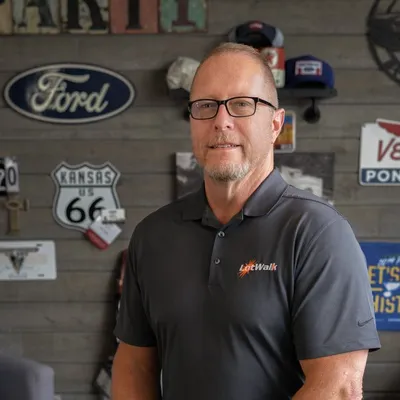
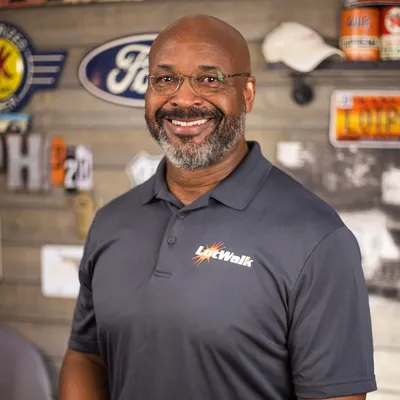
Chris Keene's claim, drawn from hundreds of dealer calls a week: more times than not, margin compression is a self-inflicted wound caused by poor disciplines inside the store, not the market. The fix starts with one rule no dealer has ever disputed: you make the most money and mitigate the least loss in the first 30 days of a vehicle's life. Protect those 30 days by pricing on activity instead of lagging data (a vehicle with search results and VDPs but no leads needs a merchandising check or a price move now, not on day 37), by never cutting price on a unit that already has live opportunities with quality follow-up, and by making sure fixed ops can recon the inventory you buy. The hosts' new clock: 15 days is the new 30, 21 is the new 45, and 30 is the new 60.
What you'll walk away with
- Most margin compression is a self-inflicted wound, not the market. Chris hears it on hundreds of dealer calls a week: blaming the market is the easy button. The real culprit is poor daily disciplines inside the store, and as David Long puts it, dealers create their own economy.
- You make the most money in the first 30 days of a vehicle's life. No dealer has ever disputed that the first 30 days are where you capture the most gross and mitigate the least loss. They just contradict it with their actions by letting day 37 become 47, then 67, then 90 and a wholesale loss.
- Price on activity, not on lagging data or a timer. Great SRPs and VDPs with no leads means the consumer likes the machine and the money; check your photos and merchandising first, then move price. And never cut a $45,000 unit just because a tool says it has been seven days, when four live opportunities are sitting in the CRM.
- Growing inventory without discipline shrinks your results. A strong dealer selling 52 to 62 percent of inventory every two weeks grew from 76 to 106 units, drifted off his bucket management and pricing strategy, and watched the sell rate fall to 18 percent while SRPs and VDPs dropped despite 25 percent more inventory.
- Your recon pipeline decides whether the first 30 days even exist. If a four-store group needs 15.8 days to get inventory in front of the market, the aging clock is already lost. The hosts' standard: 15 days is the new 30, and fixed ops has to partner with used cars, with recon done in under 48 hours.
Episode chapters
Jump to the part you need. Timestamps match the audio and video.
- 00:00Cold openHappy New Year, John is on vacation, and 2026 dealers are hunting every nook and cranny for profit.
- 02:20Dying of a thousand razor cutsRenaldo on profit leaks, transparency, and why time is not your friend.
- 04:04Margin compression is self-inflictedChris calls out the easy button of blaming the market.
- 07:37The CarMax warningEarly indicators ignored in 2025, and now velocity suddenly becomes a strategy.
- 09:41Back to basics, every single dayEgo, gut feel, and repeating the message 30, 40, 50 times until it sinks in.
- 12:43Finish the prescriptionChris's antibiotic analogy for why dealers relapse after early results.
- 16:46The number one job: fill the lot, drive activityRe-level set on what inventory managers and sales managers are actually paid to do.
- 19:43Price on activity, not data overloadMoney, machine, or me, and what SRPs and VDPs without leads are telling you.
- 23:21Self-inflicted compression in reverseWhy you never cut a price on a vehicle with four live opportunities.
- 24:39Audit your store like a consumerPhotos, descriptions, and taking the car-guy sombrero off.
- 28:10Case study: 76 cars to 106, sell rate to 18 percentA good dealer grows inventory, drops bucket management, and pays for it.
- 33:55The dealer who protects the first 30100 to 105 percent of market while staying well back of 30 days.
- 37:45Fixed ops has to carry the planBays, techs, detail, and 15.8 days to market as the silent killer.
- 44:07KNOW problem or NO problem, and the $25,000 teaserVariable and fixed alignment, plus the acquisition setup for next week's guest.
The phrase dealers hide behind
Season 3 opens with Chris Keene and Renaldo Leonard holding the fort while John Anderson takes a well-earned vacation, and they come out swinging at the most overused phrase in the business. Margin compression gets thrown around like Pez candy, and every time margins shrink the market takes the blame. Chris, drawing on hundreds of dealer calls a week, says it plainly: more times than not, margin compression is a self-inflicted wound caused by poor disciplines inside the store. Renaldo backs it with a line from their friend David Long: dealers create their own economy. The leaks you ignore today sit in the corner and grow until they hit you over the head.
More times than not, that margin compression is a self-inflicted wound by the poor disciplines that we have inside of our business.
The cautionary tale is CarMax. Per the hosts, the warning signs were surfaced inside the company and nobody listened, 2025 delivered the beating, and now the public posture is cutting prices, increasing marketing, and rediscovering velocity as a strategy. Bucket management and protecting the first 30 days never stopped being the fundamentals; CarMax just relearned them the expensive way.
The rule nobody disputes and everybody violates
Chris lays down the claim that anchors the whole episode: not one dealer has ever disagreed that you make the most money and mitigate the least amount of loss in the first 30 days of a vehicle's life. They never argue it with their words. They argue it with their actions, letting day 37 turn into 47, 47 into 67, 67 into 90, and 90 into a wholesale loss. The discipline gap is the difference, like a patient who quits the antibiotics on day five because he feels better, then gets put on his back when the infection comes back twice as hard.
Re-level set: the number one job
Chris's reset for every used car manager, inventory manager, GSM, GM, and owner: the number one job in inventory management is to fill the parking spots and drive activity to whatever you put in them. And a sales manager's title means manage sales: take the inventory with activity, convert it, empty the spot, and refill it. Every tool, report, and form in the building exists downstream of that.
Price on activity, not on a timer
The Alabama used car manager who checks five-plus tools before touching a price is the setup for the episode's most practical segment. The number one input for a pricing decision is the activity the vehicle has or does not have, reading both search activity and leads together through the old money, machine, or me lens:
- Good SRPs and VDPs, no leads: the consumer is telling you the machine is right and the money is in budget. Go look at the actual listing first. Dirty photos, summer leaves in a January photo set, a 78-degree temp gauge reading: that is a merchandising problem, not a price problem.
- Clean merchandising, still no leads: now price is the only lever left, and you move it inside the first 30 days, not on day 37.
- The reverse mistake: a $45,000 unit with four live opportunities and quality follow-up within three days does not get a price cut just because a tool says it has been seven days without one. That is self-inflicted margin compression in its purest form.
This is the same self-inflicted pattern covered in the margin compression follow-up breakdown on the blog.
A live case study: growth without discipline
Chris shares the anonymized data of a genuinely good dealer partner who was selling 52 to 62 percent of his inventory every two-week period, on pace to sell more than he stocked every month. Then the new car business picked up, the trades rolled in, and he grew from 76 used units to 90, 99, and 106. Logical thinking says more inventory means more at-bats, more SRPs, more VDPs. The data showed the opposite: inventory up 25 percent, search results and VDPs down, sell rate collapsing to 18 percent. The cause was not the market. He drifted off his bucket management and his pricing cadence, stopped protecting the first 30 days, and started reading his own press releases. Meanwhile the polar-opposite dealer on Chris's screen is running 100 to 105 percent of market while making decisions well back of 30 days, which is exactly how you hold price and velocity at the same time.
Fixed ops decides if the clock even starts
The curveball: if you plan to stock up for the spring selling season while wholesale sold percentages are climbing, your service department has to be ready before you buy. Enough bays, enough technicians, a detail department that can turn and burn. A leadership team cannot beat the used car manager over the head with an aging policy if fixed ops cannot get the cars through the shop. Chris cites a four-store Pennsylvania group at 15.8 days to get inventory in front of the consumer market, and against the hosts' clock, where 15 days is the new 30, 21 is the new 45, and 30 is the new 60, that store has lost the race before the first photo is taken. Renaldo's target is everything reconditioned inside 48 hours, and his degree requirement for every manager is the GSD: get stuff done. When the shop will not move, Chris frames the diagnosis as a KNOW problem or a NO problem. If the fixed ops director does not understand that a fast-turning used department becomes service's number one customer, that is coachable. If he understands and will not do it, that is a leadership decision.
The Monday-morning action plan
Here is the work this episode hands you for the week:
- Pull your aging report by bucket: count how much of your inventory is past 30 days and treat every unit there as a leak you are choosing to keep. The mechanics are in the aged inventory guide.
- Re-read your activity before every price move: for each unit, look at SRPs, VDPs, and live opportunities together. Merchandising problem, price problem, or people problem: money, machine, or me.
- Ban timer-based price cuts: no price drops on vehicles with active opportunities and quality follow-up inside three days. Work the customers first.
- Audit your digital lot as a consumer: open your own website today. The hosts promise you will find 10 things that make you ask how it got that way.
- Measure days to market: if your time from acquisition to front line is anywhere near 15.8 days, meet with fixed ops this week and set the 48-hour recon standard before you buy another car.
- Stop digging: if the year-end statement said you kept too little, the leaks are already known. Pick the biggest one and fix it this week.
Get insights like this every week
Join the Insider Newsletter. Inventory tactics, podcast recaps, and dealer strategies. No fluff.
Transcript is auto-generated from the episode recording and lightly formatted. It may contain transcription errors.
Cold Open (00:00): In this week's episode, we find out what made Chris say this. A piss you off on this episode. Just call me. We could talk about it.
Chris Keene (00:13): Mary New Year. Happy New Year. Welcome back, folks. You have tuned in 2026. We are here. This is Lottok powered by Lottpop. I'm Chris Keenwood, your co-host joined by the all famous straight up out of Fort Worth, Texas. Mr. Ronaldo Leonard. Good morning. How are you my friend?
Renaldo Leonard (00:36): Funky town's finest. Man, I'm doing it, bro. You know, it's, uh, it's a new day. It's a new year. Excited, pumped up, fired up, jacked up and ready. Rock and roll. You know, excited about everything that the new year is going to bring, putting the, it's crazy. Yeah, it really is. What was it? I guess about six, seven weeks ago, we started talking about, Hey, get ready. He's in your grill. The 26 is ready to kind of give you a thump on the noggin and say, Hey, what are you going to do with me? And so yeah, dude, it is time to strap it on and get strong and roll with it, bro.
Chris Keene (01:13): I'm definitely and listeners, viewers for the listeners are going to miss a very distinct voice for the viewers. You are not seeing a very distinct profile on here. a Mr. John Anderson is taking a very much needed vacation. We hope that he's got his toes in the sand and a cocktail in hand. So listeners and viewers, you got an all know, you got myself, and we are going to get this party started. Guys, I'm gonna tell you now. Ready. Some of the reports that we're reading out there, some of the things that we're seeing out there in the phone calls. We are 10 days or 12 days, 13 days in the year, And some of the calls we've already had with some of our dealer partners, they're not playing around. They are hyper focused. They are literally looking at every single nook and cranny for profit.
Renaldo Leonard (02:08): But you have to. You have to.
Chris Keene (02:10): But that speed to capturing that profit potential is more important now than ever. Not only you said, but you have to finish your thought.
Renaldo Leonard (02:20): Well, I mean, if you're operating a business and we know, I mean, ever since Dale came up with the phrase margin compression, from that moment when we realized that, you know, profit potential is being squeezed out of it because of the transparency and all of the information that consumers have at their fingertips. From that very moment, if you did not get into a thought process where you were looking at every opportunity and trying to figure out how I can get more juice from the squeeze, You were behind the eight ball. And so a lot of people who have been playing the shell game and kind of avoiding, you know, the realization that time is not your friend when it comes to merchandising vehicles and selling inventory. Time is not your friend. Those people have come to the realization that with 2026, we have to shift our methodology of acquisition, optimizing sales processes follow up processes every single aspect of the sales process to make sure that we don't have leaks that are just killing us. You know, one of my favorite phrases is that dude, you're dying of a thousand razor cuts and you know, you know, you're bleeding. A lot of guys are just kind of woken up and they're in the ER and they've got band aids just stacked all over the body from those razor cuts that they've been absorbing. And the light bulb went off and says, Hey, we got to do something about this. We're going to have to figure out exactly where a profit and our margin is going, plug those leach and write the ship and believe me.
Chris Keene (04:04): So yeah, but let's talk about this margin compression for a minute because know, you're using a term that in my opinion gets thrown around out there like Pez Candy and margin compression. Everybody has hit the easy button and correlated to market compression in that every time the margins get compressed, it's the market. It's the market. It's the market. Well, I'm here to tell you folks, for one, lot, talk podcast.com. I'm gonna go ahead and throw this out there. All my contact information is in there. So if a piss you off on this episode, just call me. We could talk about it. But I'm here to tell you mark the infamous market that's out there and although in this margin compression more times than not because we are in with our dealers day in day out hundreds and hundred hundreds and hundreds of calls a week. More times than not that margin compression is a self inflicted wound by the poor disciplines that we have inside of our business because we got fat like cats and paid attention to our own press releases and how great we are. I said it.
Renaldo Leonard (05:20): I mean, but yeah, think about it Chris. Everything that we have experienced in any negative situation that you look at in dealership operations is self-inflicted. Quoting a good friend of ours, David Long. Dealers create their own economy. That is true, right? But those things that we just overlook, brush to the side, you know, don't want to deal with at the moment. It's just going to sit there in the corner and grow and grow and grow and grow. And when it's a, you know, 10,000 pound elephant or gorilla, it just wack you across the night.
Chris Keene (05:58): Uh huh. Beach right over the head. Yeah.
Renaldo Leonard (06:01): And you know, yeah, pops always told me when I was growing up and I was a little heathen there and funky down. He said, Hey, man, if you ever find yourself in a whole stop digging. That's the only way you're gonna, you're gonna change where you are headed and write the ship. So some guys out there are still digging, you know, unfortunately, but that's job security for you and me. But for those guys that are listening to us, you know, if there is an issue, if you looked at the end of the year, looked at your statement and said, man, we just didn't get enough done. We didn't, we didn't get to keep enough money after all the expenses are taken care of and everything washes out on that P and L. Today is the day that you got to dig into it, figure out where the leeks are. You probably already No, you probably already know where they are, but it's time to roll up sleeves and get to work. And there are no if fans about it. It's like that easy button. It's it's a unicorn. It doesn't exist.
Chris Keene (07:02): No, it does not exist. No, Jason has always said that. I mean, you know, what's the fastest way to lose to the house? Yeah, reduce your calorie intake and increase your caloric burn rate. Yeah, easy, simple. I can sit there. I can sit there and just stop eating. But is that sustainable?
Renaldo Leonard (07:20): No, it will reset your system though. I mean, that's a good thing. For real. I mean, it definitely, it's such a system. It's a way to get to know. I mean, hey, if you want to buy a hangry individual, that's me. That's me. I can get, I could get hangry.
Chris Keene (07:37): But yeah, you know, it's what are we going to do that? Sustainable. I mean, when we think about the automotive use car giant out there that 800 pound gorilla car max, I mean, think What happened in the last year, they took a beating. They got that ass with a belt. One that made a bad way. Well, we saw Michael Oraven on the sidelines. He started pulling his belts off during that, that, that Miami game. You know what he was saying? We took that belt. We put it to ask. Okay. But think about Carmacs for a minute here, guys. They had for lack of better terms, some entry level data sizes, trying to point out to them, we get a storm brewing. And if we don't, if we don't fix the storm, if we don't address this, we're about to take it in the teeth. And Michael Irv is coming, about to ask on us real fast. And nobody listened. And everybody knows, who happened to Caramax in 2025, they sat there and took a big whipping president steps down, I'll run them off whatever the case was, it doesn't matter. But what does matter is, is there were early indicators, They were brought to the surface and people didn't listen, but you look at them today. Yeah, I was looking at a post that was out there on on the social media here. I'm just going to share it on the screen. I'm going to share it on the screen here. So for the listeners, what I'm sharing is a post on LinkedIn. And if you go into LinkedIn, you could just go into the search car max and go look at all their posts is pretty reset. The market just spoke car max cuts prices increases marketing. And now velocity becomes a strategy. It just now becomes a strategy. I mean, bucket management is your basic fundamentals to improve your velocity to capture the most gross you possibly can in the first 30 days of ownership of a vehicle and mitigate the least amount of loss. Ronaldo, how often do we preach that with a new client or existing client here at LAPOP?
Renaldo Leonard (09:41): every day, every single day. Because I mean, it's what drives successful use car operations. And it's basic blocking and attack. And if you are not paying attention or just straight up ignore. the fundamentals of car sales. Eventually, you can make that revelation and make a shift to getting back to basics. Two years ago, we started talking about getting back to basis. I think the first episode that we ever did was shooting, fishing a barrel, shooting and getting back to basics. And it's just, you know, it's so elementary, But unfortunately, ego gets in the way. Our gut feelings get in the way because we're talking about a group of people who've done really well in their chosen field of endeavor, they've done well and that ego swells up. Hey, I know the car business. I know how to sell cars. I know this, that and the other. But if you are not paying attention to the basics, you will get that ass to hand every single time. I'll go ahead. Go ahead. Go ahead. Fisher thought I'm just going to say because I had a flashback. Big daddy telling me when I did something wrong. Lenato go over there that tree and pick me a switch. You know what's coming and that's it, man. I mean, it's simple. It really is simple, Chris. And we talk about it every single day. 30, 40, 50 times we have to give that message before it finally sinks into somebody's head. You know, well, hell, they might be something to this. I've got, we've got, I feel like everybody that we talk to and deal with as clients are from the state of Missouri, you know, the show me stage. Show me. We got to show them exactly how this works and the results that you get from just doing the basics, blocking and tackling. But, you know, once we do, then it works. Every single day we have that conversation and I am, I go Jerry Maguire mode, Help me. Help you talking to Rod did well. If you if you cannot trust me and trust all of his data and put your gut to the side and your ego to the side, then this is, you know, it's going to continue to be a long haul for you. And so every day to answer your question, every day we preach that message. Hell, we've been preaching this long before we came to Lottbop. Right. When we were with Cox and with the auto because it is, it's obvious. It is obvious. And we preach that message though, because our president, founder, CEO, was performance manager number one for Vyana. And he had been preaching to me. I learned that when he was my performance manager when I was still in retail dealership. Yeah. Yeah. So this is something that's not new.
Chris Keene (12:43): No! But we would be new for you, listeners and viewers. What would be new for you? is having the discipline to do it every single day without question, without fail, with no reservation. That would be new. What would be new is, is not listening to your press releases. And it's kind of like the analogy that you've heard me use a million times, Ronaldo, you could go to the doctor and they can tell you, okay, yeah, you got this, you got this ailment here. And I'm going to put you on a 14 day antibiotic and a seven day steroid pack. And by day five, you start feeling better. And then all of a sudden, like you either choose to not take the medicine anymore. You just feel so much better. You, you quit taking it. But then that little lingering cold that you had comes back is still festering underneath. But because you didn't finish the prescribed medication, when that cold comes back, it back twice as hard and put you on your ass. But if you were to just take the prescribed medication as prescribed, you would have rid of it. then if you do the daily things that the doctor says to do to prevent that ailment from coming back, you don't have to take the medicine again.
Renaldo Leonard (13:51): Great analogy. Perfect. And fits perfect. You know, I had to be careful, man, because I can manage it. Damn it. I, yeah. And that's what you got it there. You know, you just got to be right there up in your sick. And I have somebody up there in your grill and there's got to be some pain involved, unfortunately. Well, you got to pay. I mean, sometimes you go have to pay for your sins from the past, but you damn sure your kid put your head to the Senate ignore them. Right. Well, and even with that, you know, we talk about paying for past sins, you know, we even have an inordinate amount of dealers that prolong that process. Even after knowing if we manage the inventory by age buckets and we try to get the majority of our inventory sold in that first 90 days, they still keep those sins around in the corner and let those losses continue to pile up because I know that that. Yeah, I know that that's a great car. And I know that when we sell it, we're gonna be able to make 2500 3500 on the front. No, you're not. No, you're not.
Chris Keene (15:00): That's that. What is it? I guess there's a meme that was on on Instagram. Sorry, Brett. I know that you guys have moved on to Tik Tok or something, whatever the new social media is now. But you know, the guy's sitting there and he's like, no, you're not. You're not. If that vehicle's got past 30 days, says, Oh, yeah, making no money on it. Well, nobody's in the wash. It's gonna come out of the rents. Absolutely. But nobody's ever disagreed with it all out. Now, one dealer has disagreed that you will make the most money and mitigate the least amount of loss in the first 30 days of your inventory's life. No, they won't come there. They won't challenge us and say, no, you're wrong. That's not going to happen.
Renaldo Leonard (15:47): They don't say that with their words, but they sure as hell do it with their actions. And when, you know, when your actions don't match up with what you're saying, the words that to come out of your mouth, I got to rely on what your actions say, right?
Chris Keene (16:00): So y'all and maybe, yeah, well, there you have it. So 2026. You either got to stop digging or go ahead and have somebody while you're working that shovel, throw that box in the on top of you, climb in it, and then cover you up with it.
Renaldo Leonard (16:18): And then they can cover you up with it. Yeah, because somebody, somebody's gonna make some changes. If those guys that are responsible for managing that inventory. You know, there will be a change made. You either make a change in your actions on a daily basis to improve the results that you're seeing by getting back to the basics or someone will be brought in who will know if and or buts about it.
Chris Keene (16:45): Million percent. So you talk about getting back to the basics. Mm hmm. You talk about getting back to the basics. So here's one thing. I want to kind of re level set and I want the listeners and viewers to understand this. And if you take anything away from this call today, this is what I want you to take away. So get your pin out, hit record on your listening advice or just come back to lot, talk podcast.com and watch this again at minute 22, 23, whatever we're at inventory management, whether that's your use car manager handle in it. You have an inventory manager, GSM, GM owner, doesn't matter. The number one job in inventory management is this fill the parking spots and drive activity to whatever it is you put in the parking spots. Now, obviously, there's some ancillary jobs in between there to get to the part of filling the lot and to get to the part of driving activity to it. There's a lot of things that you're going to do right to get that done. But that What is the focus of the used car manager or inventory management job? Fill the lot drive activity to it. Sales managers think about the name of the job title sales manager. That means manage sales. The inventory that's on that lot that has activity. Your job is to manage the sales of that inventory and take that activity, pull it off of there empty the parking spot so we could wash, rinse, repeat and fill the lot back up again with which you emptied it with. Yeah, we have 7,000 resources of data and tools and and different buying tools and different pricing tools and different advertising tools and you know that nine million things you got to do just to sell a damn car with all your state and federal forms that you got You got to get pulled up and filled out, but it still doesn't change the fact that you got to manage the sale to even get to the point of all the day and forms you got to do and all the things you got to get filled out. You still have to have an opportunity to do business. So let's relevel set and think about that. The second part of all of that, and I was literally on a call with the dealer today out of Alabama, Alabama. Alabama. So I'm going to call it the new album day. And this use car manager is telling me all the different things that he goes in to look at. He looks at this back end tool from that third party looks at this back end tool from that third party. He looks at this information inside of his inside of his inventory management tool. And then he looks at this piece of data and that piece of data and this piece of data and that piece of data. And I'm sitting and I'm lost after about the fifth thing that he tells me that he's looking at to make a decision if he's going to adjust the price of a vehicle and I'm baffled. So second point listeners and viewers write this down. All that matters on making a decision to pull that final lever of price because there's a lot of things that you got to look at before you decide to pull the price lever here at a lot pop the last thing we're ever going to tell you to do is at the price, but the number one thing you guys should be looking at, what type of activity does the vehicle have or don't have? And that is not limited to SRP and VDPs. That is not limited to how many quote unquote leads or opportunities I have on it. It's a combination of both. Don't sit there and look at a vehicle listeners and viewers. Don't sit there and look at a vehicle and go, well, I'm not going to do anything to that vehicle because it's got this many SRPs and this many VDPs. It is converted at 4.7%. Look at that as a couple things. Listen close. The consumer is talking to you. So if you think about the three basic fundamentals of what helps a car sell, it's either the money, the machine or me, by the way, that's been around since at least 94. When I first got the business, is it the money, the machine me. So I want you to think about this for a minute and I want you to think about the illustration example I gave you. You got a piece of inventory, it has no leads on it, but it's getting great SRP and VDPs. The consumer market is talking to you. Listen to them. They're telling you the machine's great because if it wasn't, we wouldn't be searching for it. Also known as the vehicle showing up on a such results page. The machine is great because we're actually looking at it. That's your VDP. We're looking at your vehicle. The price is great because it's in within my budget. So here's a basic fundamental that I would tell you to go look at my car showed up in search. They've clicked on it. Go look at your actual vehicle. Is it scratched a hill? Does it look like that one suburban run? All know that looks like a giraffe sneezed on the back of it. You scared me. I thought you were going in the other direction on how you described it. Well, Brett, they're good. But go look at the photo guys. Are they clean? Is it right? Does it still show on the temperature gauge that is 78 degrees outside and we're in January or they're still green leaves in the background. Go look at those things. And If that's the problem, then you know, it's a photo merchandising problem. Now, same situation. I have no lead on the vehicle. I have no opportunity on the vehicle. Nobody's raised their hand and said, Hey, I like that vehicle. Tell me more, but it's still converting at a high rate. The consumer's still talking to you and going, yeah, your vehicle's relevant, but we just ain't there yet. So then yeah, make you an adjustment to the price because that's the only thing left because your team hasn't had an opportunity to screw up the lead or the up because nobody's submitted one yet. The vehicle is getting searched. So it's a sought after vehicle. The only thing left you have at that point is price. But don't wait to date 37 because day 37 turns into 47 47 turns into 67 67 turns into 90. And the next thing you know, it turns into a a wholesale loss. So why don't you manage that in the first 30 days? Look at that piece of inventory and say, man, this thing's been in front of the consumer market for five days now. It's getting some activity, but nobody's submitted a lead on it. Well, then maybe you got to make an adjustment. But that goes in reverse. It goes in reverse. Well, that's point we're not know. It goes in reverse. It goes in reverse. We talked about margin compression at the beginning of this call. And I boldly told you that you sometimes create your own margin compression because it goes in reverse here. I have this car and it's priced at $45,000, but my inventory management tool has told me I haven't had a price change on this thing in seven days. So you cut the price. But did you go and look to see if you had an opportunity on it? Did you go and look that you got four opportunities on this thing? And we have it called text or email those opportunities. Here's the caveat. Listen close with quality follow up in three days. So really, where's the problem? You had three customers racing their hand on the vehicle when it was $45,000. Why the hell would you ever cut it? 44 and a half, 44 grand, 97%. Whatever your metric that you want to use. Why would you cut it? Because a little box told me I haven't changed the price in seven days or 14 days or whatever your magical number is. That's bullshit. It was time. Simply put. And I'm going to put a pin in it right here and all knows I know you got to thought simply put make decisions on your inventory based on the activity or lack thereof back to you and all know.
Renaldo Leonard (24:39): Dude, I forgot what I was going to say. No, I'm kidding. And when you when when a dealer implements that process going and evaluating how am I merchandising this vehicle, which you should be doing every single day. Looking audit in your website, go into your third parties to see what do my photos look like. How does my describe? description read. Is it full of typos? Does it make sense? Take your car guy hat off. Take that big old sombrero you got on your fat, bloated, ego driven head and look at it from a consumer's point of view. I mean, because there are certain things that we overlook because of the fact that we are in the business. But if I'm going to fish, I'm not going to put a baguette on the end of a hook to try to catch something that I know prefers worms. That makes sense. I mean, that's a forest dump moment. Stupid is, stupid does. Look at it from a consumer point of view, because that's what you're trying to attract. Because they're the ones paying you the profit, not the auction, and not yourselves. We're trying to get the profit from the consumer. And if you cannot attract a consumer, you cannot sell a vehicle. You're gonna continue to see 9.9 SRP to VDP conversion rate be conversion rate on vehicles that don't have a lead. It's just that simple. And we have all purchased something from the interweb online from some type of e-commerce business. Think about what you want to do to me. Yeah, no, no, Miss Judy got your team. No, miss me with that move. I mean, I don't even know how spell team. I've been there. Seriously, we have to, we have to look at things from a consumer point of view, audit all of your systems that's driving your e-commerce. When there was a huge push on making sure that e-commerce was a portion of the business that we had set up properly, we were in a totally different environment. All we had to do is put the photos up, put the photos up, put the description up. People were fighting each other to buy a vehicle. That is not happening anymore. And so in order to be able to attract somebody's attention, it's got to be appetizing. You got to put the mushroom belt and the mushroom coat lining. You got the coordinate. You got the coordinate. The coordinate. Right. And so when you go in and you take a look at those things and you have to do it on a regular basis, it's not set it and forget it. Make sure that you look at it from the consumer's point of view because that is going to change the way that you look at those things. If you change the things you look at, or you change the way you look at things, the things you look at change. And as soon as you listen to this, if you close down this at whatever you're reading, or listening to this, or watching it on, and go straight to your website, promise you you're gonna find 10 things that you're sitting there shaking your head and going, you know what, they were right. And the second thought is like, how in the hell could I let this get like that? You'd be surprised at the things that you uncover when you actually go in there, because you realize the fact that how you present your dealership to the world digitally is how the world sees your dealership and how they see your dealership is going to dictate whether or not they will consider owning that vehicle and consider doing business with your dealership. Yes. All right, Chris, go ahead. You had another point that you wanted to bring through.
Chris Keene (28:10): So listeners and viewers, I'm going to share something on the screen here for a minute. I was on the call with another dealer yesterday. And this was a really, really good performing dealer. So let me just, let me just go ahead and put that out there. The dealer was a very good performing dealer. They would sell, you know, 50, 60% of their inventory somewhere in between there, you know, every two weeks, which means they were selling a hundred or more percent of their inventory. Good job. Every, every single month, those are good numbers. Those are good numbers. Okay. But to, to the point that Ronaldo just made, the point that Ronaldo just made, you walk away from this podcast, you walk away from any type of thought provoking inspirational training. Now I'm not saying we're, we're inspirational. You probably, you may be a little pissed off right now. That's okay. a lot. Talk podcast.com. Please call me directly and we go look at your inventory together and we can find areas of opportunity that you look. Oh, Chris, don't call me. Yeah, call me. It's okay. And for those that are just taking note, four zero five, two, three, four, six, four zero, two, that is my personal cell phone number. Call me and I will gladly look at your inventory with you and help you get 26 kicked off. But back on track here, great performing dealer. And he's like, man, Chris, toward the end of the year, I just started getting my mouth kicked in. And yeah, we did some new car business and, you know, it's a domestic store. And we just fell apart. And I went and bought a bunch of good cars. This and that, blah, blah, blah, blah, blah, trading for a bunch of good cars. We've got some great trade ins because our new car business and we picked up a little bit. But we fall apart listeners. I'll do my best to describe it viewers. Take a peek here. Okay. Let me share my screen now because this is a really good dealer partner of ours and I don't want to embarrass them So I took the name of the dealership away. I want y'all to look at this right quick Now you look all the way here to about November 9 November 10 52% of their inventory sold in a two-week period of time makes them on pace to sell more than what they're stocking. And you back it up here, 53%, you back it up 54%, 50%, you know, 56%, 60%, 62%. They, they doing a good job. Then they start trading for a bunch of cars. And yeah, historically speaking, you can log jam your reconditioning process when you take an absorbent amount of vehicles in on trade and purchase. And you can see it right here. They go from 76 pre-owned cars and they bounce that sucker to 90. They bounce that sucker to 99, 98. They bounced it all the way to 106. And now they're sitting right around this hunter mark. But they're down to an 18% to accelerate. And he's like, Chris, what the hell is going on here? What do we do? And does the market this bad? What does everybody else do in around the market? Well, first and foremost, it don't make a difference with what everybody else is doing. What matters is is in your store, in your market with your people. I used to hate it. When people come back into me when I was still on the retail side, Hey, man, I talked to God, does Shavey store boy, he's have a tough day too. I don't give a damn what they're doing. My store, my market, my people. That's who I'm responsible for. So we dug a little deeper and before I take you here. Now let me show you something because we've been talking about you got to fill the lot and you got to drive opportunity to the lot or to the cars on the lot. So not only your brick and mortar starts getting people darkened in your doorsteps. More importantly, we get our digital dealership to start darkening our doorsteps. Now look what happened here. This old boy goes on a run and he starts improving his search results on his third party. You can see those VDPs start going up as well. Now during this time of improving SRPs and VDPs, because I know everybody out there wants to have more SRPs and more VDPs because everybody knows that translates into opportunities that darken the doorstep in your digital dealership, that darken the doorstep in your brick and mortar. see this grow, you see his cell rate maintained, even when the inventory declined, he added more inventory. He was still selling cars, but then all of a sudden his cell rate starts dropping and he adds more inventory. So what happened? Well, organically, you would think if I add more inventory, I'm going to get more at bats. I'm going to get more search results. I'm going to get more VDPs. Well, look what happened from the time that is inventory started declining. And then he starts back filling it. It's SRP is in VDPs. Improving as inventory 25% meaning growing it. 25% didn't yield him more. But in fact, he went the other way is VDPs did the same thing. But why one little mishap he got away from managing. His buckets. He got away from his pricing strategy. He started reading his press releases and the old boy goes from his pricing strategy and doesn't pay attention raising his prices. Maybe not even raising him, not making his adjustments when he should in a celery dropped. He didn't protect us first 30. But then you take the polar opposite dealer who is still doing a good job And that polar opposite dealer is protecting the first 30. And if we all look at par as a hundred percent of the market, look on this screen here, folks. Here's our benchmark of a hundred percent of the market. And then as I scroll up, you see a hundred percent of the market. See one on one, one or two, one, oh, four, one, oh, five. But here's the transitional difference. 30 days, 12 days, nine days, 20 days, 18 days, 11 days, 33 days, 21 days, 20 days, average of all out, he's well back at 30 days when he's making these decisions. And he's able to capture that opportunity. He's paying attention. And like I said a minute ago, stop manager inventory based upon lagging data, manager inventory based upon activity or lack thereof. That's what this Let's go. those. What's your thoughts?
Renaldo Leonard (35:01): That one although proof is in the pudding. How about your t-shirt? How about your t-shirt? Call it out. Oh, what the fuck? I mean, work the facts. Work the facts. Well, no, no, no, this guy is the urban dictionary. But it's that that just proves the point that none of this is set it in forget it as message we would like to be involved in a business where we could just speech something into existence. And that is going to be the norm until we put some change to it. That doesn't happen here. We earlier, we were talking about trading places, an old movie with Dan Aykroyd and Eddie Murphy. I don't forget Donnie Murphy. Yeah, don't forget Donnie Beach in that. I'm not. No, you can. But hang on. But hang on though. Hang on. Think about the it is about the commodities. But what did they do? They took a bum off the street and traded the place with the executive, the brain, but they took the bum off the street and gave them basic principles and taught a basic fundamentals. It didn't equally do the job just as good. If not better. They did it better. Yeah. I mean, it's not rocket science. process, the process. He stuck to the basic mental process. Absolutely. Absolutely. Absolutely. But if you are monitoring, I mean, we're talking about the dealers going seven, eight different places to gather information to make a decision. And I'm a firm believer that we are doing so much less with so much more information than we used to do with that little yellow book in the back pocket and standing out on the bumper working bills shaking hands. Right. I think we call that fender training. Right. But it, I mean, it just it just boils down to using the information is most important to you. How does this vehicle sale in your market, at your store and with your people understanding that and then attacking a sales to implement in a sales strategy to get that vehicle gone as soon as possible. And definitely back at 30 days, if we can manage it. And it's just that simple. But if you do.
Chris Keene (37:45): So, but I'm gonna I'm gonna throw I'm gonna throw the you throw me a car. Yeah, it's not even that's a realization. Yeah, okay. For some of y'all out there that are sitting here looking at this going, okay, the market, the market has been a little bit more favorable. This is that time of year that I can maybe go in and pick some inventory up. It start kind of load my inventory up for the spring selling season. Okay, great. Fine. You want to do that. Sure. As long as you continue to do these basic fundamentals, as long as you continue to improve your time to market as long as you improve that whole reconditioning process, but the curveball or the realization I'm gonna throw out there is this Ronaldo. Dealers are facing challenges in getting that vehicle ready on the lot. Photo it up, smell good, look good, feel good. But then I'm gonna sit here and tell you that you may have created that problem yourself, not because you bought the cars, but because you're not equipped to handle that influx in inventory to go through your shop. So before you make a decision to go load up on your inventory, let's make sure that we Look at our fixed operations process that it can handle the influx. Because before you go out and do that, guys, do it. Have a strong detailed department that can turn and burn this inventory out for me. Do I have enough bays? Do I have enough technicians? Do I have all the right resources? Because if any dealer principles to meet members or general managers are listening in on this call tonight, you can't go beat your use car manager over the head or your sales managers over the head and hold them to an aging policy. If your fixed operations is not equipped to partner with the use car department and get this vehicle turned into burning through the shop, you put everybody at an unfair advantage and you chisel away. at the net profitability of your store when you do that. Because right now we are seeing it, I'm going to share this on the screen, we are seeing it right now in some of the most recent data that Jason put together for us, wholesale sold percentage going up vehicles are selling. So is it maybe a time that we can go buy some inventory? Yeah. But do you have your processes in your fixed operations department clean to get this inventory out? And although I was on a call with the dealer the other day, which is relatively newer dealer to us, four store group out of Pennsylvania, they're at 15.8 days to get their inventory in front of the consumer market. If you subscribe to the fact that 15 days on a piece of inventory is your new 30, 21 days is your new 45 and 30 days is your new 60. Well, hell you're behind the eight mall at 15.8 days. So listeners and viewers, start 2026 out, making sure that you're equipped in your service department to handle the goals and expectations you may have for your used car department in Q1, two, three, and four, which I thought I'll know.
Renaldo Leonard (41:22): Your new nickname is BJ. Boy, genius. You're just, you communicated so much. It's a Beverly Hill Billy reference. Yeah, it is. But I was just like, come on, man. We're going to check it that far back because breast fried scratches his head back there. Go, what he talked about? Yeah, we'll get the em later. Yeah, we'll get the em later. Yeah. But yeah, you got to have that pathway together in order to be able to get these vehicles to the market and give yourselves an opportunity to have it transact before that that magic doomsday. 30 day number. And if you don't, that's just a simple conversation, a similar conversation with your use car manager, with your fix up director manager, whoever's back there. This is the plan. This is how we're going to accomplish that. These are our markers. I have a new vehicle or a new vehicle that I'm adding to the use car department. I've got to have everything taken care of sooner than 48 hours, make it happen. What's that? Yeah. And you will, invariably you will uncover some obstacles. When those obstacles come up, there's only one answer to the question. What am I supposed to do? Get it done. Everybody should have everybody should have a doctorate with the GSD. And if everybody know everybody on this call, everybody viewing and listening, don't know what a GSD is. Well, you got a bachelor's, you got an NBA, you got a doctorate, and everybody needs to have a GSD. And a GSD is just get shit done. I did. One final thought. Go ahead, although go ahead, wrap your top baby. Oh, we still on a time limitation. Yeah, Brett, Brett, Brett been poking the bear. Yeah. Well, I can leave it. It'll, it'll sit. Well, no, we can't go anywhere. I was just gonna just gonna griped at those guys. I can't get my things through the shop. Can't get my vehicles through the shop. Well, why not? Well, my shop manager just, you know, for some reason, he just can't get them out. They get them out. It kind of goes back to conversations that we've had over the last couple of weeks. You know, I can't get can't get my people to call my customers. I can't get my people to do this, do that, do this, do that. If you can't get those people to do the job that they were hired to do, kind of like digging And that whole stop digging, stop digging, stop digging, because somebody will replace you. Somebody will replace you who can manage it and get it done. All of our jobs are commodities. I mean, they're replaceable. Okay. Yes.
Chris Keene (44:07): But to the defense of that. Okay, this is where dealers, I'm going to take your side here for a minute. Okay. But to the defense of that, you have to assess it when it comes to that relationship between variable and fixed that importance of getting the vehicles in and out the shop. From the leadership in your fixed ops down, you have to assess this and understand. Is it a K and O W problem or an O problem? Does the fixed operations director understand? Do they know? Do they have the mental bandwidth to understand that the more inventory that we turn through our used car department, the more that the used car department becomes the number one customer in our service department, the more that we improve our internals, because of that turn in the used car department, the more profitable everybody from the fixed operation. director down to the level one tech becomes it if they understand that it's not a KNO W problem. Now it's an O problem. And if it's an N O problem, then well leadership, that's where you have to start making decisions on do I got a guy on a horse? You could ride or not. Very simple. Bread is poking us. We're just right about the time. I want to leave it with one last thought and we're going to unpack it more next week. Some people still believe and especially with all of the buzz out there about acquisition that the auction is a bad place that we need to avoid like the plague and we need to improve our street buys and our service department buys and our trade efficiencies. Yes, you do need to improve your street buys, improve your service department acquisition, improve your trade efficiencies. Yes, you do. But the auctions are not a bad place. This is the thought I'm going to leave you with before we wrap. If a vehicle is worth $25,000 and you have two groups that you could acquire that vehicle from. Group number one is the auction. Group number two is your service department to street your trade-ins. The value of the vehicle is still the value of the vehicle. It is worth $25,000, but right now a lot of you are getting the value of the vehicle in cost of ownership confused. Group number one, the options still worth 25 grand, but your cost of ownership is just a little higher. Group number two, the vehicle still worth 25 grand, but you don't have the other insularity fees to change the cost of ownership. We're going to unpack that a little more next week and we may have a special guest. So with that being said, Mr. Leonard on behalf of you, on behalf of our colleague who is like I said, probably got his toes in the sand. We miss you. We love you, John. I'll be happy. Not Paul on the on behalf of Mr. John Anderson, Mr. Rinaldo Leonard, our lot pop family. We thank you for tuning in to Lot Talk again powered by Lott Pop. We hope to see you again next week at the same bat time, same bat channel. Make sure that you go because we are in 2026. We are in season three. It's going to be one hell of a ride for the next 52 weeks. Make sure that you subscribe, that you like, that you pick up the phone and call us to lot top podcast.com. Again, my name I'm Chris Kane. We thank you. We love you. We give you all the success. We give you all the blessings. See you next week. We out.