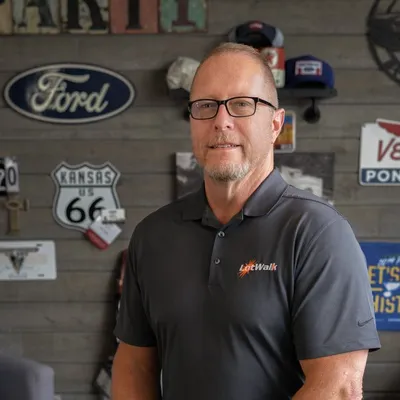
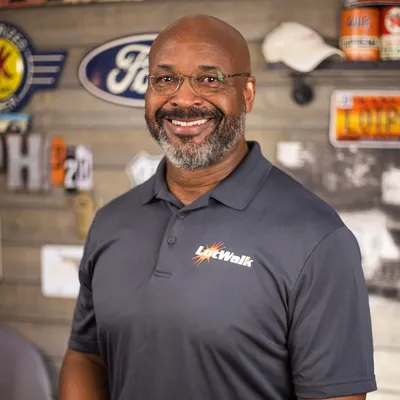
Full video episodes now live on the LotTalk YouTube channel.
Watch on YouTubeWhen a dealership leader says "I can't get my people to do X," Ed French says 90 percent of them have skipped the same step: setting clear expectations. His framework is four questions every leader must answer for their team: what do you want, why do you want it, how are you going to get it done, and what's in it for the employee. Because, as he puts it, no one can meet a secret expectation. French also pushes leaders to study losses instead of celebrating wins (if you sold 150 cars, excellent was probably 210, so go chase the 60 deals you left on the table) and to choose clarity over comfort, because there is no money in being comfortable.
What you'll walk away with
- No one can meet a secret expectation. Ed French says 90 percent of leaders who complain "I can't get my people to do it" skipped setting clear expectations: what you want, why you want it, how to get it done, and what's in it for the employee.
- Chase the deals you lost, not the ones you sold. The financial statement already records your victories. If you sold 150 cars, excellent was probably 210, so the real work is autopsying the 60 self-inflicted losses nobody tracks.
- Choose clarity over comfort. French argues the industry has spent the last decade lowering standards to keep everyone comfortable, and his closing line says it all: there is no money in being comfortable, there is money in winning and being clear.
- A franchise is not a business model. Answering "we're a Nissan store" doesn't cut it. Leaders have to define whether they're finance first, used car volume centric, or something else, then match their people and processes to that model.
- High performers need three things from you. They need to know their work matters, that there's more development coming for them, and that you have their back. Miss any one of those and doubt creeps in, and you can't run a dealership on doubt.
Episode chapters
Jump to the part you need. Timestamps match the audio and video.
- 00:01Cold open: a relevel-set marketShopper index down, inventory up, and why 2026 feels like 2017 to 2019 again.
- 05:18The post-COVID skills gapRenaldo on coaching up a generation that came in during the shooting-fish-in-a-barrel years.
- 08:57Ed French joins: 52 years in the businessService, sales, dealer principal, COO, NADA consultant, and 15 years coaching dealers.
- 11:20"I can't get my people to do X"Why 90 percent of leaders who say this skipped setting clear expectations.
- 13:49No one can meet a secret expectationWhat do you want, why, how, and what's in it for the employee.
- 16:32Watch game film for the lossesSold 150? Excellent was 210. Go chase the 60 deals left on the table.
- 23:45A franchise is not a business modelMatch your human capital to the model you actually run.
- 31:51BHAGs: from 40 cars a month to 303How Ed's mentor trained him on what-ifs, and the Vegas trip that sealed it.
- 39:23It ain't your comp plan, it's that you don't have a planBelieve or leave, and why hope isn't a strategy.
- 48:53The high-performance physicalInventory, sales process, management process, culture, and financials, checked like a doctor's exam.
- 51:04185 mph at IndianapolisWhat a BMW high-performance driving school teaches about investing in clarity.
- 57:05Windshield timeCourse correction without punishment, and the three things every high performer needs.
- 1:07:11Closing: there is no money in being comfortableEd's parting shot after 52 years, and how to reach him at AutoProfit LLC.
The mentor behind the mentor
John Anderson has coached hundreds of dealers. This week, LotTalk brought on the man who coached him. Ed French started in the car business in 1972 and has done nearly every job it offers: service, sales, dealer principal, chief operating officer, president of dealer groups, board member, and NADA consultant. For the last 15 years he has poured that experience back into the industry through AutoProfit LLC. When Chris Keene asked him the question every consultant hears ("how would you coach a leader who says I can't get my people to do X?"), French didn't hesitate.
No one can meet a secret expectation. If you don't tell me what you want, why you want it, how to do it, and what's in it for me, I can't read your mind.
That, French says, is where 90 percent of frustrated leaders fail. They skip setting clear expectations. Everybody wants to win, so a leader's job is to set up the scoreboard, define the rules, and answer four questions for the team: what do you want, why do you want it, how are you going to get it done, and what's in it for the employee.
Clarity over comfort
French's career rule is simple: choose clarity over comfort. Most leaders index the other way because being clear is hard and confrontation is uncomfortable. He traces a lot of today's leadership softness to the everybody-gets-a-trophy mindset, and to a wave of managers who were battlefield promoted during the 2020 to 2024 boom ("we fired Jimmy, okay, you're up") without ever learning the fundamentals. The result is an industry that has steadily lowered its standards to keep people comfortable. His thermostat analogy lands hard: put your hand on the thermostat and it reads 98.6, but the room is still 72 degrees. You didn't warm the room, you warmed the gauge.
Watch game film for the losses, not the touchdowns
French never paid much attention to what his stores sold. The financial statement already records the victories. What's not recorded anywhere in retail automotive is what got lost. His math: if you sold 150 cars, perfect was probably 275 and excellent was about 210, which means roughly 60 deals were left on the table. How many of those were self-inflicted, where the team didn't do its job, forgot a step, or did it sloppily? That's what he chased. Most leaders chase the 150 and congratulate themselves, which you could get away with in the 2020 to 2023 market. Not with margins as thin as they are now.
A franchise is not a business model
When French walks into a struggling store and asks about the business model, the answer is usually "we're a Nissan store." That's a franchise, not a business model. A fringe-market store, a high-volume metro operation, and a rural point all need different models, and the talent has to match the model. He asks owners to take a high-performance physical: are you a high performer in inventory distribution, in sales processes, in management processes, in culture, and financially? Nobody he has met in retail automotive is fully satisfied with where they are. The problem is they don't know where to go, because nobody has given them clarity.
BHAGs, comp plans, and the Hope System
French was trained young on big, hairy, audacious goals. His mentor took a small-town Pontiac-Datsun store selling 40 cars a month and declared they would sell 300. Four years later they sold 303, and Ed shut the store down for three days and took everybody to Vegas. The lesson wasn't the party. It was that keeping score against a big goal forces you to figure out how to get there, with what-if thinking instead of chasing the guy down the street. It also reframes the most common excuse he hears walking into stores: "it's our comp plan." His answer: it ain't your comp plan, it's that you don't have a plan. Hope is not a strategy, and a 107 percent price-to-market on a car that should be at 94 just means you don't believe in your own pricing strategy. Either you believe or you leave.
Windshield time
John Anderson lived the famous "windshield time" rides, where Ed would pull up and say let's go for a drive. It was never punishment. Every ride was built around the three things any high-performing employee needs: to know their work matters, to know there's more development coming for them, and to know the boss has their back. Miss those and doubt creeps in, and you cannot run a dealership on doubt. French even did the rides in public on purpose, so the whole store saw the two of them leave together. The message: those two are tight, and the leader is invested.
The Monday-morning action plan
Here is how to put Ed French's 52 years to work this week:
- Write down your expectations: For each role on your team, answer the four questions on paper: what do you want, why do you want it, how do they get it done, and what's in it for them. If you can't write it, it's a secret expectation.
- Run a loss autopsy: Take last month's sold count, estimate what excellent looked like, and dig into the gap. Count how many lost deals were self-inflicted: slow lead response, skipped process steps, sloppy follow-up.
- Define your business model in one sentence: Not your franchise. Are you finance first, used car volume centric, fixed-ops driven? Then check whether your people and your daily meetings actually match it.
- Schedule windshield time: One ride or one-on-one per key manager this month, built on the three needs: their work matters, here's your development path, and I've got your back.
- Pick a BHAG: Set one goal big enough that you can't get there by doing what you did last month, and start asking what-if questions until the path appears.
Get insights like this every week
Join the Insider Newsletter. Inventory tactics, podcast recaps, and dealer strategies. No fluff.
Transcript is auto-generated from the episode recording and lightly formatted. It may contain transcription errors.
Chris Keene (00:01): Welcome back folks. You have tuned back into lot talk powered by lot pop. I am Chris Keene. What are your co-hosts joined with us today is the all famous Mr. John Anderson. here shortly, Ronaldo, he is stuck in the abyss somewhere. Actually, John, I think he was wrapping up with a one of our dealer partners, but he'll be here shortly. But beyond myself, what's that?
John Anderson (00:24): Ronaldo's in the clouds. Ronaldo's in the clouds.
Chris Keene (00:28): He's in the clouds, but beyond you, John, beyond me, beyond Ronaldo, beyond everybody else, we have the grand pooh paw today. The one of the biggest legends in automotive. And I cannot wait till we bring them on stage. But before we bring them on stage as a reminder to our listeners, to our viewers, we are in a leadership series and what Better way to end 2025 as we start rolling through this fourth quarter. And as we start coming into 2026 and probably one of the craziest markets, John, that we have seen in a really long time, but I don't know about you, John. I think everything is relevel set to like 2017, 18, 19. I mean, I think that's kind of where we're at. Is that how you feel?
John Anderson (01:25): Seems to be, you when you look at the trends, you know, it seems to be resetting itself somewhat. Obviously the trends are starting to, you know, as we watch shopper count trends and trending in the market and, know, now, you know, although we've mentioned on this pod several times, the used car inventory really hasn't dipped any. Now you're seeing new car, there he is. Naldo has joined us. Awesome. Welcome Naldo. So, so new car inventory, you know, had a resurgence and then it's starting to flow now and, it's dipped down some time and somewhat. So yeah, I think we're probably as close to those, pre COVID times, as we've seen in, in, since COVID happened. you know, so that, that all those challenges, are, are, are back.
Chris Keene (01:56): Hai hai hai!
Renaldo Leonard (01:57): Good. Hey, thanks fellas.
Chris Keene (02:17): Mm-hmm.
John Anderson (02:24): you know, and, to your point, think that's one of the reasons why we wanted to do this leadership series is because, you know, in, our opinion, that's where all the answers lie, right. And in, in leadership from top down, and, and, and, and our best performing dealers and you had one on last week, on the pot, you know, our best performing dealers, what
Chris Keene (02:43): Mm-hmm.
John Anderson (02:54): what the listeners and the viewers experienced last week and watching the team from Bozard. That's what you're looking for from a leadership standpoint. Our guest today, one of the things that I want him to talk about is because I know him and I know his attention to detail and that attention to detail has to be there.
Chris Keene (03:05): Mm-hmm.
John Anderson (03:22): in today's automotive environment, any business environment, but because we're centered around automotive, automotive environment, that attention to detail just has to be there. There cannot be any excuses, especially in the market that we're in right now. So yeah.
Chris Keene (03:28): Mm-hmm. You know, think that re-level set, John, you know, we're not, although you and I were talking about it a few days ago because of we're seeing this inversion, you know, the shopper index decline inventory levels rising. mean, everybody can miss me with that bullshit of, I can't find cars. Well, we've seen inventory go up. Okay. So that is complete nonsense. And I know, I know our guest today has a lot of insight into that as well. But Naldo with what we got to experience, it was privileged with last week with Letty Bozard and Ed Roberts from Bozard out of, out of St. Augustine, Florida there. And with what you get to the opportunity to do in part, partnering with some great dealers each and every day, each and every week, each and every month on You know, this, this whole management of people, this whole management of processes, this whole management of, of leadership, you know, with everything inverted and with the field that we have, how much would you say that leadership is got to really raise above? Where it's been in the last five years because of how many leaders have gotten sucked into that shooting fish in the barrel over these last five years. What would you take me on that?
Renaldo Leonard (05:18): I think it forces leaders or leaders should be a little introspective to see how they can fill in the gaps from that, you know, skill set prior to COVID and everyone who's come in after, you know, they're just basically taking orders. They don't really understand the basic block, basic blocking and tackling of how to operate a business as a sales professional. And then on up the line from, you know, a sales professional to a sales manager or a general sales manager. And so the skillsets are the same, but the ability to be able to, to analyze and find out where those gaps are and then coach to and coach up. mean, never has been more important, right?
Chris Keene (05:59): Mm-hmm. Mm-hmm. Yeah. I mean, you're spot on. No, that you're 1 million percent spot on because, you know, our leadership's, to their defense. It's very easy when you're in the midst of the fire and you've got bullets whizzing by your head all day long to just kind of get washed up in the mix.
Renaldo Leonard (06:18): Is that I mean, is that right? That answer your question.
Chris Keene (06:37): and lose some of those skillsets or maybe not exercise them as much as we had to exercise them before because things were moving along pretty smooth. Okay.
John Anderson (06:48): Hey, do me a favor. know he's, I know he's backstage. He's listening to it, but don't say that to our guests. Cause he ain't buying any of that. He ain't buying any of that. So let's go ahead and bring him up. Cause I guarantee you he buying it. He ain't buying any of that stuff.
Chris Keene (06:55): No, he ain't buying that. He'll hit me with the miss me. So before we bring this gentleman up, I got to tell you listeners, viewers, get your pen, get your paper handy. Because this gentleman, let me tell you, this man, 1972. started in this industry. He has gone from service sales. He has owned retail car dealerships. He has saved retail car dealerships. He has consulted as the levels of NADA as a consultant for them. He has been a chief operating officer, a dealer principal, a president of groups, part of a board of directors. for automotive and for the last 15 years, he is taking all of that wealth of knowledge in those leadership skills and has been pouring it into our industry. Folks get your pen, get your paper, Naldo, John, John's the better factor of it. So, you know, we, have him to think, thank for some of the ass whippings that we take Naldo.
John Anderson (08:09): I'm a benefactor of it. I'm a benefactor of it.
Renaldo Leonard (08:20): I'm looking forward to it, man. Because you have no better indication of who a man is than people that have sat at his knee and learned from him and how they conduct business. yeah, judging from my experience with Mr. Anderson, I'm really looking forward to meeting Mr. for sure.
Chris Keene (08:20): that John likes to pour out, okay? So we have this gentleman.
John Anderson (08:35): Yeah. Yeah.
Chris Keene (08:36): Yeah. Yes. Yeah, hey, hey, hey. So let me tell you, Brett just, Brett just put it in the chat. So let's bring them all stage now. Let's bring people's people. Mr. French.
Renaldo Leonard (08:54): Pea Paul's Pea Paul!
John Anderson (08:56): my gosh.
Ed French (08:57): Well, there you go.
Renaldo Leonard (08:59): I love it, I love it.
Ed French (08:59): Hi, everybody. Thanks for that introduction. got to tell you, it sounds like you were talking to my mom. I sounded pretty good there. She's 96 and still waiting for me to get a real job, Chris. So I'm happy that I'm able to join this. This is great. Thanks for having me.
Renaldo Leonard (09:07): Hahaha
Chris Keene (09:18): Well, it's a pleasure. is. It is honestly viewers and listeners. Some of you youngsters may not know who Ed French is, but I'm going to tell you your boss's boss and your boss, they may know who Ed French is and you guys are in for a treat today. Mr. Ed French. Thank you for taking time out of your schedule to join us on this because leadership. What better person to get it from.
Ed French (09:39): My pleasure.
Chris Keene (09:47): the one of the ultimate leaders out there. And we thank you, Ed, for being on.
John Anderson (09:51): Yes, sir.
Ed French (09:51): I appreciate it. It's an honor to actually be able to do something like this. Our industry is in desperate need of having avenues like this to communicate with dealers across the country so that they can actually learn what needs to be done in today's environment and tomorrow's environment, frankly. This isn't one of those things that changes with the economics.
Chris Keene (10:14): Mm-hmm.
Ed French (10:19): This is resilient to anything that we would have, whether it be inventory or interest rates or whatever the people or the engine that runs a cardio ship. obviously having those things in place make all the difference in the world. So thank you.
Chris Keene (10:40): So, Ed, with that being said, I'm going to throw the biggest question out there that we see leaders fight with all the time that we fight with, you know, because of the our positioning within automotive and the way that we consult with our dealers. And it comes with the service and things of that nature. But besides all that, this is something we hear leaders say all the time. And I'd say four years ago. John and I were in Rinaldo, we were at Digital Dealer and we literally just looked at it, a group of leaders when they said this, like they had a thumb coming out of their forehead and they had another head coming out of the rib cage. How would you coach a leader up that says, I can't get my people to do X?
Ed French (11:20): you I'd start with understanding that 90 % of the leaders who say things like that skip the following. And this is what starts it. They skip it. They skip setting clear expectations. Everybody wants to win. And leaders who say they can't get their people to do it essentially are not keeping score. That's why we love sports as a country or as in the world. We love keeping score. We love watching the scoreboard. We love watching who's ahead with two minutes to go. like, shoot, I just played 18 holes of golf yesterday and got my butt kicked by 383 year olds. They were keeping score, you know. So everybody, whether you're two or 102, want to keep score. So Chris, frankly, the leaders of today aren't setting up a scoreboard. They may be setting up a scoreboard with how many cars did we sell, but they're not setting up a scoreboard with all the details that go within it. So. Most of the folks that I work with and most of the folks that I see that say things like that, number one, they're not setting clear expectations. Everybody wants to win, so they need to know your keep and score. And then as important, they need to know the rules. So the principles of that is what do you want? As a leader, what do you want? Why do you want it? How are you going to get it done? And what's in it for the employee? Those are clear expectations. And organize everything that you communicate with around clear expectations. Here's the punchline that I would give to any manager that said something like that. No one can meet a secret expectation.
Chris Keene (13:38): Mm.
Ed French (13:49): Nobody can meet it. I can't get there. If you don't tell me what you want, why you want it, how to do it, and what's in it for me, I can't read your mind. And most leaders are scared, that's the fear, to give their people clarity. They don't give them clarity. They don't say, hey, this is where we're headed. Because most of them are indecisive on where they're headed in the first place. You know, John will tell you, I may not have known where I was going, but nobody that reported directly to me knew that I didn't know where I was going. They knew I was headed somewhere. Now, I may have had to figure it out as I was going, but I wasn't about to let anybody who directly reported to me know that I didn't know where I was going.
John Anderson (14:44): The expectations were clear. Trust me. Very clear. Very clear.
Ed French (14:46): Clear, clear as a bell. And I chose clarity over comfort, frankly. I'd rather have clarity as opposed to comfort. And I think today's frankly, index more towards being comfortable than they do being clear. Because being clear is hard. It's hard. You know, it's the old joke, you know, if you need a friend, get a dog. You know, there's lot of people in retail automotive that come to work to make friends. You know, this is warfare. know, this is somebody somewhere selling a car right now. And if somebody listening to this podcast isn't selling the car, you're getting kicked. And you know,
John Anderson (15:10): Ed, you-
Renaldo Leonard (15:14): Yeah.
John Anderson (15:21): Yeah, yeah, yeah.
Renaldo Leonard (15:35): Mm-hmm.
Ed French (15:38): Somebody inspired me when I was in my very early 20s to read the art of war. You every battle is won before it's fought. And you all are very familiar with that. But if you take some of that mindset and understand that this industry is ruthless, it's relentless, it will punish you.
Chris Keene (15:46): Mm-hmm.
Ed French (16:02): if you aren't going to have a clear game plan and clear expectations. so I'm taking a long time there, Chris, to answer your question, but it starts with clear expectations and let everybody know I'm keeping score. Not only am I going to keep score with the scoreboard, I'm going to know how many passes you through, how many interceptions you through, you know,
Chris Keene (16:14): Take all the time.
Ed French (16:32): John will tell you, know, obviously he's got deep insights into this football. You don't watch game film to see your team score touchdowns. You watch game film to see what the missed assignments were. And I think that clarity of keeping score, and frankly, I didn't really pay much attention to what we were selling. I paid attention to what we were losing because there's a scoreboard to keep. a track of what you sold. It's called the financial statement. You you get one 12 months a year and every, every, at the end of every month, you got a scorecard and it's either an A or an F or something in between it. And that's where all the victories are recorded. What's not recorded anywhere in retail automotive is what got lost. It is not, it's not recorded anywhere.
Chris Keene (17:05): Ha
Renaldo Leonard (17:21): losses.
John Anderson (17:23): Hey, I want to listen. Sorry. I didn't want, but I do. I did want, I did want to jump in there because I listened viewers and listeners. If you don't, if, if you don't write that down, what Ed just said and circle that and asterisks it look.
Ed French (17:27): Yeah, no problem.
John Anderson (17:43): what you don't know, you don't know. So when you're, when you're analyzing what you're losing, now you start to learn what you don't know. There, there is, there is nothing, there is nothing more important than that. What you don't know in life because you haven't experienced it is what you don't know. But if you don't look for it and you don't try to find it, you're never going to know it. So look, I, I'm, I'm to, I Ed mentioned sports. So there's,
Chris Keene (17:51): Mmm.
Ed French (17:52): Sit.
John Anderson (18:12): There's famously a conversation about Bill Belichick when he would walk through the hallways of the training facility and he was always asking questions of anybody that was walking down the hallway. It didn't matter if it was office personnel, who it was about the operation. He was always hitting them with questions and he always knew the answer to the question, but he wanted to see how quickly the person responded and were they responding quickly. And I can tell you having teething under Ed, That was something I would, I would relate him to bill Belichick from that perspective. You better not give ed an answer to a question you don't know because he already knows the answer and you're going to get yourself, you're going to get yourself caught in a bad situation because he was a student of, what we weren't getting, not what we were getting, what we weren't getting. So, I mean, that's just to me. stop right there for a second. could end the call with that right there. I don't want to because the man has a ton of knowledge, but I'm just saying that man's anybody listening circle that. And then I got one, I have one question for you just based on your earlier comments. Do you think a lot of what we're experiencing now as our industry is transitioning to younger generation? And I'm not being hard on the younger generation. I'm just saying that, you know,
Renaldo Leonard (19:10): you
John Anderson (19:34): for the longest time, everybody gets a trophy. Right? When I was growing up, the winner got the trophy. And if you didn't win, you just had to deal with it. Get better, get better, right? If you want to win, get better. Do you think a lot of what we're seeing now from a leadership standpoint and when you mentioned, Hey, everybody coming in wants to be comfortable. Do you think a lot of that resides from that mentality of everybody gets a trophy now or everybody gets a trophy?
Ed French (19:37): Yeah. Right.
Chris Keene (19:58): The participation award. The participation award.
Ed French (20:00): Yeah, it absolutely started there. There's no question, John, that it starts with the fact that everybody wants to feel good all the time. And when I said clarity over comfort, if a team loses, there needs to be a There's not in today's environment, there's not clarity on what happened. In other words, there's not an autopsy on why did we lose? It's, don't worry, we'll do better next time. No, no, we're not going to do better next time if we don't figure out how we got kicked around. And because we are choosing comfort over clarity, Because it's easier. It's easier to say, don't worry about it little Johnny. You just do the best you can. I hear all that, just do the best you can. That is so overhyped and overused because doing the best you can may not be good enough with the standards that we're setting. What we've done is just lowered the standards to make everybody feel good. It's sort of like a thermostat in your house. If you put your hand on the thermostat, it's going to say 98.6, but the room could be 72 degrees. Didn't warm up the room, it just warmed up the thermostat. We really got to reset. the expectations in retail automotive beyond how many did we sell? That's the end result. That's like watching game film and saying, look, there's Johnny scored a touchdown. No, let's look at Johnny, he missed four tackles through two interceptions and got sacked five times. No, don't want to do a touchdown dance. I don't want to find out what I can do to keep Johnny from.
Chris Keene (21:39): Hmm.
Renaldo Leonard (21:50): .
Ed French (22:00): from repeating so he doesn't score just two touchdowns, he scores 22 touchdowns. I was relentless in the pursuit of, if we sold 150 cars, that meant we probably could have done 275 if everything went perfect. So now if everything didn't go perfect, how much am I willing to accept as a percentage of
Chris Keene (22:05): Mm-hmm. Mm-hmm.
Ed French (22:27): chasing perfection and catching excellent. OK, so if 150 was good, excellent would have been about 210. OK, so that meant we left 60 deals on the table. Of the 60, how many did we do that were self-inflicted? We either didn't do our job, we forgot what to do, we did it sloppily, whatever it was. That's what I'm chasing. I'm chasing the 60. Most leaders chase the 150 and go, look at us go. And you can't do that. Not in today's environment where margins are thinner than they've ever been. You could do that in the 2020 to 2023, 2024 environment. And frankly, John, most of these managers were battlefield promoted. You know, we fired Jimmy. Okay, you're up. Okay, what's your experience? Well, I was a 10 car guy and they really liked me. Okay, you're up. You're a manager. And so we've created this within our industry because we don't create clarity.
Chris Keene (23:20): Mm-hmm.
Renaldo Leonard (23:31): You start Monday.
Ed French (23:45): And to be frank about it, I would say that clarity also is attached to a business model. You have to deeply understand what your business model is so that your human capital matches the ability of your business model. John, you've seen me do this in two or three different settings. Business models are not all the same. There may be a particular location that's a fringe to a metropolitan area. It would have a different business model than a high volume metropolitan operation. You'd have a completely rural location. You've got to match your business model to the talent you've got around you and then build the talent up based upon the business model that you're going to operate from. I think that's the biggest mistake I see most dealers today as I travel around and
Chris Keene (24:28): Mm-hmm.
Ed French (24:44): get under the hood of most cardio ships. I go, okay, tell me what your business model is. They go, well, we're a Nissan. No, dude, that just is a franchise. That's not a business model. And so I really would encourage anybody listening to this to think, what is my business model? Am I really finance first? Am I use car centric? Am I use car volume centric? What am I known for? What is it that I want to take away and share with my people? This is where we're headed. know, again, I take it back to sports, but sports and business is very similar. You're seeing different models on the field today. Whether it's a particular football team where they've got, where they're running first or their defense is strong or they're. or they've got a pass happy offense. Those are all in my mind business models for a football team. What's your business model for your cardio ship? And yes, franchise plays a large part in it, but it also can be adjusted based upon the type of personnel that you have. And I think that along with...
Chris Keene (25:37): if million percent.
Ed French (26:03): You really have to give people feedback. Withholding feedback can spread like cancer. And again, it's hard. These are hard things. Most human nature is to avoid confrontation. Very few people wake up and go, I'm going to go up and get in that guy's grill today. That isn't what we do as human beings. Because generally, we're trying to fit in and get along. But you've got to give your employees feedback. And I'm not talking about a formalized one-on-one. Yes, those matter. But you've got to make an impact so that everybody knows you're watching, you're keeping score, and if they fall outside the lines of what you want done within the business model, you've got to let them know. And that, again, any successful company, I don't care who you are, don't care what business it is, you got to give feedback. And uncovering someone that's selling 30 cars a month, if you uncover their blind spots, might help them get to 35. If you've got somebody that's sort of down on themselves, you got to catch them winning. You know, John, you've seen that. we've got somebody that's on the floor with six or seven or eight cars a month. You know, I used to come out and tell you, let's get that guy a deal. Let's buy him a deal. Let's do what it takes to get him back. And then I'd also tell you, you'd say, well, wait a minute, Eddie's selling 25 cars a month. I said, no, he can do 40. Let's figure out how to get that extra juice out of the squeeze. And again,
John Anderson (27:35): Yep. Yep.
Ed French (27:49): That situational awareness from a manager's standpoint, situational awareness is generally missing in middle managers. They're not situationally aware of what's happening within their dealership. And that's because they're paying attention to the touchdowns, not the little things. And the little things, like I said before, big stuff takes care of itself. Here's what I know for sure in every car dealership today. You buy a car, you price it, and eventually it's going to get sold. All the stuff in between is the little stuff. It's, you price it correctly? Is it the right car to match your market? Are you managing the leads per vehicle? Are you managing the movement from interest in the vehicle to intention?
Chris Keene (28:31): Mm-hmm.
Ed French (28:42): Are you managing what happens when the customer hits send on a lead? What's the response? Are you managing what happens when they do enter the store? Are you managing your process on how you're interacting with the consumer and the manager within the ecosystem of what you set forth in your processes? Does it fit? So I think we've missed all of the little stuff because it's easy to stay focused on the big stuff. The big stuff takes care of itself.
Chris Keene (29:23): Mm. Naldo. Naldo, I know you sit there chopping at the bit because seriously right now, this is what I feel like. This is what I feel like. I feel like I'm sitting around at Christmas time and hearing of all the great stories of the past that is developing me into become a young man and then eventually a man and then a dad. That's what I feel like right now. I mean, all this knowledge, man. mean, I've got
Ed French (29:23): It just does.
Renaldo Leonard (29:25): you you
Chris Keene (29:53): A trillion things written down and four of them already highlighted in red. Naldo throw something at the grand pooh paw here because I know you got something.
Ed French (30:05): What is this? Does this stomp the chump?
Renaldo Leonard (30:05): Ash. No, it's not. You have already set yourself up as unstoppable. So
Chris Keene (30:08): No!
Renaldo Leonard (30:15): we just want to dig into it a little bit further. Yeah, because the nuggets that you've thrown out here in just the brief amount of time that we've been on, the things that kind of resonated for me is having clear expectations.
Ed French (30:17): Okay, alright.
Chris Keene (30:19): We into it. We wanna plug into it.
Renaldo Leonard (30:33): you know, being vulnerable enough to say, I did not always know where we were going, but the people following me had no idea. They just knew that they needed to follow me and trust me and execute on the expectations that I set for them. Another one that jumped out at me is, you know, choosing clarity over comfort. every world-class leader that I've ever had an opportunity to talk to has always mentioned that you have to be uncomfortable.
Ed French (30:42): Good Noir. So.
Renaldo Leonard (31:03): where you have to be comfortable being uncomfortable.
Chris Keene (31:06): in the open.
Ed French (31:07): Yeah, that's, that's, you're right, Renalda. Yeah.
Renaldo Leonard (31:09): The question that I have for you is what is it or what was it as you were coming up in the business that drove home to you how important it is to analyze the losses so you can mitigate loss moving forward, but also that innate sense that you wanted to push everybody that was around you so that you could continually level up. If you had 150 units, Why didn't we have 180? And to be able to dive into that and figure out exactly where the opportunity, the true opportunities to grow were hidden.
Ed French (31:51): So let's start with the first one, which is the losses or the looking at it upside down, basically. I was mentored that way early in my career by a particular gentleman that gave me the opportunity to help him. fix a store that was broken and allowed me to look at the operation through his eyes. And his eyes were always focused on what if. And we sort of took that what if. And he was never comfortable. He was never comfortable with what we ended up with. And I think where it started was he would set b-hacks, big, hairy, audacious goals. And I would sit there and go, that is impossible. It's just fit.
Chris Keene (33:01): Mmm. Mmm.
Renaldo Leonard (33:03): Mm-hmm.
Ed French (33:14): So a small town with, and I'm dating myself, Ronaldo, but a small town with a Pontiac, and it even Nissan then, Datsun dealership. It's selling 40 cars a month in a town of 50,000 people. He says, we're going to sell 300 cars a month here. And I'm looking at this guy like he's out of his mind.
Chris Keene (33:28): You
Renaldo Leonard (33:34): Mm-hmm.
Ed French (33:42): And at the time, I was his service director. He said, we're going to sell 300 cars a month here, and I'm going to take you under my wing and I'm going to teach you how to operate a car dealership and look at it completely different than anyone else has. And he literally did that. But here's the interesting thing, Reynaldo, he never worked.
Renaldo Leonard (34:01): Mm.
Ed French (34:09): That would go weeks I'd never seen. He'd call me and he goes, how's it going? I go, well, you know, this happened, this happened, this happened, this happened. He goes, okay, what details are you looking at? All he did was talk to me about the details. He goes, that's nice, you sold 23 cars, that's nice. How many could you have sold? And so it became, and I'm 24 years old. It just became part of how I was trained to think about what if, and that what if was attached to BHAG. Believe it or not, four years later, we sold 303 cars. Not only was I keeping score, but I had to figure out how in the hell to get there.
Chris Keene (34:42): Mmm.
Renaldo Leonard (34:44): Mm-hmm. All right. Cause you knew that was the goal. You were keeping score. You had to get there.
Ed French (35:06): I'll never forget as long as I live, this is one of those untold things. I said, if we sell 300 cars, I want to shut the dealership down for three days and take everybody to Vegas.
Renaldo Leonard (35:18): we're going to celebrate the win.
Ed French (35:20): This is back in the 80s when you could do that, right? Guess what? Five days later, we're on a plane to Vegas. what stays in, what do they say, what happens in Vegas stays there? I hope most of it's still there, because there was some things that happened in that place that I didn't want to tell you about. It's not suitable for this podcast. But those are the kinds of things that I think.
Renaldo Leonard (35:23): Right. Yeah.
Chris Keene (35:26): We shut the store down.
Renaldo Leonard (35:26): It happened. stays in Vegas. Yeah, yeah, yeah, yeah,
Ed French (35:48): most managers, they've got to set a much larger goal. And they have to begin with the what if. What if this would happen? All I did for that three or four year period was do what ifs.
Renaldo Leonard (35:54): Mm-hmm.
Ed French (36:05): What if we sold some more cars? What if we added some more people? What if we added this marketing strategy? What if we changed our business model here? What if we did things differently than what the normal car dealers did? See, the problem is in our industry is we chase the guy down the street instead of chasing a B-Hag.
John Anderson (36:28): Thank you. Thank you.
Renaldo Leonard (36:30): Not chasing who we want to be as an organization or as a leader or yeah. What is Johnny doing? And then falling in line.
Ed French (36:33): Yeah. Yeah. You can't chase the guy down the street because, mean, to you all here on this podcast, you all are smart enough to know that guy probably isn't real class. I don't want to chase him. I want to chase the b-hack. I want to chase Michael. So that hopefully then answers most of the question. know that, but yeah, directly that's what I would encourage anybody that is challenged today in leadership. We're scared. I think good leaders need to inspire hope.
Chris Keene (37:07): It's all of it.
Renaldo Leonard (37:09): Yeah. Mm-hmm. Yeah. Yeah.
Ed French (37:32): And it has to come with, we're going to get this done, not, hey, what do you guys think? John will tell you, when I worked with John, it wasn't a democracy. It wasn't. We were, it wasn't a democratic society. We didn't sit down and sit in an office for three hours and discuss what everybody's opinion was. and I say this and I don't mean this disrespectfully, I didn't care because they weren't the ones that had the b-hag. I did. And what they got from it was... Three things. One, they were able to feel, feel, and I mean really feel what winning feels like. Number two, they got an education that no one could take away from them. And number three, they were able to create income to take care of their families. And you know, most managers are worried about their comp plan. They should be worried about what their education is because I can change your comp plan and take the money from you, but I can never take the education from you. Never take it. It's yours. I gave it to you. But, you know, whenever I walk into a store, you know, half the people go, I'll tell you what the problem is here. It's our comp plan. And I immediately say, ain't your comp plan? It's because you don't have a plan.
Chris Keene (38:57): Yeah.
John Anderson (39:02): Amen. Amen.
Ed French (39:23): It ain't the comp plan. It's that you don't have a plan. hope is a group. Go ahead.
Renaldo Leonard (39:25): All
Chris Keene (39:28): Hey, that, Ed, you, just, you just ruffled it. You just ruffled a shit ton of feathers because some of the people that are listening to this podcast right now, they are 100 % directly reflected in their compensation plan based upon the variable gross of the dealership. Unlike the way that you're looking at it with that BHAG and you putting yourself back into that mindset of, I, I'm responsible for the financial statement, which
Ed French (39:56): Yeah.
Chris Keene (39:57): the gross profit is a small portion of that financial statement.
Ed French (40:00): Yeah. You know, it's like this, you either got to believe or leave. And if you don't believe, you gotta leap. And just think about the strategies in used cars. Just take the parallel there. man, we don't have any cars, we gotta go buy some. So everybody's got this private party acquisition strategy and some dealers make it work, some don't make it work. What's the difference? Some dealers believe in it, some dealers don't. Pricing strategies. You all are world. class in how you work with dealers with pricing strategies. You can't have 107 % price to market in a car that should be at 94. That means you don't believe.
Renaldo Leonard (40:46): you
Chris Keene (40:51): Well, they got a system, Ed.
Renaldo Leonard (40:52): Or you believe in the wrong things?
Chris Keene (40:56): Yeah, they got a system and it's called the Hope System.
Ed French (40:59): Well, you know, and I said it earlier, Chris, you know, you got to give people hope, but hope isn't a strategy. You know, and most that goes that ties back to the business model. Most managers don't deeply understand the business model they're trying to operate. They're operating it without a complete crystal clear understanding of what the business model will get.
Renaldo Leonard (41:06): Yeah, exactly.
Ed French (41:26): the owner operator or whatever. And frankly, I've even seen some owner operators that don't have a good understanding of their own business model. And so those take some modifications. That's how I view it.
Renaldo Leonard (41:41): But that's clarity, right?
Ed French (41:42): That's clarity. It's got to make it clear. Clarity not comfort.
Chris Keene (41:47): It is 100 % if not a secret expectation. mean, you talked about that. Nobody can ever meet a secret expectation.
Ed French (41:55): No, nobody, mean, if you don't tell me what you want, why you want it, how to do it, and what's in it for me, how in the hell can I do what you need? And I would give you another harsh truth. You pay the same price whether you do that or you don't.
Chris Keene (42:02): You can't. I love it.
Renaldo Leonard (42:13): John Anderson, I have never, ever been more envious of you than I have been over this next...
Ed French (42:13): You Well, if you asked John about 12 years ago, you wouldn't see any envy there,
Renaldo Leonard (42:26): Yeah. Yeah.
Chris Keene (42:27): So, Ed, with that being said though, because this is
Ed French (42:31): John, let me just say this. John was the honor student of anybody I had. Again, John would take what I would give him, adjust it to some degree, because I sometimes, it's the old joke, how do you tell somebody to go to hell and make them look forward to the trip?
Chris Keene (42:38): That's no surprise.
John Anderson (42:40): man, Ed, I appreciate that, brother. Thank you.
Renaldo Leonard (42:40): Mm-hmm.
Ed French (43:01): You know, he was able to do that. you know, again, what I hopefully I gave John was some guidance and education that he can now use in his career. And I'm so proud of him. He's done such great things. You know, that's all I'm going to leave as my legacy. You know, I'm 71. You know, nobody's going to look in my casket and go, wonder how much money he's got. They're only going to say, how many people did he help? How many people were touched? And how many times was he able to give more than he received when it came to helping people succeed in their lives? That's all that they're going to Because after that, they're just going to throw dirt on me. It's going to be over.
John Anderson (43:51): And I might say, I will add that the list is mighty long, And I know you know this because you have, you you've created disciples, brother, and I know they reach out to you. you know, I look.
Chris Keene (43:58): Yeah. Hell, I wore his phone out, John.
John Anderson (44:10): I look here, here's the thing. here's what I would say, to anybody listening and watching, the attention to detail, is absolutely necessary, in any business environment. and, and the attention to detail that Ed coached and taught and how to look for those things. it opened up a whole. It opened up a whole new way for me. You know, listen, when I started, as you affectionately say, Chris, when I started selling model T's, you know, the, my first experience at the Ford dealer I started at, I'll never forget the sales manager. approached the sales desk. The sales manager handed me a
Renaldo Leonard (44:51): you
Ed French (44:51): You
John Anderson (45:04): a pad of worksheets and a pen on top and said, here's your worksheets and there's your desk, go to work. That was my training. Right. And so I had to carve that niche myself. and then, another instrumental person in my life, Mike nor Michael Norris, but Andy Moore Chevrolet gave me an opportunity to, to assist him on the use car department. And I learned a lot from Mike. but when I When I was, when I interviewed with Ed and Scott and then started at that store, a whole new world was opened up to me. and exactly how he explained how he was taught and he was, so I, I, I say all that. I don't want to regress, but I do want to say anybody watching or listening to this, look, what Ed's talking about, will make you successful. We'll, we'll help you become successful. is it easy? Hell no, it's not easy. And I'll tell a story on myself. There was a time where I walked into Ed's office, shut the door and I imploded and, Ed sitting there looking at me going, what are you doing? go, I was a sniffling wreck, man. The pressure got to me. and I'm, I'm, breaking down and nobody saw it out on the floor. And that's exactly what, how he coached me. He's like, dude, get your shit together. You got to get back out there. You can't let your team see that much. Like he said, I may not know where I was going, but my team didn't know that. And that's what his coaching to me is get your shit, pull your shit together and get out there and do what you know how to do. Right. And, and those are some of the best lessons. Right. he didn't, he didn't coddle. He didn't coddle. I look, you ask anybody that worked for our group when that door opened and they heard that. those wheels on that briefcase rolling across that floor. everybody, shit got tight in the store because they heard Ed coming. Right. And so, he just had an expectation and the expectation was geared around all the small stuff that it takes to be successful. Ed, want.
Chris Keene (47:15): But he created that expectation, John. He created it in everybody. He was clear with the expectation. That's where the differentiator is.
John Anderson (47:23): 100 % 100 % And you know what? At the end of the day, we were successful, right? And ultimately, that's the gauge, right? You're always, you never arrive, you never arrive, but the gauge is, so, Ed, look, if you were talking, and I know you do this, and I want you, before we end this, I want you to... I want you to talk about your company. But when you walk into a new store that you've never been in before,
Ed French (47:58): Mm-hmm.
John Anderson (48:08): And relating to what you've already shared with us. And you, and you have a, as you mentioned, you know, we're a Nissan store. Well, no, that's not who you, you know, that's yeah, you got your franchise, right? What, do you, how do you take everything that you just talked about, which is a lot, right? And all that small stuff, how do you relate that? How do you relate that to a GM or an owner and say, here's the, here's the roadmap.
Ed French (48:11): Mm-hmm. Right. Right.
Chris Keene (48:21): Mm-hmm.
John Anderson (48:37): Here's the roadmap. How do you start that with them on a roadmap of how to change that dynamic in their store? Where it's just, it's not being managed correctly. It's loose. We're just operating by the seat of our pants and go with whatever way the wind blows.
Ed French (48:53): Sure. First question I ask him is, okay, you made an investment in me. Let's make an investment in high performance. Invest in performance. Okay, so now let's break down your performance. Are you a high performer in inventory distribution? Are you a high performer in sales processes? Are you a high performer in management processes? Are you a high performer in culture? And are you a high performer financially? Let's check all the boxes. Let's go in and act like it's a physical, John. We're going into the doctor. I'm going to do everything up to and including a proctology exam. I'm going to find out, are you a high performer or aren't you? And you may tell me you're a high performer, no one that I've met in retail automotive is totally satisfied with where they are. The problem is they don't know where to go.
Renaldo Leonard (49:43): and
Ed French (50:00): because there isn't that clarity. I break it down into, are you a high performer? Because no one, think about our industry. No one goes, hey, you know good news. I'm just barely above average. I feel good. Everybody wants to be number one. So let's invest in high performance and break it down.
Renaldo Leonard (50:18): All right.
John Anderson (50:19): No. Right.
Chris Keene (50:24): I had a hard time and I, honestly, I'm sorry to interrupt you, but I really had a hard time processing that for a minute. I'm like, may not say it, but their actions intersected that. And that's what just drives me nuts.
Ed French (50:37): Right. Well, but here's the question I was asked back to ask back to them, Chris, is this, are you happy with that performance or do you want to be a high performer? Because a high performer would have this much activity. OK, so you want to be average. OK, I got it. No problem. We'll just move on to the next guy who wants to be high performer.
Chris Keene (50:52): Mm-hmm.
Renaldo Leonard (50:53): Right. Right. They they're adjusting their expectations to fit what they're willing to tolerate and try to reclassify. Yeah.
Ed French (51:04): Yeah. Yeah, that's what I said earlier, Ronaldo. Everybody just moved down to make everybody comfortable. know, high performance. You know, I was just at the Indianapolis Speedway with my son and my stepson, and we went through the BMW High Performance Driving Academy. It was one day. Started at eight o'clock in the morning and ended at four o'clock in the afternoon. And it was one of those things on my bucket list. John can appreciate this because he's from there. But They started with classroom instructions. said, at the end of the day, you will be going 185 mile an hour on the Indianapolis Speedway. You've never been that fast. Here are the expectations that you're going to have to have to be able to get to 185. Went through an hour and half of, here's how you sit in the car. Here's the adjustment to the steering wheel can be no further away from than this. Here's if you think, Acceleration is your key. It's not, it's braking. And they took us out for, we were in a car by ourselves with a lead instructor and we followed the instructor. For three hours, we never got over a hundred mile an hour. And I'm thinking, well, this is easy. After lunch, 140. I'm going, whoa, this is not as easy as it looks.
Chris Keene (52:34): Hahaha.
Renaldo Leonard (52:36): You're making progress.
Ed French (52:39): I'm watching my stepson about pitching $90,000 M4 into the fence at the Indianapolis Speedway. I'm thinking, OK, well, there's 80 grand out of my pocket. And at 3 o'clock in the afternoon, I clipped 185 going down the straightaway, John, in the Indianapolis 500 Speedway, going backwards because we're on the road course. And I had the breaking points right because I was because I was given clarity. OK, hit the break point here. you're not standing on brakes hard enough. Stand on them, stand on them, stand on them, stand on them. And thank God, because I would have I would have gone sideways into the end of that hairpin turn. But and I'm telling you that story because I invested in high performance, but it came with clear expectations. Nobody left the course at noon going, hey, good.
John Anderson (53:29): Yeah.
Ed French (53:32): because I got up to 100. Now, some people went 183, some people went 185, some people went 160. But I wasn't about to leave there without going 185. I said, has anybody beat 185? He goes, we've never had anybody get past 185. I said, good. I can leave now.
Renaldo Leonard (53:35): You
Chris Keene (53:41): Yeah. Hahaha!
Renaldo Leonard (53:55): Otherwise you're gonna have to get there and match that number.
Ed French (53:57): I'd still be here. I'd have signed up for another class and tried to get to 186. But that's sort of relatable to our business because we want to invest. We all say we want to be high performers, but we don't want to make the investment into high performance. We don't want comfort instead of clarity.
Renaldo Leonard (54:01): Yep. yeah. yeah.
Ed French (54:20): I mean, if I would have said, I don't know, this seat seems a little close. Hey, at 185, you better have that seat tight.
John Anderson (54:27): Yep. Yep.
Renaldo Leonard (54:31): It kind of, and that always, that reminds me every time that I hear, you just kind of spark a memory for me, but Bobby Knight used to always say, everybody says that they want to win or everybody says that they want to be high performing, but very few are willing to do the things that it takes to prepare to win. And it's those details and making sure that you're committed. You know, there's a difference between being dedicated and committed and,
Ed French (54:39): Yeah.
Chris Keene (54:51): To be that.
Ed French (54:56): Yeah.
Renaldo Leonard (55:00): Yeah.
Ed French (55:01): Every football team today in college, and John, we have a success story at IU right now. Two years ago, that team was three and nine, and he was making 600 grand a year at James Madison. Fast forward two years later, he's making $11 million a year, and he's six and 0. you want to bet there's clarity at that team?
John Anderson (55:08): Yup.
Chris Keene (55:18): $11 million.
Renaldo Leonard (55:21): Just got a new extension too, got a new contract.
John Anderson (55:27): Hey, I'm going to tell you right now. You know, there is, you know, there is.
Ed French (55:28): Elbow, you want to bet that he does not know where he's going exactly, but there ain't anybody in that building that doesn't think he doesn't know.
Chris Keene (55:32): There's. There's a hundred percent clarity inside that. you you, you, you keep talking about it. We've all heard the phrase, you know, the devil's in the details. And that's like one of the biggest things that keep taking from this, but Ed, I have a question and part of it's a little bit of fun, but the other part of it is pretty serious. So we've talked about today and you know, I want to get toward the end of this because Brett will start spreading out signal flares saying,
Ed French (55:40): Yeah. Yeah. Yeah. Yeah.
Chris Keene (56:08): You guys are out of our way. He don't understand.
Renaldo Leonard (56:08): We gotta go, we gotta go!
Ed French (56:10): Well, and at my age, I need a nap. So, yeah.
Chris Keene (56:15): shit. Yeah. But he doesn't understand is the four of us on this screen right now, we can do this for eight hours straight and not take a lunch break. Okay. you know, but this is what, when I look through back at some of the stuff I've read lined in here, you know, identify your business model, situational awareness, you're chasing that BAG.
Ed French (56:25): Yeah. Yeah, I understand. Yeah.
Chris Keene (56:42): Those are the, those are those, those details we're talking about.
Ed French (56:47): Right. Yep.
Chris Keene (56:49): What I want to have a little fun with, but also want you to expand upon a little is those times that those expectations weren't being met. And you'd pull up to the dealership and you'd call, said, Johnny, let's go for a ride.
Ed French (57:05): Yeah, it's called windshield time. Yeah, windshield time. Yeah, yeah.
John Anderson (57:06): No, it was windshield time, brother, windshield time.
Chris Keene (57:08): Johnny, let's have some windshield time. The first couple of times Anderson had no clue, but then that was your moment.
Ed French (57:18): Well, he was pretty smart. He picked up on it pretty fast. So, yeah.
Chris Keene (57:21): Well, I'll say the first one or two times, you know, he's OK. It's my time. Three is like, shit, man. Here comes the ass whippin. But talk about that in the importance of that quote unquote windshield time. Talk about that. What does that look like? You know, what were some of the things you did in that course correction in how you did those things? Talk about that.
Ed French (57:44): Well, I focused on three things, essentially. I didn't want anybody to feel bad that was in the car with me that they were in the car. In other words, I wasn't treating it as punishment. know, high performing employees need three things. that just it's an absolute necessity. Any high performing, any rock star employee needs these three things. They need to know that their work matters. They need to know that there's more development for them. In other words, they need to know, here's what I can do to get better. And they also need to know that I had their back. any high performer that doesn't get those doubt becomes their enemy and it starts to creep and then and then the next thing you know they go I better get I better call somebody down the street because I think I'm in trouble and
Chris Keene (58:54): So they get the spin box ready.
Renaldo Leonard (58:55): They get their exit strategy in play.
Ed French (58:58): And so every windshield time was focused around. I wanted to make sure they knew that they were important and their work mattered, irregardless of what the final tally was, and that here's some things I saw, that here's how we get there. And then... that I had your back. I would, the high performing people that have worked with me in the past, I'd take them into battle anywhere. than that strongly convicted about it. Anyway,
John Anderson (59:38): And they would run through a wall for Ed. Trust me.
Ed French (59:42): Yeah. leaders who don't do that, see what you can't run a dealership on is doubt, Chris. There's too much doubt inside car dealerships today. They're culturally, they create this doubt. Well, you you don't do this, you might get fired. No, I'll make it simple. Don't do it. You will get fired. You know, we've got to, you know, if you think about the folks that you all work with that struggle with, you know, I can't get my managers to do it. Well, that's because they're doubting their ability to see the other, they're doubting the ability to see the other side of it. They're scared. What happens if Johnny leaves? Okay, we'll get two Jimmies. Maybe it'll take three people to replace him, but we're not going to compromise our standards to try to get what we need.
Renaldo Leonard (1:00:41): Yeah, that, yeah, it's all driven by fear and, you know, the other things that are out there, but you definitely have to be resolute. You either believe or you leave. Here's the expectation. And if you, you know, even after.
Ed French (1:00:55): Yeah. And I did the windshield time on purpose. And the reason I did it on purpose because I wanted everybody in the store to see that the two of us left together.
Renaldo Leonard (1:01:07): Mm.
Ed French (1:01:07): Because see, that's a message. Hey, but those two guys are tight. They left together in the car. They had no idea what we were doing. And we might've gone down to Sonic and got a milkshake and we might've driven on a back road for 20 minutes. I didn't even, and I got to tell you this Chris, I had no idea where we were going. I didn't have a pre-plan wrapped. You know what I mean? We just started driving.
Renaldo Leonard (1:01:10): Mm-hmm.
Chris Keene (1:01:30): Yeah.
Ed French (1:01:33): But I knew that I knew I had to focus on those three things because the most important people in a dealership are the high performers that help you execute that big hairy audacious goal. And the high performers are the ones that are absolutely bringing clarity to the rest of the team.
Chris Keene (1:01:47): Uh-huh. fail.
Renaldo Leonard (1:01:59): That is that solid gold solid
Ed French (1:02:03): And I might have to just show up at John's door and say, listen, Johnny, we're going for a ride. He'd love that, and I would too.
Chris Keene (1:02:11): Well, first and foremost is you would have to figure out which stump to turn left at, which double wide, which double wide to take a right at. Okay. And when you see the dog cross the road pause and then he's going to course correct and take you up to John's place on top of the mountain there. Okay.
Ed French (1:02:16): Yeah, I know, but yeah. If he sends me the GPS coordinates, I'll get there.
John Anderson (1:02:32): If Ed was coming, I'd find him. Trust me.
Chris Keene (1:02:32): Hey, hey
Renaldo Leonard (1:02:35): You
Chris Keene (1:02:36): Ed, GPS coordinates can't even figure out where the hell he's at. Okay, let's just.
Ed French (1:02:39): That's all
Renaldo Leonard (1:02:41): I was gonna say,
Ed French (1:02:43): I'm
Renaldo Leonard (1:02:43): it's gonna tickle.
Ed French (1:02:43): thinking about moving. I'm thinking about moving where John is because there's too many people that can find me. I think he's got it figured out. Yeah. Yeah, OK, I love it.
Chris Keene (1:02:49): He's got it figured out because he is in a black site. I mean, the U S government can't even find his ass. Okay.
John Anderson (1:02:56): Elon knows where I'm
Ed French (1:02:56): Yeah.
John Anderson (1:02:57): at. Elon knows where I'm at.
Ed French (1:02:57): Yeah, okay. All right, there you go. Who's more important than that? Yeah.
Renaldo Leonard (1:02:58): Yeah.
Chris Keene (1:03:00): So Ed,
Renaldo Leonard (1:03:03): He does, but Starlink doesn't.
Ed French (1:03:04): Yeah. Yeah.
John Anderson (1:03:04): Yeah.
Chris Keene (1:03:05): I don't think I got a clue where the hell he's at. So I've got, I've got to recap a couple of things here. Listeners and viewers, number one, okay. No matter what form of leadership you're in, and if you're an individual contributor inside your dealership, understand you are a leader because there is nothing On God's green earth that says you can't lead from the bottom up the back forward. You are a leader period into paragraph. And what I would submit to you, anybody on this call. Ed is not hard to find unless he moves to where John's at. Ed is not hard to find. If you get on the, if you get on the LinkedIn and look for auto profit LLC.
Ed French (1:03:48): Yeah.
Chris Keene (1:03:58): Or you look for Ed French, you will find him. It is a resource for your dealership. And if I am an individual contributor, I'm going to my manager, my GSM, my GM, my owner is saying, I just listened to a podcast today and they had this old guy on their name. Ed French has been around since he was before Anderson that was selling model teas. He was selling covered wagons. Okay. But this cat knows what's going on back then and what's going on right now. Auto profit LLC and French. You need to go look them up because I promise you it's worth the time having them in your dealership. Okay. I haven't had the rare privilege that John has had or many other disciples that have worked for him, but I've worked for a guy very similar to him, but I have had the privilege of being around it for the last. 14 years that I've been on this side of the car business and our paths have intersected a bunch and I was just drawn to them for these reasons you've all heard today. And some of those reasons, nobody could meet a secret expectation, choosing clarity over comfort, identify your business model, situational awareness, chase that big hairy audacious goal.
Ed French (1:05:10): Thank you.
Chris Keene (1:05:28): not the guy down the street. Good leaders need to inspire. They need to inspire that hope. They need to make sure their people feel what winning feels like. Educate their people. And then provide that opportunity for the staff to earn that income. Make an investment in yourselves to be a high performer. Course correction, it's not punishment. Know that, make sure that your people understand that their work matters. Make sure that they understand that you are a resource and you've got their back, but you're also going to be the one that helps provide them more development opportunities. And lastly, and most important listeners and viewers, as a leader, Ask yourself, what legacy am I leaving behind?
John Anderson (1:06:34): Yeah.
Chris Keene (1:06:36): That is the most important out of every last bit of it. What legacy am I leaving behind as a leader? If you can't answer that question, you better go invest in yourself to be a high performer as an individual and a high performing leader. Mr. Ed Roberts, any closing remarks from you, sir?
John Anderson (1:07:01): Ed French, you thought he thought about last week's Ed Rob.
Renaldo Leonard (1:07:02): Mr. French. Yeah.
Ed French (1:07:03): Yeah, I thought about last week. That's okay.
Chris Keene (1:07:06): Yeah. Brett edit that out. Mr. Ed Fridge. Mr. Ed Fridge. Any closing remarks from you, sir?
John Anderson (1:07:10): Not that.
Ed French (1:07:11): Yeah. Yeah. 52 years in the car business. The same problems we face with leadership today, similar to the ones we faced 50 some years ago, 30 some years ago, 30 some years ago. What's happened is, is that we have accepted it. Eight, nine, ten years ago, we accepted it less. 15 years ago, we accepted it less than we did 10 years ago. 25 years ago, we accepted it virtually at zero level. And all of a sudden, we've made this acceptable that everybody needs to be comfortable. And what I would leave everybody with is there is no money. There is no winning.
Chris Keene (1:07:58): Mm-hmm.
Ed French (1:08:08): being comfortable. There is money in winning and being clear.
Chris Keene (1:08:16): Wow, wow, that's John, this is one of your mentors, one of your peoples that helped bring you along. Any final remarks about what we have?
John Anderson (1:08:29): Yeah, I mean, listen, yeah, you guys have heard me say it, Multiple times we've been talking. what he's done for me. and I, and I, I love you brother. I love you. And I appreciate you so much. you look, you, know, Chris, Ronaldo and myself, we had our, we had our last cute quarterly meeting, which we got another one coming up. had a, a military, a military guy set in, that, awesome guy. had him on the podcast, that he's worked over in areas, and oversaw military leadership and planning and all that. And one of things he said to us when he was observing our quarterly meetings is, what I appreciate about you guys is you get in each other's face, but you're okay with that, right? Because you guys push back hard on each other. And I would say to you,
Ed French (1:09:27): Yeah.
John Anderson (1:09:35): That's one of the things I learned from you is to be bold and, and, and push. I, I would end this with anybody watching this or listening to this. If you want to take your stuff to the next level, reach out to this man, but do me a favor. If you're not serious about it, don't reach out to him. Cause he's going to come in with an expectation that you're taking it seriously. And if you take it seriously, he'll take you to the next level. I promise you that I promised you that. If it here, let me put it this way. If you reach out to him, he doesn't take you to the next level. Reach out to me. I'll give you free resources through our company. I just, that's the confidence I have in Ed because I've, I've, I've, I've been under, I've been under him. I've learned it. So, and I appreciate your time, brother very much.
Chris Keene (1:10:04): Mm-hmm.
Ed French (1:10:12): Yeah.
Chris Keene (1:10:16): Lose their doubt. Mm-hmm.
Ed French (1:10:21): John, thank you. Chris, Reynaldo, good to be with you.
Chris Keene (1:10:23): Yes.
Renaldo Leonard (1:10:25): It's been a pleasure. Yes, sir.
Chris Keene (1:10:25): Thank you. Thank you. Thank you. Thank you. Listeners, viewers, you've experienced it today. Season two, episode 15 with Mr. Ed French, Auto Profit LLC throwing bombs down about leadership. I hope that you share this. I hope that you like this. I hope that you go back to YouTube. You go back to Spotify. You go back to Apple. And you re listened to this multiple times because if you don't pick up one single thing from this, we failed you. And that's the last thing we ever want to do is failed you. So on behalf of our entire lot, pop family, on behalf of Mr. John Anderson, Mr. Ronaldo Leonard, and our special guests, Mr. Ed Fritz from auto profit LLC, we thank you for tuning in and we ask that you make it back next week. Same bat time, same bat channel. Much success everybody. Thank you very much.
Ed French (1:11:26): Thanks. Bye bye.
John Anderson (1:11:26): out.
Renaldo Leonard (1:11:27): Thank you guys.