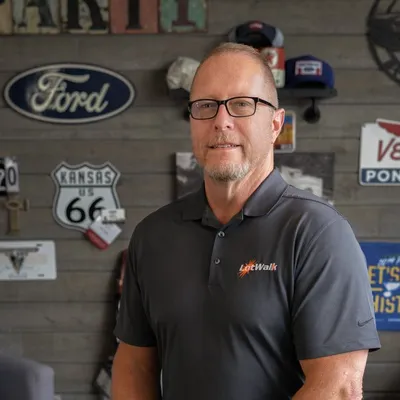
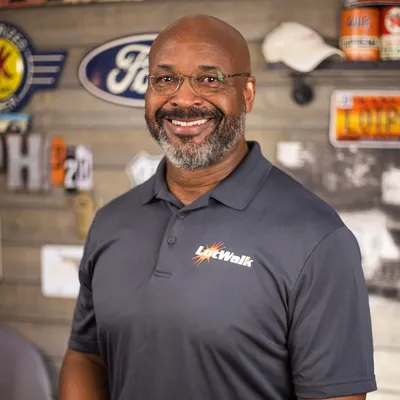
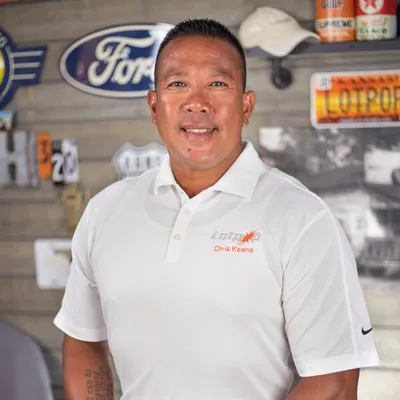
Full video episodes now live on the LotTalk YouTube channel.
Watch on YouTubeMost dealers screaming about margin compression and slow sales have a follow-up problem they refuse to own. When John Anderson audited a dealer partner's CRM, lead after lead got the same first response, "when can you be here with your trade," with no rapport, no questions about the vehicle, no reason to choose that store over the other 11 dealers the average shopper sends leads to. His point: if a unit is getting leads, customers are telling you the price is okay, so aging inventory traces back to how those leads get worked, not to the market. The wake-up call for managers is to inspect what you expect, secret shop your own store once or twice a week, and hold the standard, because Amazon Autos already has roughly 3,000 pre-owned vehicles listed within 75 miles of Dallas-Fort Worth with full pricing, payment, and instant trade-in offers, and it is exactly the transparent, time-respecting experience your customers are being trained to expect.
What you'll walk away with
- If a vehicle is getting leads, the customer is telling you the price is okay. So when leaded inventory still ages, the failure is in how the leads get worked. John's CRM audit found first responses of "when can you be here with your trade" before the store even introduced itself.
- Grow a set of balls as a manager. John's line of the episode. Those sales chairs are worth $100,000-plus a seat, and if someone won't do what the job requires, find somebody who wants to earn it. You get what you negotiate, what you train, or what you tolerate.
- Amazon Autos is no longer a future threat. Roughly 3,000 pre-owned vehicles are already listed within 75 miles of Dallas-Fort Worth, with full payment disclosure down to the doc fee and an instant trade-in offer that carries no commitment to buy.
- Your customer sends out a dozen leads. You're one of 12 stores, and "are you still in the market" doesn't separate you from the other 11. Slow down, ask what drew them to the vehicle, and earn the right to ask for the appointment.
- Secret shop your own dealership once or twice a week. Chris's takeaway number one. Managers can't fix a lead experience they've never seen from the customer's side, and most have never read what their own store sends out.
Episode chapters
Jump to the part you need. Timestamps match the audio and video.
- 00:00Cold open: grow a set of ballsWhat made John say it, and why half of the slow-sales complaints are self-inflicted.
- 01:41Secret shop your own storeTakeaway one: shop your dealership once or twice a week, then audit the CRM behind it.
- 03:31Sonic refocuses on used carsWhy one of the biggest groups in the country shifted its attention to pre-owned.
- 04:36Leads on aging inventory means the price is fineThe audit finding: customers like the price, the follow-up kills the deal.
- 05:55"When can you be here with your trade?"The first-response habit that torpedoes rapport before it starts.
- 08:31John's truck purchase, in real timeA promised video that never came, and what every customer quietly tolerates.
- 10:15The $100,000 chairI can't make gross and I can't get my people to do it both end at the manager's desk.
- 16:05Printmeacheck.com is real nowFrom mocking online values to Carvana, CarMax, and instant cash offers everywhere.
- 18:14TIPS: to ensure proper serviceYou don't pay the restaurant tab before you're served. Stop asking customers to.
- 25:50Amazon Autos has arrived3,000 pre-owned units within 75 miles of DFW, full disclosure, instant trade offers.
- 33:10Brett's verdict from the producer chairBuying from a dealership is horrible and consumers don't trust salespeople. Only a home takes longer.
- 42:18Sourcing is half the job. Now what?There's plenty of inventory out there, just not as much aged inventory. The work starts after acquisition.
- 46:05The consultant scriptMy job is to provide all the information you need to make an educated buying decision.
- 53:54Raise your hand and ask for helpJohn on pride, free help in this industry, and a shout-out to Scott Cahill's top 10 certified Honda finish.
The audit that lit the fuse
John Anderson was already fired up before the cameras rolled. He had sent a teammate to secret shop a dealer partner's store while he went into their CRM and read the actual lead responses. The logic that sent him there: when a dealer is getting plenty of leads on inventory and that inventory is still aging, even after price drops, the customers are telling you the price is okay. For the 85 to 90 percent of a lot that is just inventory (the Ford Escape with a million like it within 30 miles), a lead means the shopper did the research and liked the number. So why isn't it selling? The CRM answered that question, and the answer was atrocious: lead after lead met with "when can you be here with your trade?" before the store had even introduced itself.
The $100,000 chair
The two complaints John hears constantly are "I can't make any gross" and "I can't get my people to do this." His response on this episode pulls no punches.
Grow a set of balls as a manager. How about that? Those chairs out there that a salesperson's planting their ass in are worth a $100,000 plus. If you're not gonna do what I'm gonna ask you to do, I'll find somebody else that wants to make a $100,000 plus.
Renaldo's framing is the one to write on the whiteboard: you get what you negotiate, what you train, or what you tolerate. And before blaming the team, John passes along the question a mentor once asked him: is it a you problem or a them problem? Chris adds a harder mirror: a lot of managers are regurgitating a directive they don't actually know how to execute themselves. If that's you, get trained before you demand it. The follow-up failure has a direct inventory cost, too. Renaldo described dealers selling at 93 percent price-to-market while acquiring at 90 percent cost-to-market, then complaining about gross, all while their teams ignore the leads that could sell cars fresh instead of bleeding through the age buckets.
John bought a truck, and lived the problem
Mid-episode, in real time, John got a text from the salesperson on the truck he bought the previous Friday: "does picking up your truck today still work for you?" The promised walkaround video never came. He drove over three hours to buy that truck (don't tell yourself customers won't travel), and even as a 30-year car guy he caught himself thinking "I just wanted to get through it" four or five times during the purchase. Chris turned it into the TIPS analogy: in restaurants, tips stands for to ensure proper service, and nobody pays the tab before they've been served. Asking "when can you be here" on the first touch is asking the customer to pay the tab before you've served them anything.
Amazon Autos is here, and it's clean
The hosts pulled up Amazon Autos live. Within 75 miles of Dallas-Fort Worth there are now roughly 3,000 pre-owned vehicles listed, a massive jump from the new-Hyundai pilot the show covered months ago. The VDP they opened, a 2023 Volkswagen Atlas at $22,656 with 34,000 miles, showed $422 a month for sixty months with $3,000 down at 6.6 percent APR, with the $262 doc fee and every tax line disclosed. One click up sat an instant trade-in offer with no commitment to buy. Stack that against the scale already in the market (Sonic with 35,000-plus units across about 100 locations and a renewed used-car focus, CarMax with 94,000 units across 250 stores) and the competitive bar is obvious. Producer Brett, the resident thirty-something, gave the consumer verdict when asked why he'd buy from Amazon: the dealership process is horrible, consumers don't trust car salespeople, and the only purchase that takes longer is a home. The hosts' read is empowering, not alarming: Renaldo points out that if the 80 percent of dealers who haven't built this discipline simply trained their people and held them accountable, Amazon taking the relationship isn't even a possibility. Everybody still wants a guy they can trust.
Sourcing is half the job
John closed the loop on the industry's favorite word right now: sourcing. Yes, acquisition matters, but Lotpop calls one thing out directly: there is just as much inventory out there as before, there's just not as much aged inventory out there. The bigger question is the one nobody budgets time for: once you source the vehicle, now what? The 20 percent who have it figured out (he names client stores Bozard and Bob Ruth Ford) win on what happens after the car lands, and the other 80 percent keep buying cars into a broken follow-up process.
The Monday-morning action plan
Here's how to run your own wake-up call this week:
- Secret shop your store: Submit a lead on one of your own units once or twice a week and read what comes back. If the first reply is "when can you be here with your trade," you found your margin problem.
- Audit the CRM on leaded, aging units: Any vehicle with leads that's still aging is a follow-up failure, not a pricing failure. Read every response thread before touching the price.
- Install the consultant opener: Steal Chris's line word for word: my job is to provide you all the necessary information you need to make an educated buying decision. Then ask what about the vehicle caught their interest.
- Browse Amazon Autos: Spend ten minutes on a live VDP and compare its transparency to your own website's. That's the experience your shoppers now expect.
- Hold the chair to its value: Set the standard, train it, and enforce it. You get what you negotiate, train, or tolerate, and that decides who loses deals in a slow market.
Get insights like this every week
Join the Insider Newsletter. Inventory tactics, podcast recaps, and dealer strategies. No fluff.
Transcript is auto-generated from the episode recording and lightly formatted. It may contain transcription errors.
Renaldo Leonard (00:00): In this week's episode, we find out what made John say this.
John Anderson (00:04): Grow a set of balls as a manager. How about that? Grow a set of balls.
Chris Keene (00:12): Hey, folks. Welcome back. This is LotTalk powered by Lotpop. You have tuned it back in, and we thank you for that. I am Chris Keene, one of the co hosts, and you've got my man is fired up today.
Chris Keene (00:25): Paul himself, mister John Anderson, and Ronaldo back here eating some popcorn. Mister Ronaldo Leonard, our other cohost, he back here eating the popcorn because John is on fire. Listeners and viewers, you are going to hear something extremely repetitive, but I know this for a fact. There are dealers out there screaming about margin compression. There are dealers out there screaming about we don't have sales coming in.
Chris Keene (00:53): We don't have leads coming in. The end of the earth, the the straight of Hermos or Hermos or that folk over there. You got, gas prices are high. You got the graduations going on. All that bullshit, half of it's your fault.
Chris Keene (01:10): Now what? (405) 234-6402. If you think I'm wrong, I challenge you. Call me. I'm a load yourself in the system.
Chris Keene (01:22): I'll show you you're wrong. So let's get it going. John, we were backstage having a conversation. Now we ain't gonna use dealer's name now. Okay?
Chris Keene (01:30): Because we're live here, so we can't use dealer's name. But we're backstage having a conversation, and you had veins popping at your head. Okay? And you was fired up, but I said, hell with it. Let's just roll.
Chris Keene (01:41): So, John, we were talking about a dealer, and you sit one of one of our team members who does a fantastic fantastic job of secret shopping dealerships for us, which dealers I would highly recommend, write this down, pen and paper, write this down. You need to make sure to be secret shopping your dealership once to twice a week. There's takeaway number one. But you're sending you got one of our teammates that said, Hey, do me a favor. Put some secret shop out on this dealership here, and in the meantime, I'm gonna go audit some of their stuff.
Chris Keene (02:11): That's where we left off our conversation. I said, Stop. Let's just roll. Let's get this all filled. John, you were talking about what you were looking at.
Chris Keene (02:19): Pick up right there where you left off at backstage conversation.
John Anderson (02:22): Hey, Ronaldo and Omnicromudgeons.
Chris Keene (02:26): But see, when he kicks it off every week, he gets to frame it however he wants to. You know? And then and then we've got we got forty minutes to kinda correct everything. Course correct. Lateral damage.
Chris Keene (02:40): Sweep it up. I love it.
John Anderson (02:43): No. I I look. I was doing my, I was, I get up in the mornings, I get up and, spend a little time with, with, my original father in some word. And then I jump over and get into, you know, reading headlines, automotive headlines. Right?
John Anderson (03:02): And so I jumped into a couple of things.
Chris Keene (03:05): You go from one ex you go from being tranquil and at peace.
John Anderson (03:09): One extreme to the other.
Chris Keene (03:10): Getting pissed off. So okay. Because he he knows.
John Anderson (03:14): I gotta set a foundation first. Right? But, no, I I you know, there were a couple and we talked about that, and I know we're gonna we're gonna look at, look at a couple things on on on today's podcast. But just a couple things that jumped off at me. It's like, wow.
John Anderson (03:31): One is we're gonna see is more progression than I thought when I jumped in there and looked. And then the other one is, you know, I pulled up that article about Sonic and their their focus their huge focus on used cars. Sonic's a big player, man. And they've refocused their attention on used cars because, they they've new cars has not been profitable for them. Right?
John Anderson (03:51): So they shifted their focus. So, you know, just we started off that conversation and it just led me right down the road to, you know, some of the stuff that, some of the stuff that I, that, to your point, I, I, you know, I asked Eric to do an audit for me and do a secret shop this store. And, and I said, while you're doing that, I'm gonna get into their CRM and I'm gonna look at all their leads and, and I'm gonna critique. Because I told him I was gonna do that last week because the discussion that we had was, here's the thing. When I see a dealer getting a lot of leads on inventory and I see that inventory aging, especially when they've lowered their pricing and it's not selling, then, I mean, if you got, if you're getting leads on your inventory, for the most part, customers are telling you, you know, the pricing's okay.
John Anderson (04:36): Now listen, there's some outliers. Everybody's gonna, everybody can bring up outliers to me. You got a ZR, you got a, you got a Z06 Corvette in inventory. Yeah. You're gonna get everybody looking at that thing and send, asking for information because it's one of those cars and there's a lot of dreamers out there.
John Anderson (04:50): I get it. You're gonna have some vehicles like that, but I'm talking about overall for the for the 85, 90% of your inventory. That's just inventory. Nothing special. Right?
John Anderson (04:59): It's, you know, Ford Escape that there's a million of them within 30 miles of you, but you're getting leads on it. I mean, if I've got think about this, mister or missus dealer, or manager that's listening or watching right now. If I've got a vehicle that I go out on my inventory management tool and I stretch it out a 100 miles and there's 60 vehicles in there and then I pull it back to 30 and there's 30 of them there and then I get a lead on it, trust me, it ain't because it's some special vehicle. You know, it's it's customers have done their research and and they like my pry they like your price. And now they're wanting to see if they can if they can further this along.
John Anderson (05:41): Right? So to that point, and then I start looking into CRM, guys, I don't know what to I it's it's freaking atrocious, man. I mean, it we, we don't even act
Chris Keene (05:51): we don't even we're not even at. What was atrocious? What was atrocious about what you're
John Anderson (05:55): gonna say? We're, we're not even, we're barely introducing ourselves to the, to the customer before we get out. When can you be here with your trade? What? You don't even know me yet, dude.
John Anderson (06:08): And you're asking me, when can I be there with my trade? How about you find out a little bit about what why I have some interest in this vehicle? Like, why why why Are you talking
Chris Keene (06:17): about are are you talking about establishing rapport with somebody in order to be able to earn the right to ask for their business? I I get a little confused.
John Anderson (06:29): No. I'm I'm baffled, man.
Chris Keene (06:33): Dude, I'm right there with you. I you know?
John Anderson (06:35): I'm I'm baffled. You got I got I saw one lead. They they were they sent a lead on a, a used, a used '25 pickup truck that's got the little mini diesel in it. Right? Why are asking for the mini diesel, mister customer?
John Anderson (06:50): What about that engine? Right. I mean, how, what, but no, we're like, how soon can you be here with your trade? I mean, what, I don't even know. I don't even look, my buddy, James Pay, if he's watching today, you're probably gonna get pissed at me again today.
John Anderson (07:07): Cause I don't I, I don't even know how to respond to this stuff, man. Don't, I don't, I don't, I don't know. I mean, what would you, I guess here, here's the ultimate question. If a customer is on your physical lot, come in to look at that truck, is that the first thing you go up and say to them? Where's your trade at?
John Anderson (07:26): I wanna get it appraised. Hi. My name's John. Thanks for coming to community. Where's your trade?
John Anderson (07:31): I wanna get it appraised.
Chris Keene (07:32): You know what, John? It very well may be the case.
Renaldo Leonard (07:36): And I was just thinking about this, you know, when we started the conversation. Everything in our society is so transactional right now.
Chris Keene (07:43): You know? We you can go online, find whatever it is
Renaldo Leonard (07:48): you wanna buy, click a button, it's over, we move on to the next step. And so from a dealership perspective and following up with these leads, because we are on that walk
Chris Keene (07:58): ourselves on a daily basis, we forget the fact that selling cars, it's not rocket science, but there is a process
Renaldo Leonard (08:08): that you can go through in order to maximize the return on the time that you're invested in working with a with a prospect. Can't read that. Bro, I have to put that on
John Anderson (08:18): the No. I'm just saying while you're talking, I'm listening to you, Ronaldo, but while you're talking, guys, it's happening to me in real time.
Renaldo Leonard (08:25): Somebody reaching out to you? When can you be here?
John Anderson (08:27): I just bought I just bought a truck.
Chris Keene (08:31): I just this is all seriousness. Is a salesperson. This is a salesperson texting me. Two days ago, I I bought the truck last Friday. I still don't have it.
Chris Keene (08:40): Shame on me. Right? But the figure the
John Anderson (08:43): figures worked out. I bought it last Friday. I still don't have it.
Chris Keene (08:46): Two days ago, the it's a three hour drive. So there's another one. Right? I the the dealer's 3 and three a
John Anderson (08:53): little over 3 hours away from me. So don't
Chris Keene (08:55): think that your customers won't drive.
John Anderson (08:56): I did. Well, go ahead. Two days ago. And, and so I had some stuff that I wanted, nothing major, running boards, spraying bedliner, window tint, some, some, arrow, you know, mudflake. Because where I live, I you wanna keep the rocks off the side of my truck, you know?
John Anderson (09:16): So I assumed all that stuff would be relatively easy and in stock, but they said they had to order it. So they'd put it on. And so that was last Friday. Well, two days ago, I got a text from the salesperson. He said, everything's done.
John Anderson (09:33): It's coming out. When it's done, I'll send you a video. And if you want me to bring it to you, I'll bring it to you or you can come you know, if you wanna come get it, whatever you
Chris Keene (09:41): wanna do. I said, okay. Cool. Haven't heard from him. And then
John Anderson (09:44): I just get this text. Hey, John. Does picking up your truck today still work for you? Where's my video? Where's my video?
John Anderson (09:51): That's what I'm gonna type back in. What? You said you're gonna send me a video. Where's my video? You know I'm saying?
John Anderson (09:56): Here. Here. Right in a minute. Real time.
Chris Keene (09:57): This is real, guys, and it does piss me off. I ain't gotta send you a video. I already got your money.
John Anderson (10:04): It does piss me off. Right? What are we doing? What are we doing?
Renaldo Leonard (10:08): It should.
John Anderson (10:09): What are we doing out there? You guys hey. Listen. We get dealers all the time complaining to me. I I two things.
John Anderson (10:15): I can't make any gross. I can't get my people to do this. Grow a set of balls as a manager. How about that? Grow a set of balls.
John Anderson (10:23): How about we do that? How about in in the store that that that I was at, those chairs out there that a salesperson's planting their ass in are worth a $100 plus. And how about if you're not gonna do what I'm gonna ask you to do, I'll find somebody else that wants to make a $100 plus. How about that? How about we start there?
John Anderson (10:40): Damn, man. This is crazy to me. This is crazy to me that we're still talking about this shit in 2026. Alright. I'm done.
Renaldo Leonard (10:47): No. No. Keep going.
Chris Keene (10:49): Keep going. You're on
John Anderson (10:50): a roll, curmudgeon. You got it out of me.
Chris Keene (10:52): I'm gonna start calling you butter because you're on a roll.
John Anderson (10:55): Real time.
Chris Keene (10:55): Keep going. Real time. Stay off my yard. Get off my yard.
John Anderson (11:01): Get off my lawn.
Chris Keene (11:03): But, John, think about it. I mean, we're in the industry. Okay?
Renaldo Leonard (11:07): And we see it every single day.
Chris Keene (11:10): And it doesn't it's not gonna take a whole lot to kind of reverse course and get the ship headed in the right direction, but
Renaldo Leonard (11:18): there are so many people out there that just will not spend the time to make it happen.
Chris Keene (11:24): You know? Like you said, it's a $100,000 chair. You know how many people that and let me back up a little bit. Last week when I went back to Texas Oof. And I I've
Renaldo Leonard (11:35): just been ingrained. When I
Chris Keene (11:36): come across people, I think about recruiting them to a dealership because that's what I had to do.
Renaldo Leonard (11:42): I always had to go out if I was going out for dinner, if I was sleeping in a hotel, wherever. I try to look for those personalities who could be successful in the automotive industry. Right? And just over the weekend,
Chris Keene (11:54): I saw 10 people that if I could sit down and have a conversation with them and I had a dealership to place them
Renaldo Leonard (12:00): in, you would have people that would take that $100,000 chair and turn it into 200 because they
Chris Keene (12:06): were motivated, they were personable, they were interesting, could hold a conversation rather you know, other than just sitting on the phone. But when we talk to those guys and say, I can't get my people to do that, you got the wrong people, and they're out there everywhere.
John Anderson (12:21): You might have the wrong you. You might wanna look in the mirror. You might have the wrong you. Might not be your people. Might be you.
John Anderson (12:29): Might be reflective of you. Yeah. A great man one time called told me, and you guys know him because he's been on our podcast. You having trouble getting your peep you having trouble getting your people to do something, John? Is it a you problem or is it a them problem?
John Anderson (12:45): Right?
Renaldo Leonard (12:46): We often we get we don't get what we negotiate or what we train or what we tolerate.
John Anderson (12:51): Thank you. Right. Thank you.
Renaldo Leonard (12:53): But the problem starts with the fact that those guys in that chair that we're asking to grow a set of
Chris Keene (12:59): balls, you know, maybe they need some some HRT or TRT, testosterone replacement therapy, or whatever it needs to make your balls swell up. Those guys have got to I mean, they don't they don't dig even into it. They don't inspect what they expect. You know, the dealer we were talking about earlier,
Renaldo Leonard (13:20): you see you're going through and looking at their follow-up process, and that's what got you so lit up.
Chris Keene (13:26): Nobody in that damn building's doing that.
John Anderson (13:28): Well, it's obvious. I get it's obvious. You know? And I and here's the thing. I feel bad.
John Anderson (13:34): I feel bad because I like the the dealers, man. He's just he's about the nicest guy you'd ever wanna come across. And he's on every call and he's engaged. And I feel, I feel bad. You're right.
John Anderson (13:45): Because I'm my meeting with him is on Monday and I'm gonna roll all this out. Right. And you know, I'm yeah. I mean, I just look guys, this isn't, this isn't really secret sauce. It's not.
John Anderson (13:59): And, and let me say this by no means am I sitting here saying that I was this ultimate, never made a mistake professional that was in a management position in the dealership and had everything figured out and did everything right Now far from it, far from it. And I learned, I mean, I guess that, you know, that's, that's all, I guess that's my point. Right? Are you, are you coachable? I was coachable, You know, I, I knew I didn't, I'm still by far, look, you'll never have a problem me coming into a room and saying, I'm not the smartest person in the room.
John Anderson (14:33): I got no problem admitting that. You know, I don't wanna be the smartest person in the room. Right. So I just, to me, it's sad. It's, to me, it's a sad statement about where we're at as a society.
John Anderson (14:46): One that as customers will continue to tolerate this stuff, I guess, because you feel like you have no choice. And then two, as servants, we continue to push this stuff out there like it's quality. It's not quality. When you're not even trying to engage me in the least little bit about why I was interested and decided to visit your virtual dealership and submit for information. And then all I get back is, Hey, when can you be here with your trade?
John Anderson (15:19): Really? Are you, are you, let's be serious. Are you communicating that you care about me? If that's the first question you asked me when I sent you, when I took my time to pencil out a request for information to your virtual dealership, The first question you ask me is when can I be here with my trade? Are you communicating to me that you care about me that way?
John Anderson (15:40): Be honest with yourself. If you listen. If you're listening or watching this podcast and the answer to that question I just ask you is yes, I wish you the best of luck. More power to you.
Chris Keene (15:50): Yeah. You know, I've I've heard dealers say and still coach to this day, miss Kushner, you know, your vehicle be worth more money if you bring it in here to the dealership. We could see it. We could put hands on it. Something to that effect.
Chris Keene (16:05): We've all said it. If you've been in the car business for any length of time over ten years, we've all said that. And I remember years ago when the Internet first came around to the to the business, we used to poke at customers when they'd say, well, I was on the Internet and, you know, my vehicle's worth this much. Well, the NADA book said it's worth this. Well, KBB said it's worth this.
Chris Keene (16:27): We would look at customers just dead set in the face and tell them two things. Number one, there's only one book that'll buy your vehicle, it's a checkbook, and got the checkbook. And number two
John Anderson (16:40): That's what I
Chris Keene (16:42): And number two, exactly. Number two, we would sit there and tell them, okay. We'll go back to that same interweb and log on to www.printmeacheck.com and see if it's gonna spit you out a check for that vehicle. Well, listeners and viewers rolled the clock back six years when COVID first hit. And we sat there and we ran into an inventory shortage problem.
Chris Keene (17:04): And then a ton of resources came out. You know, the first one that came out long before COVID was trade in marketplace from Cox Automotive or at that time, Auto Trader. And then it turned into, you know, the KBB ICO. And then you take the company that went out of business, Vroom, but who's still in business, Carvana, our max, our KBB ICO, trade pending van, you know, Cars Converses tool. Okay.
Chris Keene (17:32): All these different tools that are out there. I would never tell a customer today, go log on to www.printmeandcheck.com. Because they will. Will. Can.
Chris Keene (17:43): They will. Probably already have.
John Anderson (17:46): Exactly. Exactly.
Chris Keene (17:48): Right. So but my point to it is this, viewers and listeners, If you think for one minute because the consumer is saying, hey, what's my vehicle worth? This and that, that they don't already have a number, you're fooling yourselves because they've already done the research. They're asking you that question that historically speaking is a buying signal. They're seeing if you're a credible person to do business with.
Chris Keene (18:14): That's what they're looking for. You you go to a restaurant where it's customary to leave a tip. And in the restaurant industry, everybody's got their own language and everybody's got in every industry, everybody's got their own language, acronyms, whatnot. TIPS is an actual acronym. It stands for to ensure proper service.
Chris Keene (18:35): Use this analogy, guys. If you walked into a restaurant and you said, Hey, want this appetizer, this drink, this meal, this dessert, they placed an order then brought you the ticket. And it's supposed to be a fine dining restaurant. Are you gonna pay the bill right then? Or are you gonna wait till after your experience to see how much you're gonna tip them to make sure that you got the proper service?
Chris Keene (19:01): I don't know about y'all, but anytime I preorder a coffee from Starbucks, it's got that little button on there that says leave a tip. How am I gonna leave you a tip on something if I haven't even been served yet? So take it back to our industry. How are you expecting somebody to pay you when you haven't even served them yet? John's got his guy right now trying to get him to come pay the tab, and he ain't even served
Renaldo Leonard (19:24): him. And can we hold
John Anderson (19:27): up They're this a new client of ours, so we're going to help
Chris Keene (19:30): them with this stuff. Let me let me ask you this. If the guy had not told you he was gonna shoot you a video, take that out of the equation. Up to that point, had
Renaldo Leonard (19:41): he given you service that you thought might be addict?
John Anderson (19:44): This young man, yes.
Renaldo Leonard (19:46): There there
John Anderson (19:47): have been there have been several people that have entered into the equation, and and so couple people, not so much. You know, when you're, you know, when you're so far down the road, I you know, look, this is not This was a necessity for me for the most part. So, it's not it's not a want. It's just from a from a personal situation and what I needed to do. So I kinda wanted to get through it.
John Anderson (20:16): I don't think I'm different. You know, now that I'm on this side of things, I don't think I'm different than any other customer. Look, think about how I just phrased that. I kinda wanted to get through it. And, and let's talk, let's talk about this.
John Anderson (20:28): It's in, during this process, I'm thinking to myself, the thought coming to my mind four or five times, I understand why people just can't stand this. I, because of the things that are still being done during the process of trying to purchase a vehicle that just don't do not make any sense. Look, they made sense fifteen years ago, but they just don't make sense anymore with the access and the opportunity and all the tools that are available to the customers out there in the marketplace. They just don't, it just doesn't make sense anymore to operate in some, in some same areas that we've always done as an industry. It's quite honestly, it's embarrassing.
John Anderson (21:14): You know, it's embarrassing. And, and so, you know, I just got so far down the road. It's like, I'm just gonna, I'm just gonna get through this the best I can, you know, it just, you know, I don't wanna go deep into detail, but there are just some things that that, you know, why are we doing things this way? So look, I could see, I could see where listeners and viewers are like, hey, I'm getting ready to click click off this because these guys, this is, they've talked about this subject, ad nauseam. Yes, we have.
John Anderson (21:44): And, and so to the point is, why are we still talking about it? Because it, it just doesn't seem to catch. It doesn't seem to catch the, we're still seeing the same things that are going on at the dealership level. And, and, and I brought it up earlier when I was on my rant and, and my voice was raised as, you know, those two things that we constantly hear is I can't get my people to do this and, and we're not making any, we're not making any money. Well, then are we gonna, okay.
John Anderson (22:14): So let's, let's run with those two things that you told me. All right. So we're not gonna try to do anything different. We're just gonna, we're just gonna continue to do the same thing and expect a different result and drive ourselves insanity. We're not gonna, we're not gonna try to do anything different.
John Anderson (22:28): Right. Right? Because I mean, just start, just connect the dots. I mean, just connect the dots on on with your inventory and and and what's happening with your inventory. You know, Reynaldo and Chris, we talk to new dealers all the time when we bring them on.
John Anderson (22:46): Right? And all three of us asked the same question. Would you agree that the best time to sell a used car, really any car new or used, the best time to sell a, sell a vehicle, is in, while it's fresh. And I don't know, I, we've had, we've had off camera conversations and I know you guys, no one has ever tell, no one has ever that ever in my time asking that question has told me, no, I don't agree with that.
Chris Keene (23:13): I've never
John Anderson (23:14): had anybody say that. Right. So I'm, I have trouble connecting the dots as a person that's at a 20,000 foot view now. Right. I really had trouble connecting the dots when I was in the, in the dealership for a while.
John Anderson (23:26): Because I had my mind focused on all these other things that really had nothing to do with me selling a car that day. So I had to reset that. But if we all agree with that, then I gotta go in. I got, as a dealer, I gotta go in and find out what are the obstacles keeping me from selling a car while it's fresh and then, and then fix those obstacles. And if somebody's standing in my way of not getting those obstacles corrected, then they either need to conform to what I'm asking them to do, or they need to get out of my way.
John Anderson (23:54): Because if I'm gonna change something, those obstacles need to be knocked down because there's, there's, you, you are not, you are not the only one out there in the marketplace with inventory. How many what what what have we been told? How many lee when a customer enters into the marketplace, how many leads do they send out?
Chris Keene (24:11): 12. A
Renaldo Leonard (24:12): smooth dozen. Smooth dozen.
John Anderson (24:14): And you have and and and you have no idea how your team is trying to set themselves apart from the other 11 dealers. We're just going about our
Renaldo Leonard (24:22): They know that their team's not trying to set themselves apart, and they just tolerate it because they are getting enough. They're getting good enough. Getting good enough and not focused on driving results and driving improvement in every aspect of the business. We're a bunch of people where getting along is good enough. And that's why we provide that type of service.
Renaldo Leonard (24:50): People accept that type of service. And we've got dealers who are bumfuddled because their inventory bleeds through, because they will not press their team to get better and provide the type of service that's gonna allow us to sell that inventory quick and sell it at a premium.
Chris Keene (25:08): Let me ask you this.
Renaldo Leonard (25:09): Of it. When I have a conversation with a dealer and they are consistently selling at 93% price to the market and complain about not having enough gross. But when I ask, why do you not have your people inside of the system calling and following up with your leads? Oh, I keep they don't see the importance of getting there. Right.
Renaldo Leonard (25:32): So you don't see the importance of improving on selling at 93% to the market when your acquisition is 90% cost to the market. So
Chris Keene (25:46): let me ask y'all this.
Renaldo Leonard (25:47): Good enough.
John Anderson (25:49): Who who
Chris Keene (25:50): is the number one ecommerce seller in the world? Amazon. K. Oh. No, agree.
Renaldo Leonard (25:58): Take us on a tangent there.
Chris Keene (26:00): But Amazon's the number one e commerce seller in the world. Everybody knows it. Why? They make it easy to transact. They're transparent.
Chris Keene (26:09): They show everything. Several months back, listeners and viewers, we brought Amazon Autos to the podcast. Excuse me. We brought Amazon Autos to the podcast, and we talked about you guys better start tightening up your e commerce game. Now, I did a little research earlier today and throughout this call that because John, you brought up Sonic Automotive.
Chris Keene (26:34): The Sonic Automotive has 35,000 plus pieces of inventory across their entire suite of franchise dealerships and EchoPark stores at about a 100 locations across the nation. CarMax has 94,000 pieces of inventory spread across two fifty locations across the nation. Sonic is driving all their focus over to the used car side. Okay, great. Glad you are.
Chris Keene (27:04): Which makes everybody else that's listening in or watching this podcast today, if you don't work for Sonic and if you don't work for CarMax, well, you just had two gorillas right there with a 125,000 pieces or excuse me, 1,200,000 pieces of inventory floating around that you're competing with and they're both doing a really good job with their e commerce, but there's a silent player out there that you haven't heard much press about and they're really starting to take off. Now, when we first brought Amazon Autos up on the podcast, it was new Hyundai's and some CPO. John, we were looking at it just earlier today. How many pre owned cars are now on Amazon Auto just in the Dallas Fort Worth Metroplex?
John Anderson (27:57): Let's see here. I didn't I didn't let's take a look. I'm within, I'm within a 75 mile radius and there's 3,000 on this, on this pay, on this. And I didn't I didn't drill down other than just used.
Chris Keene (28:16): Oh, it's just 3,000 pre owned vehicles with the 75 miles of the Dallas Fort Worth Metroplex.
John Anderson (28:23): Yes, sir. Yes, sir.
Chris Keene (28:24): Amazon Autos guys, they make it easy to transact. And if anybody knows how to transact in an e commerce platform, it is Amazon autos.
John Anderson (28:34): Well, just think about that, Chris, in the in the short period of time since we since you brought you know, you found it, brought it up, we talked about it, and what it looked like then compared to, you know, when we pulled it up the first time, it it looked it looked like they're kinda trying to put together their own, a different direction. Right? Now you pull it up and it it's they're they're in the third party advertising business now. It's it's so, yeah, it's in that short period of time, man, it's absolutely exploded. So But, John,
Chris Keene (29:07): a matter of fact, just share your screen real quick since you got that Amazon pulled up. I wanna show for those that are that are viewing, whether you're on YouTube or Spotify, for those that are viewing, how clean click any of those vehicles. I don't care which one you click, click one.
John Anderson (29:24): Okay. So I mean, how many dealers are doing this or not doing it? Right. Look at that. Right.
John Anderson (29:29): And it's all disclosed. Right.
Chris Keene (29:31): This is my is my point. Okay. Viewers. Now for those listening, I'll do my best to describe this. It's a VDP.
Chris Keene (29:40): It's got the price. It's got the payment. It's got the disclosure. It's $22,656 It's a '23 Volkswagen Atlas. It's got 34,000 miles on it.
Chris Keene (29:52): It is $422 a month for sixty months with $3,000 cash down and a 6.6% APR. Now, John, click that see price detail. It is. Full disclosure doc fee is $262. The buyer's tax $5 It's got state tax registration, inventory tax in here.
Chris Keene (30:10): There's your order total. Okay, close that. Now for the listeners, right above where it says '23 Volkswagen Atlas, they have a button that says trader sale. Click it, John. Put your license plate, put your VIN in, then see your estimate.
Chris Keene (30:25): Get an instant trade in offer. Use it on any purchase at Amazon Autos. That's what the headline
John Anderson (30:32): says right there. I didn't see that, bro. That's I did not I didn't go this far, man. That's right there, bro. The right let's stop right there.
John Anderson (30:39): Right there. Right there.
Chris Keene (30:41): Are you making it this easy to transact? Are they asking for the customer's information? Well, part of it's no because they already have customer's information because he's logged into his damn Amazon.
John Anderson (30:52): Get an instant trade off or use it on any car purchase. So they're yeah. Yeah. They're developing their own network of of vehicles now that they can that's probably next, right, selling to dealers on the sell side because they'll they'll hold the
Chris Keene (31:11): Look how easy it is for them to transact.
Renaldo Leonard (31:14): Here's what's gonna happen. They're gonna take over the automotive industry. They've already got every consumer in the country plugged into their system, and
Chris Keene (31:24): they just took over. When you look at logistics,
Renaldo Leonard (31:29): UPS, FedEx, they're about to be
Chris Keene (31:32): out of business. Think about all the Amazon trucks that are out there on the road. The last piece of the puzzle for them
Renaldo Leonard (31:37): here is try is tying in transport of vehicles coast to coast, and they don't need a dealer for anything.
Chris Keene (31:45): Hold on, John. Go right back down to that FAQs. Okay? Look at this. There.
Chris Keene (31:49): You Amazon started as a bookstore.
John Anderson (31:52): Yeah. Yeah. Okay.
Chris Keene (31:54): What do they like? Okay. But but look what look what they're doing here. Look how simple they're making it. How do I start a trade in?
Chris Keene (32:00): What info do I need to provide? How's my car's trade in value determined? How do I apply for the trade in offer? Is my trade in offer negotiable? How long is it good for?
Chris Keene (32:10): How does the trade help lower my sales tax? I get a trade in offer, do I gotta buy a car? Matter of fact, click that, John. That second We'd to last
Renaldo Leonard (32:19): be more than happy to pay you.
Chris Keene (32:21): There's no commitment to buy a car once you get a trade in offer. If you no longer wanna buy a car, you can simply delete the trade in offer or let it expire. You can always get a new offer once you're ready to buy a car. I'm sorry, did they just take all the pressure off and give the consumer what they're wanting is to be able to navigate through the sales funnel? How transparent dealers listen closely.
Chris Keene (32:45): How transparent are you with your acquisition process, with your sales process, with your f and I process? Transparent are you?
John Anderson (32:56): How seamless are you? How how easy can how easy is it? Is it this easy to buy a car from you? Because, I mean, seriously, folks, you're gonna have to start asking yourself these questions. Hey, Brett.
John Anderson (33:08): Would you buy a car from Amazon?
Chris Keene (33:10): Yeah. Hold on. Yeah. Let's get Brett on stage. Brett, come on stage.
Chris Keene (33:14): He's our He sees Yes. He's our token youngster. Oh, that's right. He's in the producer mode. So, Brett, and I'll translate and I'll make sure to try to say verbatim.
Chris Keene (33:26): Why would you buy a car So viewers or listeners, you can't see Brett, you can't hear him, but Brett is in his thirties. So I'm gonna ask Brett the question, why would you buy a car from Amazon? Okay, so when he just said, viewers or listeners, he said there's two big reasons, and I'm gonna use the exact word he used. Buying a car from a dealership is horrible. The process is horrible.
Chris Keene (33:49): And the second reason is consumers don't trust car salesmen. The horrible experience and a trust factor.
John Anderson (33:55): Brett, just to follow-up on that second answer, why do you think that is? Oh, there's no question. Right? And but why do you so why do you feel like
Chris Keene (34:04): Hold on, John. Back up. Back up. Give every give everybody the answer that Brett just gave.
John Anderson (34:08): Oh, that's right. Okay. So, basically how painful it is from a time perspective of how, what it takes. He said Brett said the only thing that takes longer on the consumer side to purchase is a home. So, you know, he he when he's purchased his car, he spent hours and hours and hours at a dealership waiting on F and I, waiting on things to go through the process.
John Anderson (34:31): And he said that he went on to say that, you know, the reason why something like Amazon, like they're putting together, the reason why that dealers should be somewhat scared by this is that he feels as though he's right in there with all the consumers as they they all feel this way. And, you know, when guys, folks watching and listening, think about it over time. Right? You know, nobody ever thought blockbuster would go out of business. Right?
John Anderson (35:03): There wasn't a better way. And then all of a sudden, right, now you could go up
Chris Keene (35:06): to a machine and get a video. You didn't have to
John Anderson (35:08): go into a store. You go up to get the ease of going in and just looking for a video digitally and then running your credit card and it popping out of a machine. The next thing now it's morphed into, you can sit in your home and pull open, on your TV and purchase anything that you wanna watch. Now, even current runs, you don't even have to go to the theater anymore. You can get a first run, movie on your TV set in your home.
John Anderson (35:37): And so there was a need, somebody realized it, they filled it. And now the ease, right? I don't have to leave my home. I can pop my own popcorn. I don't have to spend $30 at a concession stand for one drink and a and a large popcorn.
John Anderson (35:51): Right? So same thing Brett's talking about right here is that you're gonna if you're gonna consistently make it hard on me to give you my money, then somebody's gonna fill that void with an easier way and thus Amazon Auto.
Chris Keene (36:04): But John, listen. There was one thing he said that I caught and I'm hanging on to. He talked about the f and I process. He talked about the entire sales process. Now he threw in a test drive, but I'm gonna put that to the side.
Chris Keene (36:19): He talked about the trade appraisal. He talked about all that. There's one keyword he used. He said, It's all pointless. And Brett, correct me if I'm wrong.
Chris Keene (36:29): The reason why you say the F and I process, the trade in process, all of that's pointless is because you could obtain all that information online before you even walk into the dealership. Is that correct? So then Brett's going on here and he's talking about what usually ends up happening is you commit to a number with the salesperson, let's just call it $400 a month, then you get back to F and I and you're so beat down, wore down, it's $6.50 a month. Now, to respect of the car dealership, and I was an F and I guy for a long time, was it my job to sell product and protect the consumer and the loan with warranty gap insurance, mop and glow, dent ding, tire wheel, all that fun stuff? Yes.
Chris Keene (37:19): Are there values to that? Yes. But Brett, if you had it all, if you're transacting all of that beforehand and you see your options of ways to protect yourself, your vehicle, your loan, wouldn't you select them anyway? So, and what Brett just went on to say was, is he was talking about, okay, you know, hey, if I got this a la carte window going, oh yeah, that's what the gap insurance does. Sure.
Chris Keene (37:41): I'll take that. Oh, tire and wheel. If I blow a tire, scuff a rim. Great. Yeah.
Chris Keene (37:46): And that's all it cost me. Great. Yeah. John just bought a vehicle and distinctly, I remember the conversation he and I had on the telephone a couple of days ago. It's been, I told him, don't want a service policy, but I want gap insurance.
Chris Keene (37:59): Like, he already knew what he wanted in product because he was educated, one, from being from the car business, but two, he saw all the things that were available for him.
John Anderson (38:09): Well, here, Chris, I wanna, I wanna go back because Brett said, you know, part of those things that are being offered, if a person doesn't want it, they're not gonna get them anyway. Right. And, and then I, I wanna go back to the, what he initially said was the, the, that the trust factor with the salespeople. Right. And, and, and I thought it was interesting.
John Anderson (38:28): He brought up the salesperson, but then he went on to talk about the F and I process and the money. Right. So this, these are all great points that Brett is making. So the salesperson is the person that's related to the customer linked together with the customer, right? So even though that was an F and I issue that Brett brought up, he's bringing it back to the lack of trust with the salesperson.
John Anderson (38:50): And let's circle back around to his comment going customer, somebody you're trying to, if you know that, that if they don't want it, they're not gonna take it. Well, what do we do in a dealership? We sit there and try to force. We, there's no, what we're talking about is transparency. So next thing we're trying to do is force the customer to take something they don't want.
John Anderson (39:09): And now, now we're talking about exactly the, what Brett, I'm assuming Brett, I'm, I'm speaking for you. Now we're talking about exactly what he's referring to. Right? I, my trust factor's not there because you're trying to force feed me all this stuff that you dropped on me and you made me you made me wait for all this. Made me sit in your store and wait for four hours to get this lack of transparency.
John Anderson (39:33): That's what you made me do. Right? Am I am I saying that?
Chris Keene (39:37): But that goes back to just one of the basic fundamental strategies of selling cars. Customer comes in. What do
Renaldo Leonard (39:45): we tell a salesperson to do right out of the gate? Slow them down. Yeah. Slow your customer down. Sometimes we do it just so that we can educate them.
Renaldo Leonard (39:56): So at the end of the transaction, they're informed. They've got all the information, and they can make a decision that they're gonna be happy with. But on the
Chris Keene (40:04): other side of it, yeah, it's a catch 22. Do you try to educate so that you can increase the value of their experience, or do you just run
Renaldo Leonard (40:12): them through there and risk having somebody come back and tell you, well, shit.
Chris Keene (40:17): I didn't know I could have done that. If somebody told me that, I would
Renaldo Leonard (40:21): have taken advantage of it.
Chris Keene (40:23): And so you're never gonna make everybody happy unless going through that entire process,
Renaldo Leonard (40:29): you give them the experience they're looking for.
John Anderson (40:30): Great stuff, Ronaldo. And bring this back full circle on how this call started real quick, Chris. And I just this started with me
Chris Keene (40:38): going video.
John Anderson (40:40): This started on me going on a rant before we even jumped on this call, right, about what I found at one of our dealer partners from looking in their CRM. Right? And think about everything we've just talked about and, and how with me, with the and managers, if you're not, if you're, if you're keeping your salespeople from having the opportunity to do this, then shame on you. The ability where we started talking about how do I, how do I start working with my customer virtually when they've sent me a lead? And how about this, Hey, John, I can't tell you how much I appreciate you inquiring about this Dodge Ram pickup truck.
John Anderson (41:23): Let me start by asking you this. How do you wanna buy your vehicle?
Chris Keene (41:27): Mhmm.
John Anderson (41:28): Right? And then then letting them tell you, and then being a good customer service person and providing that to the look, we just showed you Amazon's doing it, and they don't even have to talk to anybody.
Chris Keene (41:41): Full transparency, try talking to somebody at Amazon. You do that once, you won't ever wanna do it again.
John Anderson (41:48): Right. Right. I mean, so so I the you know, to full circle this guys, and, and it started with what we've talked about off air, because we're still, we just continue to see it. And I listen, the word of the last six months and still is the strong word in our industry. When in my opinion, when it comes to what I hear being talked about out there is sourcing, sourcing, sourcing, sourcing, sourcing.
John Anderson (42:18): Everybody is on sourcing. I get it. I get it. Right. A lot of people do need inventory.
John Anderson (42:24): A lot of people think they need inventory, but they really don't. And then there's a, there's another thing that's being told, bantered about out there that there's not as much inventory out there. And, and, on behalf of Lotpop and, and, Mr. Rice and, and Ronaldo and Chris, we're gonna call bullshit on that. Because there is just as much inventory out there.
John Anderson (42:48): There's just not as much aged inventory out there. But my, the reason why I'm talking, the reason why I brought up the sourcing, yes, sourcing is an important topic to talk about. Okay. But what's more important when you source the vehicle now what? So we spend all this time talking about how we're gonna come up with this inventory.
John Anderson (43:07): And we're not spending anywhere near the time talking about once we have the inventory what's happening, because it's obvious to us that it's not happening by what we're seeing happening behind the scenes in your stores every day between your staff and your customers that are reaching out to you, for help. Now, with that being said, are there some stores that got it that are knocking it out of the park? Yes, there are. Yes, there are Bozard, one of our clients, Bob Ruth Ford, one of our clients. I can go on.
John Anderson (43:36): There there there's guys that have it figured out and they're knocking it out of the park. But, but there are, you know, the, you know, the old eighty, twenty rule applies here. 20% are doing it. 80% aren't. So I'm talking to the 80%.
Chris Keene (43:49): Oh. I am. It is.
John Anderson (43:53): And here's the thing.
Chris Keene (43:54): You're not wrong. You're you're not wrong. Go ahead, Dalton. Go ahead.
Renaldo Leonard (43:58): No. I was just gonna say as daunting as the proposition of Amazon getting into the business and just becoming this one stop shop for purchasing a vehicle every day, selling a vehicle, whatever. As daunting as that is, the reality behind it is that if a dealer, that 80% out there scratching their head, scratching their butt, trying to figure out, come here from sick of them, if they would just invest the time to train their people and hold them accountable, That's not even a possibility. Not even a possibility.
John Anderson (44:31): You're talking about somebody go after you're talking about somebody going to Amazon over a dealer if their people were proper yeah. I mean, everybody wants everybody wants somebody to everybody wants somebody that they what do we do? They want a guy in
Renaldo Leonard (44:46): the business that they can trust,
Chris Keene (44:48): they can rely on, and they can depend on. Right?
John Anderson (44:50): Brett, this could be a five hour one today. Right? Because
Chris Keene (44:54): what listen,
John Anderson (44:55): we a few weeks back, we talked to to about AI, right? And SEO, GEO, and AEO, right? And the reason why we have to do that is AI starts to take more hold in the marketplace is what you're trying to establish yourself as a trusted advisor in the business, right, through AI. And that's all people are looking for. So if I know, if I feel like I have a trusted advisor, I'm gonna come back to that per I tried, I tried, I tried.
John Anderson (45:23): I tried to go back to the person that I bought a vehicle from. Right? So everybody wants that person if we're at a dinner party and we hear somebody saying, man, we've been looking for an Escalade, and now we're just having trouble. Hey, go see so and so down here. I promise you he'll take it.
John Anderson (45:46): Everybody wants that person in their life. They do.
Chris Keene (45:48): Absolutely. They're looking for guy. Everybody wants a guy. Call my guy. He'll get you taken care percent.
John Anderson (45:57): And think about it, guys. Think about this right easy would it be to fill that void right now? How easy would it be to fill that void right now?
Chris Keene (46:05): But let me let me ask you this. You two gentlemen and viewers and listeners, when was the last time we sat there to what Verona was talking about a minute ago about slowing the process down? When was the last time that your salespeople or managers trained on looking at a consumer, whether it be at the brick and mortar or throughout the digital process and set the stage by saying, Hey, John, my job here at XYZ dealership is to provide you all the necessary information you need to make an educated buying decision. So let's start with this eco diesel truck that you're looking at. What is it about the eco diesel truck that has piqued your interest?
Chris Keene (46:54): I noticed that you're trading a Volkswagen Passat, and now we're going to a half ton pickup. What has changed? What do you like about this truck? What do you dislike about the truck you're getting rid of? What did you wish that your old truck has that the new truck does?
Chris Keene (47:10): Now that we've established the vehicle, that we've got the pricing right, now that it's at the payment that you can afford, let me go ahead and set the stage for you to let you know what's going to happen next, and here's what's going to happen next. You're going to get with our F and I department, and our finance and insurance department heavily emphasized on the insurance piece of it, is to secure all your documentation for you, whether you're purchasing or financing with us, along with ensuring not just you, not just your vehicle, but your overall purchase itself. And when you get back with our finance manager, Ronaldo, he is going to again do just like I've done and provide you all the necessary information you need to make an educated decision on assuring yourself, your vehicle, your overall loan. When was the last time that a dealership's traded on that, guys?
Renaldo Leonard (48:04): Well, that's because we've we've come up with a better way, Chris. When we get a lead, when can you bring your trade in? Are you still in market? That's a better way to do it.
Chris Keene (48:12): You still in the market? Because that's that 80%. That's the road they take. And that gap between elite dealers, I mean, you always talk about good dealers becoming great, great dealers becoming elite.
Renaldo Leonard (48:24): They get it. They teach it. It's a standard. If you can't have that conversation with my customers, you can't work in this building. No if and what's about it.
Renaldo Leonard (48:35): And they do take the time to teach people to have those conversations. First things first. Yeah. But some guys and the majority of guys out there can't seem to get their people to commit to
Chris Keene (48:46): Can't give my people to do it. I and Man, I'm listening to that shit.
John Anderson (48:54): Let me ask you. Okay. Let look. Let me ask you let me ask you a question about that. What do you guys think is that when it comes to that question?
John Anderson (49:01): Because we get it so we are not that statement because we get it so much. Do you think that's a do you think that's really true, or do you think that it's because, maybe your people don't feel like that you're willing to jump in the foxhole with them. What do you think what do you think more is the what do you think is more to the fact is is that they just they just don't wanna do it, or do you think they feel like that Are we talking about
Chris Keene (49:27): training training the people to do it and I really holding them
John Anderson (49:32): honestly, Ronaldo, if I'm totally transparent in what I'm talking about, I don't really know because I just that question, that statement just blows me away. I just don't I just don't I, my brain can't When, when you're a manager of a business, when you're, when you're in leadership of a business, I, that, my brain just doesn't equate, my brain just doesn't equate with that, that I can't get my people to do it. I guess I'm old-
Chris Keene (50:00): I think that.
John Anderson (50:01): I guess I'm old school. I was raised in an era where if I, if I had a boss and he asked me to do something and I told him I'm not doing it, then my ass is hitting the door. He's just like, well, see yourself out of this place. Right? I I grew up in that era.
John Anderson (50:13): I I you know? Well, you knew you knew
Chris Keene (50:16): that if you had
John Anderson (50:17): my dad, I wasn't my dad asked me to do something, and I didn't do it. I was gonna get my ass busted. Right?
Chris Keene (50:21): So But but you you
Renaldo Leonard (50:24): knew the consequence of saying I'm not gonna do that.
Chris Keene (50:26): Or you knew you knew if somebody if you had a job and you weren't gonna do it, hell, you would proactively start to look for someplace else to go. Yeah. Just the way you were raised. Right? Yeah.
Chris Keene (50:39): If you didn't like the way that they did things and they were asking you to do them a specific way, you wouldn't make no fuss about it. What you would just simply do is you would just go find a different place to hang your flagpole. Deuces. Wow. Deuces.
Chris Keene (50:51): I think that's kind of the point there. John, the question though, I think it's a little bit deeper than that, and I dang sure don't want to embarrass anybody. But when you're asking your people to do it, go look in the mirror and ask yourself the question, do you even know how to do it? I think John, there's a lot of it there. They're asking their people to do it because whether it is some industry insights that they've been reading on or their bosses have said, Hey, you gotta get your people to do this.
Chris Keene (51:25): They're just regurgitating a direction, but maybe they really don't know how to do it. So if you are in that position, or maybe the things that you've been doing, isn't working to get them to do it and you need something fresh. (405) 234-6402. Give me a call. I'm happy to help.
Chris Keene (51:44): Go to lottalkpodcast.com. Can find John's information. Ronaldo's my information. Go reach out to, you know, Car Guy Coffee, Fred Lou. They'll help with that.
Chris Keene (51:54): There are so many resources to help with that. For God's sake, get on Gemini or chat GPT. It would help you with that. But John Ronaldo, arguably, I would say there's probably a lot of people that just don't know how. They're given the coaching order, but they don't know how to do it.
John Anderson (52:14): I think Oh, go ahead, Bernardo.
Chris Keene (52:15): I was just gonna say, I think that if everybody realized how crucial
Renaldo Leonard (52:21): and how critical it is to operate in a a profitable dealership or business for that matter, Doesn't matter what you're doing. If you realize how important it is and the difference that it could produce from for you, from where you are to what you could possibly get from your business, if they understood how critical that piece is, I don't think you'd have anybody have pause or not do everything necessary to make sure that this is in place. And I think that we tell them how important it is. We tell them how much of a game changer it is. We tell them how what they're getting is directly related to how their people handle other people.
Renaldo Leonard (53:03): Okay? But for some reason or another, we just have not found a way. I'm gonna I'm gonna I'm gonna take ownership in that. I have not found a way to stress and for it to really hit home in somebody's core being as a businessman, how
Chris Keene (53:20): flipping important it is to pick up the phone
Renaldo Leonard (53:23): and call your customer and connect with them. Make a difference. Give them everything that they need. Be transparent. Be consistent.
Renaldo Leonard (53:29): So I'm gonna make a vow today to try to stress that a little bit more intently help them understand that, hey, this is a big part of why we are failing with converting prospects into owners. And as a result, your inventory is bleeding through, and you're compressing your margin.
Chris Keene (53:54): Million percent. So, you know, with that being said
John Anderson (53:57): I would say too on Chris, real quick to to to connect just to add to what you were saying you and Reynaldo were saying is also, would say to you, because I had a problem with this. No, there was a long while there were I sometimes would hesitate to put my hand in the ear and ask for help because I was too proud and I didn't want people to think I didn't know the answer. Right? Don't do that. Don't do that.
John Anderson (54:27): Don't do that. You you're you're you're, listen, one thing I will say about our industry, and that's why I love it so much is that there's plenty of people out there that are willing to help if you just ask.
Chris Keene (54:40): Yes.
John Anderson (54:40): You just ask. Right? You know, when it comes down to it, and I know we bring up a lot of things on here and it sounds like we're attacking car we're not. It is literally from, we just see stuff and we want so bad for people to get it. But one thing I will say, man, is we're pretty protective of each other.
John Anderson (55:03): And, and if you just raise your hand and, and, and, say, man, I need some help in this area. You're gonna get help. So don't, you know, don't, don't make that mistake. You're like, look, man, if, if you're not, if you don't feel like you're, if you feel like you got some growth and that you need and, and, and coaching and, you know, the coaching arena so that you can come alongside your team and coach as a manager, raise your hand, man. There's plenty of help out there.
John Anderson (55:29): You know, there's plenty of people that'll, that'll help you. You know, that happened for me and, and that happened for me at the dealership I was running. We, we felt like we needed help in an, in the area we put, Jake, my buddy Jake put it out there on, on a third party, on, on social media and said, Hey, just looking for anybody to be willing to help us, man. And next thing you know, we got three or four people that said, we're, we're willing to help. We've vetted down to one person.
John Anderson (55:56): They started flying flying into the dealership and spent some time with us to help us. So listen, man, there's plenty of people out there that will do it. And this person didn't ask a dime, asked for a dime to come and do it. Just said, look, man, I, I, this is where I ex this is my expertise. Now it did it end up turned into relationship?
John Anderson (56:15): Yeah. That wasn't, that wasn't what they asked for upfront said, look, I'm willing to help you. Right. And so, yeah. Yeah.
John Anderson (56:22): And I want to brag. I listen, I want to brag on somebody because I just, a little birdie told me that one of our clients, he cracked the tie, cracked the top 10 certified in Honda in the nation. It's a major thing, man. So kudos to Scott Cahill and his, his clan out there on the East Coast Of Myrtle Beach, man. Nice work.
John Anderson (56:42): So I wanna, I wanna brag on Scott a little bit, man. They cracked the top 10 and certified, sales in the country, which that's a, you know, that's a, that's a very, competitive, in Honda and the Toyota likes. So the nice work, Scott, and your team.
Chris Keene (56:57): So yeah. Great job, Scott. Great job.
Renaldo Leonard (57:00): Pleasure. So all of that.
Chris Keene (57:01): So with that being said, listeners and viewers, don't sleep on Amazon autos. Matter of fact, take a page out of their book. Matter of fact, go on to Amazon Autos and take a look at how just smooth and transparent their process is. There's one takeaway. Second takeaway here.
Chris Keene (57:17): Slow down. Start explaining to these customers what you're there for. Steal this line. I don't care. My job as your consultant here in our dealership is help provide you all the necessary information you need to make an educated buying decision.
Chris Keene (57:32): Meet these customers where they're at in their process. Stop trying to take square pegs, put it around homes. You heard the feedback we were getting from Brett. Unfortunately, he couldn't come on camera because he was in a different mode, but we'd ask a question, you'd give us the answer. Okay?
Chris Keene (57:47): Quit crushing these people's time and start making yourself a trusted advisor with full transparencies. I hope you've enjoyed today's episode. As always, a huge asset we have. Like this, share it, get on Apple, leave us a review. We greatly appreciate those.
Chris Keene (58:06): And if you ever want to come on the show and ride alongside and kick us in the teeth, or be inquisitive, sharing some areas that you're winning, areas that you may not be winning, things you might have done to right your ship and you wanna give back or get from our industry, please go to lottalkpodcast.com. Hit us up, and we are happy to have you on the show. On behalf of mister John Anderson, mister Reynaldo Leonard, our entire Lotpop family, I'm Chris Keene. We thank you. We appreciate you.
Chris Keene (58:44): And most importantly, we wish you nothing but success. That being said, folks, see you next week. For this week, we out.
John Anderson (58:51): Now get off my lawn.