Quality follow-up is beating quantity follow-up in today's used car market, and the gap is widening. The average shopper submits 12 to 15 leads before buying, so every opportunity in your CRM is being fought over by 11 to 14 other stores. With the shopper index declining instead of climbing like it usually does this time of year, the dealers winning right now aren't the ones logging the most touches. They're the ones reading the lead, asking real questions, and meeting the customer where they actually are in the buying process. Twenty-two quality conversations beat 55 copy-paste ones, every time.
What you'll walk away with
- The average shopper submits 12 to 15 leads, so you're competing against 11 to 14 other stores or salespeople on every single opportunity that lands in your CRM.
- The shopper index is moving the wrong direction for the season. It usually climbs heading into late summer. Right now it's declining, so every lead has to count.
- Average used prices hit $30,200 in May, up 5.1% year over year, the first time above $30K since August 2023, and buyers are absorbing the increase instead of walking away.
- Twenty-two detailed, personalized conversations beat 55 copy-paste touches. Quality of follow-up, not volume, is what separates today's winners.
- Managers who coach live on the floor beat managers who sit at the desk, every time. The desk is a fixed object. It isn't going anywhere.
What Is Happening in the Used Car Market Right Now?
The numbers are a mixed bag, and that's exactly why follow-up quality matters more than it did six months ago.
On the wholesale side, the used vehicle index rose to 212.9, up 2.1% year over year, with wholesale values sitting at their highest levels in several years. That's tough news if you lean heavily on the auction, where buy fees, transportation, and post-sale inspection can put a unit six to ten percent above your trade cost-to-market before it ever hits the lot.
On the retail side, CarGurus reported average used prices hit $30,200 in May, up 5.1% year over year and above $30K for the first time since August 2023, while their demand index climbed to 117.8. Buyers are absorbing higher prices rather than pulling back. At the same time, LotWalk shopper index data shows customer traffic moving down when it historically shoots up this time of year.
Put those together: fewer shoppers, higher prices, and a dozen dealers on every lead. There's no margin left for lazy follow-up.
What Is Quality Follow-Up?
Quality follow-up is lead handling that responds to what the customer actually wrote, asks a question that invites a reply, and uncovers where the shopper is in their own buying process instead of forcing them into yours. It's the digital version of a proper meet and greet.
Here's the test. Pull the last 20 opportunities in your CRM and read the first response your team sent. If most of them sound like "great choice of vehicle, it's available, we're here until 8, what time can you be here?" you have a quality problem, not a lead problem.
Compare that to a response built for today's shopper:
"John, this is Chris over at Lot Walk Motors. I just saw your request on the 2023 Chevy Tahoe. Is this for you, or are you shopping for somebody else?"
One is a template. The other starts a conversation.
Why Does "Read the Lead" Matter So Much?
Because the lead tells you how to win it. If the opportunity came in from 374 miles away and your response is "what time can you be here," you just told that customer you never looked at their information. The right response acknowledges the distance, offers to handle most of the transaction digitally, and makes the trip worth it.
The internet gave the consumer the right not to come to your dealership until they're ready. That doesn't mean they'll buy entirely online, but it does mean they want to do some amount of the process digitally. You have to find out how much, and you won't find out without asking. You'd never take an up on the lot and immediately ask for a driver's license and insurance, so why does your CRM response do exactly that?
And remember, the data is clear: the more conversations you have, the more vehicles you sell. Quantity of conversations still matters. The point is that a canned template doesn't start a conversation at all.
The Quality Follow-Up Scorecard
Pull your last 20 leads and grade every response against the seven checks our coaches use, plus the word tracks from this episode, ready to print for your next sales meeting.
Enter your email and we'll send it straight to your inbox. No spam, ever.
What Should Managers Be Doing Differently?
Get off the desk. As Chris put it on the show, the desk doesn't need managed. It's a fixed object. It isn't going anywhere. Your salespeople, the ones standing in 115-degree heat and pouring rain, are the lifeline of the store, and too many of them are being told to "go listen to your calls" instead of being coached.
Managers should be listening to calls with their people, reviewing response rates together, and picking up the phone personally on aged-unit customers. A manager's title carries credibility with a customer that a salesperson's doesn't, and if you never make the attempt, you never get that opportunity.
This is also where lead management and inventory management meet. As Jasen Rice says, lead management is inventory management, and inventory management is lead management. If you have 50 intermediate SUVs and only sold 10 in fifteen days, talk to your team about the live customers on those units before you start slashing prices.
Ten Word Tracks to Steal for Your Next Follow-Up
This is the resource the hosts kept coming back to on the episode: real scripts you can drop into your CRM templates today, built around the same idea as the Chevy Tahoe example above, give the customer real information, and earn the right to ask for the appointment. Fill in the blanks and make each one your own.
1. The 5-Minute Speed-to-Lead Text
Sent within minutes of the lead hitting your CRM, before the other 11 to 14 stores get there.
"Hi ____, this is ____ at ____. I just saw your request about the ____. Is this vehicle for you, or are you shopping for someone else?"
2. The Multi-Vehicle Choice Quote
For the shopper whose exact trim might not be the perfect fit. Give them options instead of a dead end.
"Hi ____, thanks for inquiring about our ____. The specific trim you asked about is available, but I also have a certified pre-owned version with lower miles, and a higher trim level that just received a price adjustment. Which of these three options fits your goals best?"
3. The LotWalk Vehicle Verification Response
"Available" is a strong word, but confirming you're physically looking at the car builds real trust.
"Hi ____, excellent choice with the ____. It's a highly demanded vehicle right now. I'll be walking out to the lot so I can put my hands on it and verify it's ready for you. While I'm out here, what specific questions can I look up so I can take a quick video to send you?"
4. The Straightforward Price and Payment Quote
Most buyers are payment buyers. Give them real data transparently, including finance and lease options.
"Hi ____, thanks for reaching out. To confirm, the price on the ____ is $____. Based on standard tier-1 credit incentives this month, you could be ranging between $____ and $____ depending on traditional financing or our guaranteed future trade-in value program. Does that range hit where you want your budget to be?"
5. The No-Response Breakthrough (24 to 48 Hours Later)
When a lead goes cold after the initial contact, remove the sales pressure entirely to give them an easy out. It often reactivates ghosted buyers.
"Hi ____, just wanted to check in. What are your next steps to purchasing your next automobile?"
6. The Pre-Qualified Financed Buyer Fast-Track
If a lead notes they're pre-qualified through a third-party lender, skip the basic qualifying steps and push straight to the test drive.
"Hi ____, I see you're already pre-qualified through ____ for the ____. That speeds things up significantly. Pull up that digital certificate on your phone and bring it with you. Would you like to schedule a quick test drive today at ____, or would you like us to bring the vehicle to you at home or work?"
7. The Video Walkaround Intro
A short, personalized video under 60 seconds gets significantly higher engagement than a standard text or email.
"Hi ____, I'm ____ here at ____. Instead of sending a boring email, I recorded a quick video of the ____ you inquired about so you can see the actual exterior and interior condition. (Link to video.) What other options would you like to see on this vehicle?"
8. The "Vehicle Sold" Save
If the exact stock number they requested sold, turn it into an opportunity instead of a dead end, without ever misleading the customer.
"Hi ____, quick heads-up: the ____ you were looking at is now sold. I did some research and found this vehicle in the same class and price range as your original vehicle of interest. Here are a few photos I just took, and I'm happy to send a video if it's catching your interest."
9. The Out-of-Market Geo-Targeted Response
Don't ignore leads outside your immediate market. Acknowledge the distance and give them a reason to make the trip.
"Hi ____, I notice you're reaching out from ____. We frequently work with out-of-town buyers and want to make it worth the trip. We do much of the transaction digitally for your convenience, making sure everything is 100% to your approval before you travel. What are your next steps, and what information do you need to move forward?"
10. The After-Hours and Weekend Automation
Up to 40% of internet leads arrive after closing. You need a dedicated after-hours plan that sets the right expectations for the morning.
"Hi ____, thanks for checking out our ____, that's a great vehicle. Our showroom is currently closed, but I've personally reserved your request. We'll be back at 8:30 AM tomorrow to check the keys, confirm it's still 100% available, and send you the details. What's the best way to quickly send information to you? We've found that a video and pictures is how most of our clients prefer to communicate."
The S.P.A.C.E.D. Framework for Better Follow-Up
If you want to know what to talk about every single time you follow up, anchor the conversation on the six things a shopper actually buys a vehicle for: Safety, Performance, Appearance, Comfort, Economy, and Dependability.
Find out which one or two drive your buyer, then work them. If comfort matters, ask what comfort features their current vehicle has that they love and which ones they wish it had, then connect the vehicle of interest to both. You learn the trade-in's story and build value in the new unit in the same conversation. Understand all six and you never run out of things to talk about in follow-up, which separates you from every other store still asking "are you still in the market?" and "what time can you be here?"
Where Is the Proof That Process Wins?
San Antonio, for one. Tyrone Polk at Cavender Buick GMC delivered 48 units in June while much of the industry was complaining about traffic. And Sean Mummer at Buchanan Auto Group's Chrysler Dodge Jeep store turned his service drive into an acquisition lane, working with Frank Knox at Auto Acquire, and is off to a running start in July. Different stores, different markets, same three ingredients: process, discipline, and the willingness to execute.
One more housekeeping item: starting July 14, CarGurus requires fee disclosure. Used inventory without disclosed fees gets a "no rating" label and drops lower in search results, and dealer ratings will be calculated on all-in price. With a soft shopper index, don't cripple your own listings. Disclosures, descriptions, and photos all need to be right.
If you want help building this into a repeatable process, book a LotWalk demo or catch up on the rest of the LotTalk episodes covering follow-up and inventory discipline.
The Bottom Line
The market is sending mixed signals: wholesale values are high, retail prices topped $30K, and shopper traffic is soft. In that environment, the dealers winning are the ones with process and discipline, not the ones counting activity. Read the lead, ask what the customer's next steps are, and coach your team live instead of managing a desk. Twenty-two quality conversations beat 55 copy-paste touches, every single time.
Transcript is auto-generated from the episode recording and lightly formatted. It may contain transcription errors.
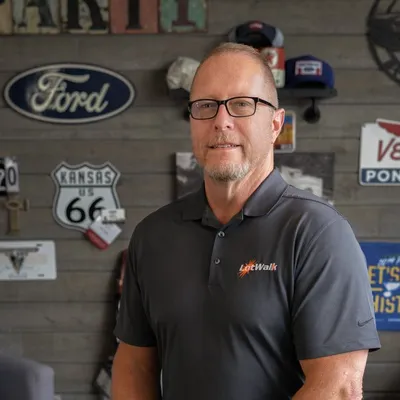
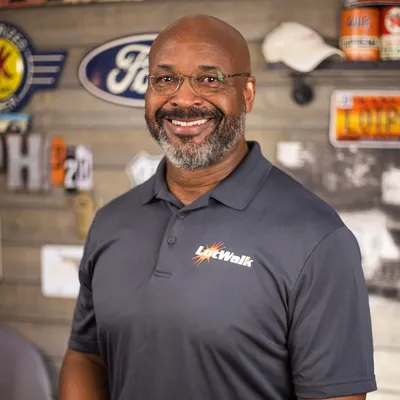
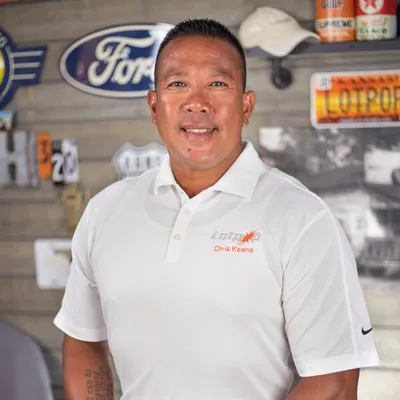
Chris Keene: You're a desk manager. No, you're not. That desk doesn't need managed. Here we are, we are back. You have tuned in. Welcome back, this is LotTalk, powered by Lotpop. I'm Chris Keene, one of the co-hosts, joined by the all-knowing, all-famous Mr. John Anderson, and bringing the beard back, Mr. Renaldo Leonard. Gentlemen, good morning. How are we doing today?
John Anderson: Fire it up, let's go. I'm ready to go this morning. Love our dealer partners, love what we do. Let's go.
Renaldo Leonard: Man, he's fired up, jacked up, and ready to rock and roll. Let's do it.
Chris Keene: We have had so much fun over these last couple episodes, and we've got some great listeners out there. Over the last couple weeks I've had some raving responses from these dealers. So thank you to the listeners and viewers, and as always, please spread the word about our YouTube channel, LotTalk Podcast, powered by Lotpop. But right now we've got to spread some gospel. John, each and every day you're sifting through news articles and sharing them with the company and on social media. What have you been finding in our industry that's been resonating with you?
John Anderson: The top one, hot off the press, released two days ago: the used vehicle index rose to 212.9, up 2.1% year over year. The first half of 2026 was defined by a strong spring selling season fueled by tax refund activity that pushed wholesale values to their highest levels in several years. And I've got to say, I didn't really see that big boost overall that we typically see in the spring selling season. I saw some dealers getting it, but overall I didn't see that huge lift. Wholesale values are up and remaining strong, but I just didn't see it translate. And I feel for those dealers that depend so heavily on auction as a sourcing channel, because it makes it difficult when the used car index stays this high. The wholesale market has stayed strong all year long, but I can't say that for the retail side. That's why we push for increasing that percentage of trades on leads in our lead management tool, so our dealers have more opportunities to source inventory away from the auction. You have your auction fees, transportation, the time it takes to get there, and then it enters your system with a high cost to market.
Chris Keene: Hey, don't forget PSI, John.
John Anderson: Right. And then you've got a unit that's anywhere from six to ten percent on average above your trade cost to market. And right now, at the beginning of the summer selling season, if you're pricing your inventory over a hundred percent price to market, you're struggling. Unless it's a twenty grand and under car, and there's just not a lot of that inventory out there. So I found that interesting. I see that index continuing to go up and I'm just not seeing the retail correspond with it. What's your all's thoughts?
Renaldo Leonard: It's a mixed bag. As far as the dealers I'm talking to, if they are running high and tight, it doesn't affect what they're doing, and they have seen year over year increases in the amount of business they're doing. But guys that are scrambling and shooting from the hip are struggling, as usual. I'm right there with you, John. The numbers being reported, I haven't seen that increase. A rising tide lifts all boats, but there are guys out there struggling, and if you came to them with those index numbers they'd shrug their shoulders like, really? Where? The trend is moving downward with those wholesale numbers, and we've been having that conversation with dealers for the last couple of months, to be positioned to take advantage when those wholesale numbers decline. I'm more interested in the shopper count numbers, to see when we're going to get that push of shoppers in the market that we normally see end of August, early September, into October.
John Anderson: Did you see the latest update in our data and our software, with the shopper index? It's not good. It went the opposite direction. Not to be gloom and doom, but the fact of the matter is we're not seeing customers come into the market like we typically see this time of year. Yet.
Chris Keene: Now, the flip side to that, John. Let's take the doom and gloom and call it what it is, because those are facts. As we talk about all the time, work the facts. The facts are the shopper index is declining, unlike the historical past when you'd see it shoot up this time of year. But we have seen quite a few dealers, regardless of what the overall industry is doing, still doing the disciplined right things, and we're seeing their activity go up. Their SRPs are up, their VDPs are up, their active leads on the cars they have sitting on the ground are up. So is that market driven? Or is that I'm feeding my market, because even though the overall may be down, I'm stocking to what my market has an appetite for. I call that discipline.
John Anderson: Chris, listen to this, because to your point, another headline: CarGurus' used prices crossed thirty grand for the first time since 2023. Average used car prices hit thirty thousand two hundred in May, up 5.1% year over year, the first time the market has topped thirty thousand since August 2023. The CarGurus vehicle demand index climbed to 117.8, up 4.1% from April and 3.2% year over year, with both franchise and independent dealers seeing gains. The data points to the market finding footing after a rough start to the year. Rising used car prices paired with rising demand suggests buyers are absorbing higher costs rather than pulling back, particularly for newer late-model inventory. For dealers, the second half of 2026 may reward those who balance inventory towards newer used vehicles and incentive-eligible new models. This is the counter narrative to the doom and gloom consumer sentiment. Buyers are stressed, but they're still buying. And here's the point. I'm seeing it. What's selling right now is fresh inventory. The dealers capturing demand are the ones with clean, late-model, right-priced inventory, not the ones sitting on aged units waiting for the market to come back to them.
Renaldo Leonard: It just goes back to what you both hit on. The success that dealers are having is process driven. Consumer confidence is not at an all-time high, but those dealers experiencing success year over year have solid processes in place that they execute every day, every time, without fail, with no exceptions. To borrow a line from one of our old friends, David Long, they create their own economy. They have processes in place, hold their team accountable, and they execute. That's all there is to it. And this is something we've talked about for the last couple of months. People are continuing to be in the market, however they're taking more time to be diligent in their research on what they're going to buy and who they're going to buy from. So those dealers who are following up and following through with the opportunities they have are having success. And inventory management and the lead process feed each other. If you call your prospects and turn them into customers, then you have the capital to go out and buy fresh inventory, and you wash, rinse, repeat. If you're not calling your prospects and following up, you're going to get what you get. And you don't throw a fit. Go back to elementary school. You get what you get and you don't throw a fit.
John Anderson: Last thing I want to bring up, and it's for our independent dealers. The headline: a sourcing opportunity hiding in plain sight for sub-ten-grand vehicles. Used vehicles priced below ten thousand dollars are creating a sourcing opportunity for independent dealers as consumer demand for affordability grows. Manheim sold more used vehicles priced below ten thousand dollars than any other major wholesale marketplace sold at any price point in 2025. This is an opportunity for independent dealers. The franchise stores won't touch eight-thousand-dollar cars. Their reconditioning minimums, floor plan costs, and CPO standards price them out. The sharp independent dealer who can source, recondition, and retail sub-ten-grand inventory with speed and transparency is serving a buyer pool that literally has no other option right now. But I want to remind you, we've got to do it with speed and transparency. There are always buyers for that inventory, and they tend to be more forgiving. As long as you're transparent with them, they understand the vehicle is going to have some issues. I dealt in that at my store back in 2013, 2014. The town my dealership was in had seven do-it-yourself auto parts stores. Those folks understand, and they're willing to spend the money if they know what they've got to do.
Chris Keene: But they've got to know about it, John.
John Anderson: Right. I would encourage you: when you have it inspected in the service department, decide what you're going to fix and what you're not going to fix, have your service department print out a copy of that RO with what you approved and what you declined, stick that in your photos online and put it in the window of the car out on your lot. Customers appreciate that stuff. You're transparent, and they know.
Chris Keene: That's good stuff. Three things to recap this segment. Number one, yes, the shopper index is down. But the best-in-class dealers, and I'm talking about the ones that, as Renaldo talked about, without question, without fail, each and every time have those processes and procedures and ultimately the discipline to execute on them. Listeners and viewers, if you have your processes and procedures, number one, go revisit them. Number two, revisit them on a more frequent basis than you may be doing already. Make sure everybody is aware and doing what we need to do to have the discipline to execute. Second thing, John, you brought up CarGurus, and I want to read a little something one of our trainers shared about CarGurus and dealer fees. This is from CarGurus: we are now requiring fee disclosure to continue to provide the most trustworthy car shopping experience, one that levels the playing field for dealers and consumers. Starting July 14th, any used inventory on our platform without disclosed fees will be categorized as no rating and will move lower in the search results. Shortly after July 14th, CarGurus deal ratings will be calculated on all-in price, inclusive of disclosed fees. Don't cripple yourselves when you see a lower shopper index like we're seeing now and you're paying exponential dollars to get your inventory cascaded out to the consumer public. Don't waste your money if you're not going to do it right. When you've got a limited shopper index out there, you have to make every opportunity count, especially if you have inventory getting a little tacky on age. Dot every I, cross every T. Make sure you've got your disclosures right, your descriptions right, your photos right. Now, new part of our show, and I love this. Kudos to Mr. Anderson who came up with the idea. Renaldo, share with us some positivity. Bring a little love, brother.
Renaldo Leonard: I love this because it fits right into the conversation we just had about processes and dealers having success. We're going to send a shout-out to a young man. There's a dealership down in the San Antonio, Texas area, the Cavender Auto Group, and at one particular location, a Buick GMC store, there's a young man named Tyrone Polk. Let me tell you what my man Tyrone did. In the month of June, while everybody is complaining, Tyrone went out and sold 48 units. Yes. That's stronger than 40 acres of garlic.
John Anderson: Come on. That's strong, baby. That's great.
Renaldo Leonard: And I would venture to guess that if we called Tyrone and asked him how he did it, he would say, I just followed the process.
John Anderson: That's a great idea, Renaldo. Let's invite Tyrone on the podcast. Let's reach out and see if we can get him.
Renaldo Leonard: I'm not going to make any promises, because I'm pretty positive Tyrone's busy. But we'll effort on that, and I'll see if I can spend a couple minutes with Tyrone and get some insights from him. Tyrone Polk, Cavender Buick GMC, San Antonio, Texas. You got your shout-out, your lot hug, your lot kiss, whatever you want to call it, recognizing you for doing an exemplary job in the month of June with those 48 units. Now, I'd also like to recognize a dealership who has started to do some things a little differently. They're adapting and adjusting and finding a way to win in today's market, on the acquisition phase of inventory management. This is a young man that I do know, and he has really impressed me with the way he approaches finding ways to move the needle at his dealership. A young man named Sean Mummer with the Buchanan Auto Group, specifically at their Chrysler Dodge Jeep store. We had a conversation about acquisition and the obstacles he was facing, and he began to implement a program where they were going out to the service drive and turning that into a lane to get vehicles for the inventory. They have gotten off to a running start this month in July. So I wanted to kick a shout-out to him and his crew for thinking outside the box to find a solution to an opportunity. And coincidentally, he also works with one of our partners, Frank Knox at Auto Acquire, and he couldn't rave enough about the job Frank was doing helping him through that process. So those are two shout-outs this week. Great job, keep it up. And let me put an alert out across the landscape: watch out, you might get a shout-out from Lotpop and LotWalk.
Chris Keene: Love it. Great shout-outs.
Renaldo Leonard: Both of those go to the point that if you have your processes in place and everything is watertight, things going on in the landscape aren't necessarily going to affect your business, because you're too focused on doing things that get you results, as opposed to the doom and gloom and focusing on things that really don't matter. It's keeping the most important thing the most important thing, and that's providing that service for our customers out there.
Chris Keene: That's the one thing everybody can control, Renaldo. You can control your process. You can control your willingness to be disciplined within that process. And when you take the three shout-outs you gave there, Tyrone down at the Cavender Buick store in San Antonio, Sean over at Buchanan Auto Group in PA, and Frank Knox from Auto Acquire, three individuals in different segments of the industry, there are three things all of them have in common: process, discipline, and the willingness to execute. So I one million percent believe the main topic of today feeds right into everything we've been talking about. And I've dubbed it quality over quantity. What I'm talking about is those opportunities we are receiving. Maybe you're not currently getting the amount of opportunities you were getting two months ago. Now, side note: through this little shift we're seeing in our industry right now, like I said earlier, our best-in-class dealers just keep ticking away, getting those search results, getting those VDPs, getting those leads, because they're disciplined in the details. But if you're going the other direction, if your business as a salesperson, a BDC rep, a sales manager, GSM, GM, or dealer principal is declining, the opportunity you are getting, you'd better make sure you have quality in that follow-up that far exceeds the quantity of follow-up you're doing. If I was back in the dealership today, I would rather have a team of individuals doing quality follow-up than a guy running up to me saying, hey boss, I just called, texted, and emailed 55 people. I would much rather have a guy who says, I reached out to 22 people, but let me tell you what I got out of it. Here's the videos I did. Here's the conversations I've spawned. Because I had more quality in my follow-up. John, what's your take?
John Anderson: What comes to my mind is what we always talk about, Chris. When we're talking to dealers, we reemphasize that in today's environment, if you own one dealership, you actually own two. You have your physical location and you have your virtual location, and your virtual location typically gets the highest amount of traffic. So think about it. When you have a customer on your physical lot, do you have more success when you're relaxed, taking your time, asking the right questions, and giving them your full attention? Or when you're trying to rush them through the process? Be honest with yourself. Which one is a better scenario? So to Chris's point, think about that on your virtual dealership. In our software, we try to pull out those leads and customers that need immediate attention based on what they're looking for. Instead of having fifty conversations, all of them short, how about having 22 that are detailed, showing the customer you care about what they care about, slowing down, making sure you're answering questions, doing your fact finding, revisiting the things you found out, and giving them options. Options are a big thing. Why is Amazon so successful? When's the last time you got on Amazon, looked at something, and didn't see "you may also be interested in"? I'll go back to the data, Chris, and I'll end with this. The data has told us the average customer sends out twelve to fifteen leads. So when I get a lead, I'm competing against eleven to fourteen other stores or people. How do I separate myself? What we're talking about here is how I separate myself.
Chris Keene: That's the quality over the quantity. Let me put it in the world of brick and mortar for a minute. John Doe Consumer walks in and says, I'm here to see XYZ vehicle. Do we say, perfect, it's right over there, it's still for sale, let me get your driver's license and insurance, how do you want that vehicle titled? No. We walk the customer over, we pull the vehicle out, we butterfly it open, we do a product presentation, and we ask questions. Hey, in your current vehicle, what do you love about it? What do you wish it had? What are you hoping your new vehicle has that your old one doesn't? What are we looking at a new vehicle for? Is it time to upgrade? Is your family growing? Or take it back to the elementary, S.P.A.C.E.D.: what's most important to you, Mr. Customer? Safety, performance, appearance, comfort, economy, or dependability? You're not going to talk about the thing going zero to sixty in 4.8 seconds if it's a car for their kid going to college or a mom-to-be. You're talking about safety and comfort. Are we finding those things out in the digital dealership the same way we would at the brick and mortar? I'm here to tell you, and it's disheartening, more times than not, we aren't. I challenge you to go look at the last 20 opportunities that came into your CRM and look at how we responded to the consumer. I'll bet you dollars to donuts it sounds something like this: great choice of vehicle, it's available, we're here until eight o'clock, what time can you be here, this morning or afternoon? Newsflash. The internet and all the tools in today's industry have given the consumer the ability and the right to not come to the dealership. They can do their entire transaction online. Does that mean they're going to do their whole transaction online? No. But what it does mean is they want to do some amount online. You've got to speak their language, and you've got to find out where they're at in the process, just like you would if they darkened your doorstep. So let's drop a nugget here. What I'm going to share on the screen are some revised word tracks that fit more in today's time. We've all heard about speed to lead, and it's important. For the listeners, we'll post this as a resource at LotTalkPodcast.com. But look at the way the response is here: John, this is Chris over here at Lot Walk Motors. I just saw your request about the 2023 Chevy Tahoe. Is this for you, or are you shopping for somebody else? How about the guy that hasn't responded to you and the lead goes cold: John, I just wanted to check in. What are your next steps to purchasing your next automobile? How about the opportunity that's outside of your market: I noticed you're reaching out from out of town. We work with out-of-town buyers, and I'm going to make it worth your trip. We generally do so much of the transacting digitally for your convenience, making sure everything is 100% to your approval, so you don't waste your time when you come take delivery. What are your next steps and what pieces of information do you need to move forward? How many times, John, have you looked over a dealership CRM where the opportunity came in from 374 miles away and you saw the response of, hey John, the vehicle's available, what time can you be here?
John Anderson: Too many. Too many times.
Chris Keene: So number one, viewers and listeners, I'm going to tell you something real simple. Read the lead. Quality. Not "I called, texted, and emailed fifty-five people." Quality. John, I'm getting fired up, man.
John Anderson: That's a great point, and that measurement, gauging the percentage of response, if I was a salesperson or BDC rep at a dealership, that's something I would definitely want to gauge. That helps me critique myself. If I'm getting a low percentage of responses, there's something I need to take a look at. Listen to my phone calls, watch my videos, do something to change up what I'm doing so I improve that level of response.
Chris Keene: To that point though, hold on one second. I can watch game film all day long. I can go back and listen to phone calls all day long. But this is where I'm going to put the managers on a pin and tell you to peel the velcro off your ass and get out with your team and coach them up. Because you can't expect a salesperson or a BDC person to improve themselves by saying, hey, watch this VHS cassette of yourself and find out everything you did wrong. No. You're the manager. You're the one that sold a bunch of cars to get yourself in that position to be a leader. Go out there and coach your team up. Too many times we're too busy desking deals. You're a desk manager. No, you're not. That desk doesn't need managed. That desk is a fixed object at the dealership. It ain't going nowhere. But your salespeople, the lifeline of your dealership, the individual contributors out there in 115-degree heat, in the blistering cold, in the pouring down rain, and you want to bust their ass because they don't have enough appointments on the board? When was the last time you got up and coached them? Therein lies the problem. Closed mouths don't get fed. John, you're of the old school. And hey, high-waisted jeans came back in style, bell bottoms came back, mullets came back. Old stuff comes back. Some of these things we're talking about is old stuff. I got a little animated there, but I'm just frustrated because I see it all the time. Am I way off base here?
John Anderson: No. I think it models society. You mentioned old school. We used to sit down at the dinner table with our families and have discussion. When I started out in the dealership, we had discussion. Managers were coming out to your desk. I wasn't afraid to approach the manager. Salespeople were in a bullpen talking with one another. Then somewhere along the line technology got big, and just like in the home, very few families eat dinner together now. In the dealership setting, a lot of times you've got the managers working at the desk, you have your salespeople or BDC talking to customers, and there's really not a lot of communication until that customer is standing on the showroom floor. And the fact of the matter is, that's a little too late. That's being reactive, not proactive. It takes communication and working with one another early in the process. To our CEO, Jasen Rice, and what he always says: lead management is inventory management, and inventory management is lead management. And to do that successfully, you have to have conversations around both those sides coming together. If I know as a manager that I have fifty intermediate SUVs in stock and in the last fifteen days we've only sold ten, I've got a problem in my intermediate SUVs. Instead of doing what we've always done, not getting up off my butt, sitting at the desk and just changing prices, I may have a set of customers on those vehicles. My sales team may be engaged in conversations, and I start cutting prices, thereby cutting the opportunity for the store to make more money and the salesperson to make a higher commission, without communicating with them. Why aren't we having those communications ahead of time? And in the process of that communication, to your point, Chris, I should be having conversations as a manager: hey man, how can I help you? You've had this customer on this car, you're making attempted contacts every three to five days, and we're not able to get an appointment. What's going on? Give me some feedback. And then pick up the phone as a manager and call the customer yourself. This is old school stuff. You may say similar stuff to what the salesperson already said, but because your name has manager attached to it, the customer gives more credence to it. And if I never make that attempt, I never get that opportunity. Unfortunately things have changed, and I think a lot of times our dealerships mirror society. How many times have you been in a restaurant and seen a bunch of young people sitting at a booth on their phones, texting one another instead of having conversation across the table? I will tell you, if I was going back into a dealership today, there's a lot of ways you assess the situation you're walking into, but the number one area I would assess and try to have immediate impact on would be the communication. No question. For whatever reason, we convince ourselves that we're too busy, and we get to working on stuff that is just stuff. Look, to Chris's point that he always says, my number one job as a manager is to fill the spot and then clear the spot. And the only way I can do that is by getting a customer on that vehicle and clearing that spot. I will say this, and we prove it in our data: the more conversations you have, the more vehicles you'll sell.
Chris Keene: And in light of our main topic, yes, you have to have that quantity of conversations. There's zero doubt. But pay attention to the type of conversation you're having. Make sure it's a quality conversation. Are you meeting the consumer where they're at? We have no idea until we ask. What's next in your process, Mr. and Mrs. Customer? Not here's what's next in our process. We have our process, but we have to mold it to meet that customer where they're at in their process. Is our process there to help create efficiency and simplicity for the consumer? I hope so. But you can't take an up on the lot and immediately ask for driver's license and insurance and how do you want this vehicle titled. You have to understand where the consumer is, how far along in their decision journey they are, and you're not going to know until you ask the questions. And if you're not getting engagement from your consumer, go look at the questions you're asking them. Are they questions that create engagement? So I would challenge you all: do better. And if you need help doing better, LotTalkPodcast.com. Reach out to John, reach out to Renaldo, reach out to myself. If I ever offend you, 405-234-6402, that is my cell phone. Call me, let's talk through it. But I will not apologize for what I passionately believe in. You don't have to agree with me.
John Anderson: And I would add to this, Chris, because I feel the same way a lot of times: not only what you believe in, but what you know works.
Chris Keene: Bingo. So we've thrown a lot at you guys today, and I wish I had time to recap it all. Here's the best way to recap it: go to LotTalkPodcast.com, subscribe, and rewatch this episode. Fast forward to the part where I call some people out, I don't care. What I do care about is you improving. What does success look like? Better than what I was yesterday. That's what I care about, that's what Renaldo cares about, that's what John cares about. It's the whole reason we've done this, to help you improve day by day. And something new is going to come out, and we're going to have to improve on that too. One way you can continue to improve is to tune right back in every week. LotTalk Podcast, powered by Lotpop. Check us out on YouTube, Spotify, and Apple. Like it, share it, and continue to subscribe. We thank you for tuning in once again to another fun episode. Until next week, we wish nothing but success for you guys. On behalf of Mr. Anderson, Mr. Leonard, and our entire Lotpop family, thank you again for tuning in, and we will see you next week. Same bat time, same bat channel. On that note, we out.
John Anderson: Keep rocking, Tyrone.