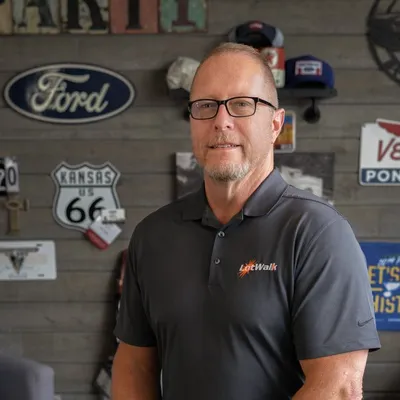
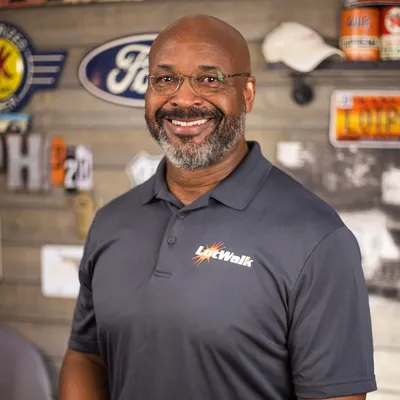
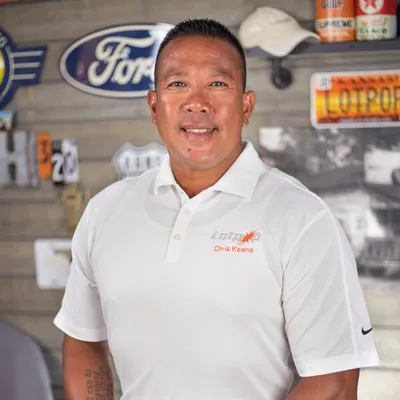
Full video episodes now live on the LotTalk YouTube channel.
Watch on YouTubeThree operators in three of the hardest setups in retail automotive prove the "my market is different" excuse doesn't hold. James Pay sells 85 to 100 used cars a month with four salespeople at an independent lot in South Dakota, and cut his lot-ready time from the upper 20s to 13 or 14 days by empowering his shop to make decisions without him. Bobby Albert runs Eastchester Chrysler Jeep Dodge Ram in heavily regulated New York City, where he cut two extra rented lots, tightened his stocking mix, and stopped reflex price drops after finding nine uncalled active leads on a car he was about to discount. Justin Williams helps run Bozard Ford Lincoln near Jacksonville with 450 employees, sources 97 percent of used inventory from trades, pre-inspects every trade in about 30 minutes, and starts every recon line at $10,000 so unexamined appraisals stand out. The common threads are accountability, daily attention to the data, a team that knows the why, and room to make a mistake once.
What you'll walk away with
- Your market isn't different. Your culture is. A four-person independent in South Dakota, a CJDR store in the Bronx, and a 450-employee Ford store in Florida all win with the same disciplines: accountability, daily data checks, and teams that know the why.
- James Pay sells 85 to 100 cars a month out of a small independent lot. He was retailing 75 percent of his inventory monthly, took a 31 percent April dip, stayed the course, and cut lot-ready time from the upper 20s to 13 or 14 days by telling his shop they could make decisions without him.
- Stop the drop before you check the leads. Bobby Albert was about to lower a price when his BDC manager surfaced nine active leads on the car that nobody had called. Price changes come after the CRM check, not before.
- Start every recon estimate at $10,000. Justin Williams flips the usual recon game: Bozard pre-inspects every trade in about 30 minutes and seeds the appraisal recon line at $10,000, so any appraisal nobody adjusted gets questioned, and appraisers get sharper.
- It's okay to make a mistake once. All three operators give their teams room to miss, learn, and improve, then hold the line. As Chris frames it, the difference is whether you have a know problem or a no problem.
Episode chapters
Jump to the part you need. Timestamps match the audio and video.
- 00:44"You just don't understand our market"Why this episode exists: three peers from three of the toughest setups in the business.
- 03:15Meet the operatorsBobby Albert (Eastchester CJDR, the Bronx), James Pay (Dells Auto, South Dakota), Justin Williams (Bozard Ford Lincoln, St. Augustine).
- 04:59Bobby: cut the rents, eat the medicineDropping two B-lots, tightening stocking mix, and accepting what the business bears today.
- 07:07Reassess daily, not quarterlyTransaction prices up $9,000 a unit and 7 to 10 percent rates even for prime buyers.
- 09:24James: 90-plus cars a month with four salespeopleThe phone call where he let John have it, and the discipline that followed.
- 11:28The April humblingA 31 percent dip, the "stay the course" coaching, and the climb back to 51 percent.
- 19:18Justin: leaders define reality and inspire hopeGrowing past 300 used a month, then rebuilding the process to make it sustainable.
- 22:09The $10,000 recon linePre-appraisal inspections on every trade and a blank checkbook for certified.
- 28:34Three acquisition realitiesBronx arbitration risk, $18,000 auction cars in South Dakota, and 97 percent trade sourcing in Florida.
- 35:52Why all three stay hands-onAccountability, delegation, and never hearing "I don't know where that vehicle is."
- 44:45Teaching the team the whyBobby's cross-department calls and stopping the drop with nine uncalled leads.
- 47:48Big rocks and culture as currencyBozard's red-yellow-green weekly rock meetings with 450 employees.
- 51:16James lets goLot-ready time from the upper 20s to 13 or 14 days by letting the shop decide.
- 59:46Closing: pace settersMore inventory, more problems, and why iron sharpens iron.
The end of "my market is different"
Every dealer who has pushed back on the data with "you just don't understand our store" got an answer this week. Chris, John, and Renaldo brought on three operators from three setups that could not be less alike: James Pay, who runs Dells Auto, an independent used car lot in South Dakota with four salespeople; Bobby Albert of Eastchester Chrysler Jeep Dodge Ram on the east side of the Bronx, in one of the most heavily regulated states to sell a car; and Justin Williams, GSM of Bozard Ford Lincoln just south of Jacksonville, a 450-employee store in a saturated market. Different sizes, different rules, different price points. Same disciplines. As Chris put it, it isn't about your demographics or your location. It's about your culture and your mindset.
Bobby Albert: eat the medicine, then check the leads
Bobby's turnaround in the Bronx started with expense. He was paying rent on two extra B-lots and stocking 160 to 170 cars while sales dipped, so he clipped the lots, tightened cost per unit, and rebuilt his stocking mix around what the business bears today, not what it bore two years ago. His market math is brutal: transaction prices up $9,000 a unit and 7 to 10 percent interest rates even for prime customers, plus a Department of Consumer Affairs environment where he loses arbitration so often on 100,000-plus mile cars that he passes on them entirely. His best habit change came from his weekly calls: he calls it stopping the drop. He was quick to lower a price on a car he thought had no action, until his BDC manager showed nine active leads on it that nobody had called inside the 48-hour standard. Now the CRM check comes before any price move, the same discipline behind a sane repricing cadence.
James Pay: 90 cars a month and the April humbling
James sells 85 to 100 used cars a month, every month, from what Chris affectionately calls a shack in the middle of South Dakota, and he's been in the 90s all of 2026. He was retailing 75 percent of his inventory monthly, selling 95 or 96 cars with only 71 to 79 on the ground, until April cut him off at the knees with a 31 percent drop. His coach's advice was two words: stay the course. By the next month he was back to 51 percent and climbing, with the silver lining that his shop caught up on inventory during the dip. His best move was letting go. With his coach's push, he told his shop techs they could make reconditioning decisions without him, and his lot-ready time fell from the upper 20s to 13 or 14 days, where it has stayed for months. Twenty-nine years in the business and his newest lesson is the one he repeated on air: more does not mean better.
Justin Williams: the $10,000 recon line
Bozard grew past 300 used cars a month, then realized the process underneath wasn't built to sustain it, so they broke it all the way down and rebuilt. Justin's recon system flips the industry default. Every trade gets a pre-appraisal inspection, about 30 minutes, before the customer even finishes the test drive, so appraisers work from facts instead of guessing $3,000 across the board. The recon line on every appraisal starts at $10,000, which means any deal nobody adjusted stands out instantly, and certified units get a blank checkbook to be fixed right. With 20 people appraising cars, that structure plus weekly "big rocks" meetings (every leader's priority tracked red, yellow, green) keeps a 450-employee store honest. Sourcing is almost entirely internal: 97 percent of inventory from trades, now 88 percent as they push street purchases. His phrase of the episode: culture is our currency.
It's okay that they make mistakes, as long as they learn from them and move forward. You can put 80 percent of it in a process, but the other 20 percent, you need artists to really tie that bow on it.
The common threads
John's observation across all three: these operators manage from the top and work the floor. Nobody on this call has ever answered an inventory question with "I don't know where that vehicle is." The shared playbook came through every answer:
- Accountability by name: Bobby's two appraisers own their numbers. Justin's 20 appraisers get room to miss once and learn. James's four salespeople run deals front to back.
- Daily assessment: Bobby's answer to how often you should step back and look for holes: almost daily, because credit, pricing, and rates change every day.
- The team knows the why: Bobby brings BDC, desk, and soon service onto the same weekly call so every department feels the same pain and the same wins.
- Humility on schedule: James still runs his Wednesday coaching call every week after years in the system, because "I thought you knew everything, but you don't."
The Monday-morning action plan
Steal from all three stores this week:
- Check leads before every price drop: Bobby's rule. If a unit has active leads, work them inside 48 hours before touching the number.
- Seed your recon line high: Try Justin's $10,000 starting number on appraisals so any deal nobody scrutinized is visible at a glance, and pre-inspect trades before you finalize the number.
- Tell your shop they can decide: James's lot-ready time nearly halved the day his techs learned they didn't need his sign-off. Define the decisions your recon team owns, then announce it.
- Audit your real estate and stocking mix: Bobby cut two rents and accepted a stocking mix double what his ego wanted on his best-selling certified units. Stock what sells, and run it through a real stocking strategy.
- Put a rock on the table: One named priority per leader, reviewed weekly, tracked red, yellow, green. Used cars never comes off the list.
Get insights like this every week
Join the Insider Newsletter. Inventory tactics, podcast recaps, and dealer strategies. No fluff.
Transcript is auto-generated from the episode recording and lightly formatted. It may contain transcription errors.
Chris Keene (00:00): Welcome back folks. is lot talk powered by lot pop. You have tuned back in and you tuned in at the right time. I'm Chris Keene. One of the co-hosts joined by the infamous Mr. John Anderson and the all-knowing Mr. Ronaldo Leonard. Gentlemen, we got a treat for our listeners and viewers today. Are you guys ready?
Renaldo Leonard (00:18): yeah, yeah. Although, I mean, the one caveat, you say all knowing. I you're using K-N-O-W and not N-O, No, no.
Chris Keene (00:26): It's always the KNOW with you, my brother. it's, you know, John backstage.
John Anderson (00:31): Ugh. I'm absolutely ready. Absolutely ready. You know, the old saying up here in the mountains of Oklahoma, Chris, right? How ready are you? I'm ready. Does a fat baby fart? Yeah, I'm ready, brother. Come on.
Renaldo Leonard (00:43): Yeah, gonna be fun.
Chris Keene (00:44): Well, listen, we were talking backstage just now before we got started, and I want to for the most kindest way I possibly can. All the time we hear this, well, you just don't understand our store. Well, you don't understand our you know, we're different here in our market. We're this, we're that, we're this, we're that.
Renaldo Leonard (01:03): I love it.
Chris Keene (01:04): Well, listeners and viewers, we got a treat for you because as much as you've heard us for two years, come at y'all and say, Hey, work the facts. Y'all still push back. Y'all some of y'all still push back. Oh, it's a little different here. OK, well, we got a treat for you today. We have some of your peers. From a little shack. Used car independent is South Dakota. We've got a Chrysler Jeep Dodge Ram store. and arguably one of the heaviest regulated states to sell cars in from the East side of the Bronx in New York.
John Anderson (01:37): Come on, come on.
Renaldo Leonard (01:39): The Bronx? That Bronx?
Chris Keene (01:40): And then we the Bronx. And then we got a Ford dealership. In a heavy saturated market just south of Jacksonville, Florida, an extremely saturated market. Of. Domestics, imports, high lines. So.
John Anderson (01:50): Come on.
Renaldo Leonard (01:51): Yes, sir. I it all.
Chris Keene (01:53): For the dealers out there, the viewers out there, the listeners out there that your market is different. No, it ain't. We're still in the car business. What's different is your culture. What's different is your mindset. And the three guests that we're going to bring on today, you're going to find out whether you're a shack in the middle of South Dakota, whether you're at. Ultrally regulated state to try to frickin sell cars in like New York and specifically out in the boroughs. Or whether you're in a heavily saturated market. Outside Jacksonville, Florida. It isn't about your demographics, it's not about your location, it's not about. Be it a new car franchise or an independent franchise, it's about your culture. Mr. Justin Williams, general manager from. So with that being said, Brett, let's bring our guests on stage. Let's welcome on stage our three guests, your peers, those folks that deal with the same thing that many of you guys deal with on a daily basis. Let's bring them on stage right now, Brett. Ford Lincoln, St. Augustine, Florida, Mr. Bobby Albert, Eastchester, Chrysler Jeep Dodge Ram from the Dennison company group of dealerships, Eastchester. I'm loving it. And then have got Mr. James pay straight out of South Dakota and an independent dealership. James paid general manager of. Dell's auto in South Dakota. Gentlemen, good morning. Good morning. Good morning. Welcome to the call. How we doing?
James (03:13): Fantastic. Good morning, guys.
Bobby Albert (03:14): Very good.
Chris Keene (03:15): Love it. Love it. Love it. So, uh, I want to start the party off here and I want to go to the Bronx. Let's, let's take it to the East side. You know, I love it. Bobby, I'll be a hundred percent transparent. What, what's that?
Bobby Albert (03:30): Thank I knew you were gonna pick on me first, Chris. I knew you were gonna pick on me first.
Chris Keene (03:37): I got to pick on you first, Bobby. So you know, Bobby, I'll be a hundred percent transparent though. You know, it'd been a while since I talked to some folks from New York and worked with some folks from New York. And know, you guys have got that y'all got that, your persona of just being real tough to work with. But I'll tell you, I'm like super, super, super impressed that.
Justin Williams (04:01): to be high-spirited.
Chris Keene (04:02): You live up to the hype of being some pretty strong willed individuals out there in New York. But one of the things that has really, really impressed me is your you guys adaptation rate, how y'all just fully adapt to things that could improve your business. OK, so I want to stay away from what our parent company is in terms of lot pop. But for you, Bobby, What are the biggest attributes for you guys or what are some of the biggest things of says, Hey, we're going to stay out of our own way. Okay. We're going to stay out of our own way and we're going to really focus and look at what maybe data says or really what does or doesn't work. What are some things that you've guys have done to keep yourselves kind of at bay with
Justin Williams (04:49): next.
Chris Keene (04:49): what we can get in this business with egos. What are some things that you guys have done to keep yourselves at bay and stay pliable to how this industry changes?
Bobby Albert (04:59): I would say first and foremost, was overall expense for us. So we had two little B lots up the street that were connected to our dealership here. So we were paying two extra rents plus ours, usually stocking 160 to 170 cars a month. Like on any given time, we'd have 170 on the ground and sales started really dipping down. So we got ahead of the, like the fall and clipped the two little lots and really tightened our belt and really focused on overall cost per inventory per unit, stocking mix. And that's where a lot of all came in and really made me eat my medicine and accept what the business is bearing today. Not what it used to be even two years ago. And I'm not talking about the COVID bump and all that. I'm talking about just regular car sales. were still thinking we were the big tighten in the room and we weren't. So we had to take a step back to go forward. I mean, it was it.
Justin Williams (05:57): So. Yeah.
Bobby Albert (05:58): Pride swallowing a little bit, because the ego gets in the way where you want to keep going, the bottom line does not lie.
Chris Keene (06:06): The bottom line sometimes qualifies you out pretty quick, doesn't it?
Bobby Albert (06:09): Yeah, 100%. And it tells on you if you're doing something wrong.
Chris Keene (06:13): Yeah, no doubt. No doubt. No doubt. No, no, no, no, no, no,
Renaldo Leonard (06:17): Yeah, well, I would just ask him, you know, and first of all, tip my hat to you, because in the environment, we will go day to day in whatever operation mode we're in, just plugging along. And we committed to a way of doing business and making things happen from day to day. But in hindsight, having your eyes kind of open, so to speak. to those things that were sucking away profit and success with as far as how we measure what we're doing in the business. If you had it to do all over again, how often would you recommend that a dealer kind of take a 30,000 foot view, a step back to see if there are holes that need to be plugged in order to get the momentum that you need in order to generate the profit that we're all looking for every single day.
Bobby Albert (07:07): I would say it almost has to be almost daily. I mean, it's a changing market every day between credit price, high interest rates, and it's challenging. I'm in a credit market as well. So I really got to get ahead of it a little bit, a higher transaction price by $9,000 per unit and throw in 7 to 10 % interest rates for even prime customers. mean, it really spikes the payments and drive your sales right down.
Renaldo Leonard (07:34): Right. Fantastic. Yeah. That was what I was hoping for as far as the answer. Every single day you got to make that assessment. Yeah, because it does change every single day. And those people that are having a Groundhog Day, you're missing something. So make sure that you're awake to it.
Chris Keene (07:51): Mmm. Mmm.
Justin Williams (07:51): you
Bobby Albert (07:52): or I am.
Chris Keene (07:53): So, let's go to South Dakota for a minute. Mr. James pay now. You know, you don't have the luxury that Bobby or Justin have with having, you know, the Chrysler Jeep, Dodge Ram logo in front of your building or, or a big blue Ford oval or the beautiful Lincoln sign out front.
Renaldo Leonard (08:11): yeah. yeah.
Chris Keene (08:12): yet alone the fixed operations that these guys have, but in the middle of nowhere. And don't care where you're at in South Dakota, South Dakota, it's in the middle of the entire state of South Dakota is in middle of nowhere for it. Nobody has ever been there. It's in the middle of nowhere. Kind of same question, though, for you, James, is, you know, what is it that you guys are instituting there? Because you're as you're an independent. You're you guys will sell. And from 90 to 100 used cars. Out of a shack for lack of better terms, OK, and this is impressive, though, OK, so, Bobby, if you feel bad, please do, because.
James (08:51): Thank you Jack.
Chris Keene (08:52): He's over at a shack in the middle of South Dakota. And you guys are I mean, James, what are you selling? Eighty five to 100 cars a month. Is that about right?
James (09:03): Yep, every month. And actually for this year it's been 90s, all 2026.
Chris Keene (09:07): Wow. So what did you do this year? I mean, what is it that you've sat back and kind of reeled reeled everything back a little bit and said, Hey, we, got to do things different. We've, we've got to do something different here. What is it that made you do that?
James (09:24): Well, watching a lot walk podcasts and I'm gonna, Justin and Bobby, I'm gonna go full circle one for about one minute. John, you remember the phone call that I called you out of nowhere and let you have it?
John Anderson (09:37): Yeah, James, actually I was going to return the favor this morning to you since you couldn't figure out how to log on, I let you slide.
Chris Keene (09:46): No.
James (09:46): So I let John.
Bobby Albert (09:48): Hahaha
Chris Keene (09:48): Tell this tell this story in its entirety because Bobby adjusted to get a kick out of this one.
James (09:54): I watched the, I watched before I was a lot walk customer, the podcast and always looking for something new, but that particular one that day made me feel like the dumbest dealer in the world. And I thought this whole hour was to make sure that us dealers don't know what the heck we're talking about. Well, John cut me at the knees and made me relax. And then I became a dealer. And then,
Renaldo Leonard (10:19): Yeah.
James (10:20): That's exactly what happened from that point on. That's what happened. There was some serious discipline that Lotwalk put me on. If you want to call it something, it's a babysitter. But with that said, my four guys love having the tool, and I can see them working on it. talking with Eric every week, I still do my Lot talk. talk every week with Eric. We don't miss those, even though you would think that maybe we don't need to do it, but I'm going to continue to do so. But with that, Wattwalk kind of gave me a big head. yes. So what he said, how you continue to sell 90 cars in this year? Well, I'm going to tell you, it caught me just like what you said earlier, Chris, ego got the best of me on April, let's call it April 9th, because I kind of dipped in
Justin Williams (11:10): you
James (11:11): Bobby and Justin, I was selling 75 % of my inventory plus. So I was selling 95, 96 cars with 71 to 79 cars on the lot. And the only thing that was ticking me off was I got 120, they're just not coming through fast enough. So I'm selling them.
Justin Williams (11:27): you
James (11:28): Well, April cut me off at the knees and said, you know what, you're not immune to this either. And boy, I dropped a 31 % real fast and I'm glad that it did it humbled the crap out of me. Um, but Eric said this, stay the course, stay the course. Well, as of yesterday morning, when I got on to check my numbers were back up to 51%. So that's, so I took a small dip.
Justin Williams (11:53): Thank you.
James (11:54): But what I did get out of that is my guys got to catch me up with some inventory, meaning the inventory was here, but because I wasn't selling, it landed on my lot. So there was some goods and bads with my little humbling going on right there, but I got my inventory back and now we're playing. We're playing at the top. We're playing at the top and we'll go back to 75 again.
Chris Keene (12:19): Nice. I like that. I like that. So. John, that conversation you had with James and and full transparency, you know, Bobby, Justin, James, listeners and viewers. It was almost kind of a gut check for us to, you know, in John, damn near called a, you know, emergency war room meeting over the phone call with.
Renaldo Leonard (12:37): Nice. yeah.
Chris Keene (12:38): with James pay like he, for lack of better terms, got into panic mode. Like, holy shit. mean, are we just absolutely just punching dealers in the face too hard here on the podcast? John, talk a little bit about that conversation between you and James pay and really what we took from that.
John Anderson (12:56): Well, think I think it goes, you know, to answer your question, Chris, I think it goes to what James said. You know, I think all of us at some point in our daily walk and and hopefully multiple times throughout our walk, reach a point where that mirror is right in front of your face and you know, there's a humility check. Right. And and so.
Justin Williams (13:18): you Okay. you
John Anderson (13:19): You know, I just happened to pull up. was in, I was in my vehicle and saw James call. happened to pull up in front of a business. And then that's when I answered a call and I had my wife sit next to me and, James was, James was on the speaker and she heard the conversation. Right. And, and so, you know, once I hung up the phone, my, then my wife and I start having a conversation, because she, you know, she ran real estate companies for many, many years and it was an honest conversation.
James (13:52): on.
John Anderson (13:52): But to James's point, he felt like that our entire podcast that day was on the attack mode with dealers. And so because we've all been dealers, think sometimes that's what I thought. I've taken for granted the fact that the folks that we're trying to get information out to to help. Cause that was our intention about starting this podcast honestly was to, was to take what we see on a weekly, daily and monthly basis and, and put that information out there to, to help. and that we're just following Jason's lead cause Jason's always done that. Our CEO, he's always, put videos and information out there for free just to try to help dealers. so it was a gut check for me, you know, just to say, Are dealers receiving what we think we're doing or is it coming across in a way that they're going to push back and go, you know, these guys are just on the attack mode like, like James. And, I, you know, I credit, I credit James because you know, we had an honest conversation and, and instead of him just saying, Hey, you know, shoved up your butt and hanging up the phone. He listened and we talked through it. And by the time the phone call was. at to an end and we, you know, we wished each other well. It was a calm, good conversation about, you know, what we were trying to accomplish. And again, credit to James. He listened, you know, lot of dealers wouldn't do that. A lot of dealers would get their point across and hang up the phone. But James listened and it was a it was an honest it was an honest conversation. And it and it gave me a gut check, you know, because I don't ever want to come across, you know, we just had this discussion about four weeks ago, Chris, you know, I was. I was questioning you guys again about how, you know, how, how, what we're saying and how it's received. because ultimately it comes down to, it comes down to this and we've got three, we've got, we've got three dealers. They're distinctly different on with us today and they're in different areas of the country. Right. ultimately it comes down to w have all these things available to us in our industry, which are all good things. And I'm not, I'm, I'm not downplaying any of this stuff. But I think sometimes because of the amount of information that's available to us and the amount of access to different tools that we have available to us, I think sometimes we get distracted from the fact of we have the vehicle, now what? We possess the vehicle now by trade or by purchase, now what?
Justin Williams (16:29): you
Chris Keene (16:29): Yeah.
John Anderson (16:30): You know, there's so many things out there that take us down different avenues. And as a result, we start getting distracted and then our inventory starts bleeding through. I think James, to your point, that's why we wanted to come across fairly stern on these things to say, guys, you know, our goal is to help dealers become proactive, not reactive for so many years. We've been too reactive in this business. Things change and then we try to catch up and then it's too late. Right. So.
Justin Williams (16:59): you
John Anderson (16:59): That to your point, Chris, that's what happened. And that's what gave me a gut check after that call with from James. and let me say this, James, I respect the hell out of you and I appreciate you taking the time to call me that that that was huge. And I told these guys, man, I appreciate, you know, I could have taken a different tack towards that too. And said, you know, shove it up your butt. We're doing, you know what I'm saying? But I, I appreciate the fact that you took your time and said, Hey man, gut check guys. What the hell are you trying to get across to us here? So, good stuff.
James (17:39): Well, before you get on to the next guy, I'll tell you this. I didn't know what bleed through meant before that call to you Dungeon. So I know what that means now. I'll tell you that.
Chris Keene (17:51): No, it was...
Justin Williams (17:52): laughter
Chris Keene (17:52): I believe that bleed through is painful as hell. And it James. So let's run down to it. Let's run down to the great state of Florida here and my buddy, Justin over there. So just did you, you run a very large operation there. Okay. There's a ton of moving parts, a ton of employees, but
John Anderson (18:11): Ha ha.
Justin Williams (18:12): I know what it means.
James (18:14): God darn it is it ever.
Renaldo Leonard (18:16): It'll get you. It'll get you.
Chris Keene (18:18): James and Bobby, though they may in size not be the same. And for viewers and listeners, you guys may not be the same size. I mean, they've got 1100 new cars, 300 used cars. They just do a fantastic job of selling these things and moving iron. And they do a fantastic job of their new and used car departments. But that's also scary. Having all of that responsibility. But then John talked about something though, just now he said, you know, we got this tool at us, that tool, we got this process, we got that process. Justin, what do you, what is it that helps keep all of that in check for you? And to be able to manage hundreds of different personalities in so many different processes and so many different tools. What are, what are some things you're doing to help?
Justin Williams (19:05): Okay.
Chris Keene (19:06): kind of keep all of that at bay because really the most important thing in a car dealership is what are we selling? How do you all do that? How do you all keep all that at bay?
Justin Williams (19:18): I mean, obviously, you know, it's a little bit of chaos, but, you know, we say something that you've probably heard a ton around here that, you know, leaders define reality and inspire hope. We've gone back to a lot of that reality. We grew, you know, with y'all's help, over 300 used cars a month. And then you realize when you get there and that wild volume and it sounds awesome that the process just wasn't where it needed to be.
Chris Keene (19:45): you
Justin Williams (19:46): So we had to break it all the way back down and start over again and say, hey, if it's going to be sustainable at these levels, what does it look like? And that's something that we just went strictly back down to the process. Hey, we have this car. What's the best case use scenario of it? How do we sell it? And like Bobby said earlier, it's now looking at using that data every day. It's something that. A lot of people want to put things on cruise control and look for silver bullets, especially with all these programs and wildness out there. But it's just going back to the walk in the used car lot, walk in the virtual lot every day, checking what our website looks like, and then looking at the data, and then proceeding from there.
Chris Keene (20:32): So one of the things I've had the pleasure of spending some time out there in St. Augustine with you guys. And I've actually given this suggestion to a lot of people. And when I do their eyeballs get about as big as saucers, but I want to, I want you to talk about it because I know Ed Roberts, LCOO, who is also a arguably a world renowned fixed operations guru. Okay. But one of these suggestions I've given dealers.
Justin Williams (20:59): So, bye.
Chris Keene (20:59): And I don't use all's name, but what I will say is, you know, I got this dealer. This is what they do. One of the suggestions I give them is have a fixed number. On your reconditioning or whatever the number is, whether it's two grand, fifteen hundred, a thousand, three thousand, whatever your number is, and give your service department, your reconditioning department. You got an open checkbook up to X dollars. Now I've said that to dealers and Bobby, I I might even said it to you guys. Matter of fact, I said it to Brian, y'all's dealer principal. I said, said to Brian, goes, excuse me, would you just excuse me, would you just say, I said, yeah, this dealer that we have, they have an open checkbook for their recon department. And my number one question, taking myself back into the dealership going, well, how often do they hit that number? You know, and. He says, surprisingly, you know, they don't hit it that often, but Justin, I want you to talk about that for a minute. What the benefits have been of having that open checkbook. What has that done for your turn times? Do they abuse that? Talk about that with us for a minute.
John Anderson (22:09): Ahem.
Justin Williams (22:09): Yeah, so Ed's actually our GM now. So I know you introduced me earlier as GM, but I'm the GSM, but Ed's our GM now. So biggest piece of that, I would say, is what we've run into over time is that we trade cars and then make mistakes in the recon process. And then we mold the recon process after we trade the car. And so we say, hey, this guy made a mistake on it, we put two grand too much, and then we pull back the recon just to fix that mistake. So we went against that drain a little bit. And so we would say, hey, if you're missing that car by that much, we're gonna fix the car how it should be fixed. So whatever it would need, I mean, especially with certified, they have a blank checkbook with certified. So if it needs to be certified, we're a big certified dealer. It's taught our desk managers and everybody who's appraising cars to get a lot more accurate. So that's been something that it changed the process a lot instead of just saying, hey, three grand, three grand, three grand, three grand, three grand in our recon line, we start at 10 grand and then I know if nobody's changed it. So I can just look down through every appraisal and if nobody's changed it, I ask them what happened.
John Anderson (23:26): Wow. Wow. Wow wow.
Chris Keene (23:28): Wow.
James (23:28): you
Renaldo Leonard (23:28): So you're looking, you're actively looking for those opportunities to correct mistakes.
Justin Williams (23:32): Yeah, I think that's a you know, the recon is a very easy spot to hide mistakes. To either put go really light in the car or super heavy in a car because it goes both ways a lot of times and then they end up doing you know, if you're too light in the car recon just goes to five grand because they have that realm and we you know, we watch that but that's Chris knows the chaos of our store. We have 20 people appraising cars. So You've really got to pay attention to the data.
Chris Keene (24:05): You I'm watching Bobby and James's reaction. And James is like, no. Bobby's like, no.
Justin Williams (24:10): Right. Right. Yeah.
Bobby Albert (24:11): We started at the appraisal process and went the other way. Like I limited down to two appraisers and they're accountable for the number they put on the car. And we do certified as well, not as many, but I deal with the Department of Consumer Affairs in New York City. It's a little bit more challenging than probably Florida and maybe up in Dakota. But I mean, it's very challenging for me to sell a car worth over a hundred thousand miles. That's part of my, even if I make it.
Justin Williams (24:41): Right.
Bobby Albert (24:42): good to the road, ready to go, pass inspection. I still lose arbitration all the time and have to buy these cars back. And then I'm out sales tax and I lose a lot more than I win. the big bad dealer. And if I was able to sell cars, I was just looking at while we were talking to Justin and James's website, they both have a lot of inventory over 100,000 mile cars. I'm sure they're to the road good, ready to go and safe. just, for me, to battle the DCA and lose consistently and pay lawyers and all this other stuff to eventually buy them back anyway, I'd rather pass on those deals. And it's costing me money, but it's, again, saving me a lot of grief and aggravation on the backside.
Justin Williams (25:27): one of the things we've done that a lot of people think that we're crazy about, we put every vehicle that we trade through a pre-appraisal inspection when it gets here. So we have guys ready in the service department. It takes about 30 minutes. We have it planned to where right when we find needs assessment, right when we find out it's a trade, we take it straight back and then they can go on a test drive and do walk-arounds, cetera. And that gives us a look into what we're dealing with with those cars. So on those 160,000 mile cars, know we can get a lot more accurate number before and not just put three grand and take a guess. And if it's not three grand, it to wholesale. So we've been really successful with that. think, Chris, when we started with your average sale price for a used car was like $44,000. So.
Chris Keene (26:19): I remember.
Justin Williams (26:19): And it's been, you know, that's just our area of town and where we are. But we, you know, we're hovering in the low thirties, high twenties now. So we've, you know, we've really put some some fight behind keeping those cars.
John Anderson (26:33): awesome.
Chris Keene (26:34): Hmm. No, no, they've thrown some, they've done some pretty crazy stuff at it so far. what's the thoughts here? You know, to, any of these gentlemen here from you.
Renaldo Leonard (26:44): You
Justin Williams (26:44): you
Renaldo Leonard (26:44): Well, the biggest thing about it is that they're all working in such unique environments that it may take any guiding principle and tip it over on its head. Bobby talking about all the legal ramifications that are applied to his appraisal process and deciding whether he's going to keep a vehicle or punt it. And Justin is a little more relaxed environment. Although,
Justin Williams (27:06): Come sit here and I'll tell you how relaxed it is.
Renaldo Leonard (27:09): It's probably coming in his direction.
Bobby Albert (27:11): but you can do whatever you want.
Renaldo Leonard (27:14): Well, when you think about, but yeah, well, when you think about all of the regulatory issues that Bobby has to deal with, you know, in the used car department appraising vehicles and assessing whether or not something road ready, or if he wants to strap on that headache, you know, he's going to have a very different look at a vehicle than you will. And James, on the other end of the spectrum, Being in South Dakota, he probably feels like he's in the middle of heaven because if a vehicle runs and drives and somebody feels like it's a fair deal, he's off to the races. And so, yeah, that's just, that's unique for me. And I love to see those variances and how guys will attack, you know, how that sets up the decisions that they make. But it's a testament to how diligent these guys are in handling that business.
James (28:04): is on
Renaldo Leonard (28:05): picking up the rocks to find the little squiggly worms underneath and getting all of that junk off their desk so that they can get a smooth operation that's going to at the end of the day, turn their dealers dollars into a nice return on that investment. So, yeah. James, why don't you jump in a little bit, give us some of your perspective on trading vehicles in. taking a look at it and the dollars that you would dedicate to something through the recount process.
James (28:34): I want to just like what you said, we're not all I'm in a different spectrum. So we're going to throw every dollar at everything. But my average sale right now is just under 18 grand. Speaking of Justin and that 40 grand range, what made me spin? I wouldn't want to do that. But I don't have a state inspection. It's not to say that I don't do it because I have three guys that do all my inspections, but I'm only trading for 35 to 45 cars a month.
Renaldo Leonard (29:03): You
Justin Williams (29:04): You
James (29:04): But now look, I'm selling cars under 20 grand. There's not much for a trade at that point. So I'm limited on the good trades that I get because when I do get one, looks like I'm having a cash for clunker sale and that stuff's going across the street. I don't get, you probably do 60 appraisals a day. I do a 60 appraisals a month because I just don't deal in the trade business, which sucks for me because I honestly actually have problems buying cars off the street also. And, So, yep, I'm that, I'm that auction guy that's paying all the money and I'm feeling the hurt right at the moment. paying attention to your inventory with what Lotwalk has helped me do was make, helping me squeeze every nickel when I have to do out of all these vehicles. Cause as you guys know, trying to find an $18,000 vehicle at the auction is not an easy task. It's going to have something wrong with it. There's no doubt about it. We're prepared to pay for it, but we're hoping that there's a dollar left when we're done and we're doing all right.
Justin Williams (30:10): Thanks.
Chris Keene (30:10): guys are doing more than all right, James, you, the three, I'll bring up something really important our industry today. And I want to hear from all three of you guys have how you combat this. Cause you know, John, Renalda, myself, we talked to dealers all day long across the country. Bobby, I want to start with you in terms of regardless of it's an auction by a street by, you know, a service drive acquisition. It doesn't matter where the car comes from. got it. We've got to stock the shelves because you can't sell bread from an empty shelf. Okay. But there's very unique perspectives here because I know Justin's business very well in over 90 % of their used car inventory is from trades. It just, I want to touch that here in a second. But Bobby, we'll start with you when it comes to acquisition. You you get so many different birds chirping in your ear about you can buy cars, you can't buy cars. What what is y'alls? What is y'alls? I don't want to necessarily say your whole game plan, but when it comes to buying cars, when it comes to filling the lot, trading for cars. Using your service drive, any type of third party tool, you know, ICO, Accutrade, whatever it is, when it comes to the acquisition of the vehicle, what are some challenges you guys are facing right now how are you overcoming them?
Bobby Albert (31:32): Well, something when I first signed with you for a walk was I always wanted to have a perfect stocking mix. And it was like trying to have the right amount of CPOs, right amount of SUVs, right amount of cars based on of say you have a hundred cars on your lot. What mix do you want certified? What mix? And then how do you solve for the ones that aren't getting traded? And then you become like James where you're buying a lot of cars from the auction, probably more than I want to. And cut and bait with the duplicates that I have. I'm a very big Jeep Grand Cherokee certified store. so it's always like, what's the number you need to have of that car? And like you said, it's me accepting the fact that maybe it's double what I want. And because you've got to stock what you're selling, play the hot hand and try to.
Justin Williams (32:25): Yes.
Bobby Albert (32:25): cut ties sooner, that's my biggest, I always think I could sell out of any problem I have. And it's easy to sell when your sales are climbing over your inventory, but on the way down, it's very challenging and it's very price-swallowing to wholesale cars for a loss after you ran them through your shop. And I don't know, each different avenue has different challenges and... different ways to get out of the problem. it just honestly, by walking the live daily and looking through it and the accountability of our weekly calls, really brings everyone on the same page and it really gets everyone fighting the same battle instead of at me trying to jam a sale down our throat or jam a wholesale loss down our throat. It's everyone feeling the pain and getting the win when we all get a team win. It's morale building for everybody.
Chris Keene (33:15): Anderson feedback to that.
John Anderson (33:16): Well, look, I've been sitting here listening, obviously, and taking notes. And there's one thing that's there's one thing that's very apparent to me, and that's each one of these men are heavily involved in in their operation. They're not only they're not only managing it from the top, but they're also working it right. And and that's something that in my opinion is extremely important. And that's a question I would have, I would like to hear from all three of you on is cause again, we're talking about massively different sizes of organizations here in different parts of the country, but each one of you men from listening to you so far, and I know are, are involved in the processes within your store. Why is that and so important to you and how, how are you able to delegate so that you are able to be involved in the processes in your store so that things don't slip through the cracks on it? I'm not saying it doesn't happen occasionally and it does to all of us. get it, but you know, it's obvious to me that you guys have a finger on the pulse at your stores. and, and listen, transparency, we don't always see that. Right. We get on, we get on with new dealers and it's apparent when you start asking about inventory and you hear, I don't know where that vehicle is at. Right. Well, that's a concern when you got a unit in your inventory that you're not sure where it's at. So if you all wouldn't mind addressing that, I think it's important for our listeners and viewers to understand how important it is for, for, look, I used to be accused by my 20 group of being the guy that chases every shiny object. Right. So they, every time, every time we'd be in a 20 group meeting, the guys would go, if you want to know anything about something, ask Anderson, cause he's probably tried it. you know, so they would make fun of me. Right. and so my point is a lot of times we see this happen where you get, you get the,
Justin Williams (35:20): I'm
John Anderson (35:20): the owner or the GM or the GSM and they find something and they sign up for it and they just kick that can down the curb and expect their team to understand it and to begin using it. And that's not the case. So yeah, if you wouldn't mind, Bobby, start with you. Why is it so important for you to be involved across the gamut of your store and how do you delegate so you have that time to find? to find those areas in your dealership that need attention.
Chris Keene (35:51): Mm-hmm.
Bobby Albert (35:52): I mean, for me, it's simple. It comes down to accountability. mean, the appraiser has to be accountable for the amount he put on that car. And I'm OK with whatever number he puts on it, as long as he has good reasoning to get there. The fixed department, they stand behind your RO. Don't sell me air. Don't pack my car. It's not a pack. I'm looking to put my best foot forward for the customer, fix the car so we can all make some money. So it's accountability to each department. And honestly, that's one of the calls with Chris. He brings us to the forefront. then after, you need buy-in. You need your people to stand behind you and know what they're fighting for or else they don't even know why half the time. They're a salesman for a reason or they're a lube tech for a reason. They're either new to the job or new to the role or they haven't become them. We're managers and leaders. because we have experience and we know how we got here and we lost many times, I'm sure. Probably more than I wanted to, but I try to make decisions that it's not gonna bleed into the staff where they feel these losses is bad. And if I can make proper decisions today to protect us in a week, I'm gonna do it.
John Anderson (37:08): Great stuff. Justin, how about yourself, my friend?
Justin Williams (37:11): I mean, ours is, know, we have internally, have something called Big Rocks and used as my Big Rock right now. So we have a team of people that meets every week. Just like Bobby said, it's buy-in from everybody. And, you know, probably the biggest piece of that is anything that we focus on, we seem to improve. So if we're really buckling down and watching it, like we're, you know. a little bit less education and more execution. In the car business, we tend to talk about things a lot and then just not do them. But ours, lately, like Chris mentioned earlier, I have never been a fan of buying auction cars. Just has never been our thing. 97 % of our vehicles on our lot are from trade-ins. But lately, to the acquisition part of buy-ins, we were 88 % this morning. So almost a nine, you know, 9 % shift in the last three weeks. So we have put a big focus on buying off the street before we go to that next level and, you know, going back to those appropriate stocking for everything. I mean, we could talk hours on those problems, but you know, it is, it just, it really does come down to just accountability and focus and allowing those guys, especially with us, like I said, we have 20 guys are praising cars. It's okay that they make mistakes. you know, as long as they learn from them and move forward. Use cars as it's artistry for, for, you know, a good percent of it. You can put 80 % of it in a process driven, but the other 20%, you need, you need artists to really tie that bow on it.
John Anderson (38:47): Excellent. Excellent. James, how about yourself, brother?
James (38:49): Well, I'll go back to the luxury. I said, this isn't a pad on the back. This is my luxury. Right at the moment. I can see all four of my guys right out my window. So I get to see what's going on when it's going on at all times. That is that's huge for me. Once again, because we're small and I can see all that. The other part is I'm the sales, the service manager. I'm the use car manager. I'm the finance manager. I'm the detail manager, which helps me keep an eye on everything.
Renaldo Leonard (39:21): Thank
James (39:22): Once again, we're not very big, so it allows me to do that. So I call that a luxury. Have I probably seen every car that we own on the lot, regardless of where it's going through? I already have today. If it's here, I've probably seen it. So once again, that's a luxury that I have. That's exactly how I keep my thumbs on it. And that was a hard time for me when the lot walk came on going. You got to... Keep an eye on your 16s and keep an eye on your 18s and this and that. Those are the things I had to learn. And here's why, because I knew where everything was already. But there was another part of that that I had to learn to let go of that and learn some of these numbers and metrics that are in on there that I never paid attention to and thought that is the dumbest thing I've ever heard to find out that it's not.
Justin Williams (40:18): Well, I'm not tell you who I am. I'm just going to you who
John Anderson (40:22): Hey, go ahead, James. No, go ahead, sir. Finish.
James (40:25): So, yeah, go ahead, John. my luxury to get turned around a little bit. again, I'm gonna play off that, like I said, I can see everything. I can see everyone right now. But that I get to talk about these tools every Wednesday with Eric and learning these everything, I'm going, every time I get a call with Eric, I'm going, thought you knew everything, but you don't.
John Anderson (40:50): Okay, so listen, I appreciate the fact that you say you have a luxury, but here's the thing, and I hear this from all three men, right? And this is why I wanted to hit on this, Chris, is because I think for listeners and viewers, this is really important because, Reynaldo and Chris, how many times have we heard from a dealer, I can't get my people to do that? Yeah, so just listeners and viewers, listen to the three men and what they just said, right? And again,
Chris Keene (41:19): Daily.
John Anderson (41:20): We've got the gamut here and right. So James, you say it's a luxury, but listen, brother, I can tell you that I've had occasion with a store your size and the, I know for a fact that the, the, manager of the store was sitting in his office and kicking the can down the curb and not really, you know, those, those guys will worry about it. These guys will take care of it. Right. And as a result, you know, It wasn't getting taken care of. Right. And then I heard, you know, I heard, Justin refer to accountability, right? Both Justin and Bobby is accountability. Right. And so that, that is extremely important. from the perspective of, if I hold myself accountable, then my team understands that I'm, I'm not asking you to do anything that I'm not willing to do myself. And I think that is extremely important.
Chris Keene (42:11): Mm-hmm.
John Anderson (42:12): In the light of what we take on daily, daily in the dealership. Right. then the last thing I'd touch on is, Justin saying that it's okay to make mistakes. Now what, what, listen, what a, what a breath of fresh air, right? a perspective of running a store. If I know that it's okay for me to make a mistake and I'm I think internally you hold yourself more accountable from that perspective. If you know have some leeway.
Justin Williams (42:40): Bye.
John Anderson (42:40): Right. So Chris, just wanted to this. really want to delve into this because again, I know we've talked about stocking. I know that, you know, the platform we look at lead management, we look at, we look at inventory management. Right. And so I think all these things are important to understand. And I go back to that one thing and I I'm stealing that from Jason, right. Because Jason hammers us all the time about when we're working with our dealer partners. Right.
Justin Williams (43:08): Thank
John Anderson (43:09): push everything off the desk guys. They have the unit in stock now, now what? Right. But everything else, everything else we're talking about a lot of times when we get wrapped up in talking about it, it detracts from that, that thing right there. Right. Now we got it in, now we got it in stock, in stock, right. Now what do we do with it? Right. How do we approach it? What do we do with it? And I, and again, it's important to understand what we're bringing in stock and looking at those things. But again, the flexibility,
Chris Keene (43:42): Mm-hmm.
John Anderson (43:42): And the accountability that these gentlemen have in their stores, I think is leading to the success that we see them having. So, you know, it's good stuff from all three of you guys. appreciate you sharing.
Chris Keene (43:54): You know, John, they, there was a couple of things here that, you know, Bobby, one of the biggest things that I picked up that you were talking about is by it happens when the staff understands the why. Okay. Just did you talked about, you know, what your quote unquote big rock James, I kind of read the tea leaves on what you're talking about. You know, of the luxuries of being able to see. And, then you get on your call on Wednesdays and you're like, my gosh, you know, I thought I knew what the heck was going on. I read that as this, having that humility of not knowing it. And it's okay. You're giving yourself that space, which I commend you for, but I want to take it back to the top here. You know, Bobby, you're talking about, you kind of glazed over it because.
Renaldo Leonard (44:44): .
Justin Williams (44:44): you
Chris Keene (44:45): And I think the reason why you did and correct me if I'm wrong is from that top down from Brian to you through your staff, you glazed over it a little bit and not intentionally in a bad way, but you talked about your, your staff knowing the why now I've had the luxury of being on with your team. And I would arguably say that your team knows the why. better than most teams that I've dealt with. Okay. What are things that you do from a leadership standpoint on the why on, taking that lube tech or that BDC rep or that salesperson or a manager and really getting them to understand the why, what are some things you're doing there?
Justin Williams (45:25): Yeah.
Bobby Albert (45:26): Individual meetings more or breaking down the, you bring the departments together on our calls. Like you have a BDC manager, all my desk, my GSM. I mean, I was thinking about maybe next week if we were gonna keep sprinkling in service to throw my service manager in here as well so he can see what we have to deal with on the other side. It's always the. Everyone in sales, it's the service department boogie man. hit me with a $4,000 a row. needs, didn't like, they didn't even do anything to the car. It's just like, it's the same stuff over and over again. And it's very painful sometimes to have to be in the middle of them, but I always take a step back. mean, something you helped me with from about two months ago, three months ago even, was stopping the drop. Like I'm so quick to change the price and lower the price to get more, but. by having the BDC manager on our calls, she's feeling the pain of not getting those calls handled inside the 48 hours like she's supposed to. I'm dropping the price because I don't think I have any action on the car or anyone looking to buy the car, but I have nine active leads that haven't been called on the car. So it's just like, you find the weak links and you try to just work through them. Again, it's accountability even on that side. I think they're all busy working. It's just... If they're not working towards what the common goal is, they're pretty much wasting their time. I mean, I don't know. You can have success and get lucky, but if you have a proven path on something that can almost guarantee you a better success rate, why not take that path? It just seems easier.
Chris Keene (47:08): Completely agreed. Take it over to Justin. Okay. I I've heard you guys talk about the big rocks, the little rocks, you know, every individual has a bunch of rocks in their box and you know, it's like, okay, what's my big rock? You know, that I'm going to focus on right now. What's my little rocks? You know, where's my urgent? Where's my important? You know, it's really what it comes down to, but you know, for our listeners, viewers, and maybe for Bobby and James to steal it from you.
Justin Williams (47:38): and that's what I need to know.
Chris Keene (47:40): Talk about that big rock for a minute. You why that is so important and maybe expand upon that just a smidgen for us.
Justin Williams (47:48): Well, you you brought it up earlier, we have 450 employees, you know, in a standalone store. it's, it's good. It's wild, you know, and it and I think, know, laughing, it's, it's completely wild. But
Renaldo Leonard (48:00): I think that's the thing.
John Anderson (48:01): I thought we were going to lose James. I thought we were going to lose James there for a second. I thought he was going to fall out of his chair.
Chris Keene (48:12): We will go- we will-
Justin Williams (48:13): Yeah, he's about to fall out. And if anybody ever comes here and Chris has been here, there's just a feeling when you walk in this place, like the music bumping out there, everybody's having fun. Culture is our currency. So it's a huge part of who we are. And the big rocks.
Renaldo Leonard (48:31): you
James (48:31): Thank
Justin Williams (48:31): Everybody has must-do's, know, in the mornings on our desk and, you know, things that they have to do every day. But when someone says, hey, this is my big rock, and every Monday we have a meeting with all the desk managers that's, longer than a huddle, and everybody talks about their big rocks. How's it going? know, John's been on our calls before. We're a passionate bunch, so no one's afraid to mix it up and say, hey, you're wrong, or hey, we can do it this way. And when you see people, the rocks go from, you know, we do red, yellow, green, to see them go from red to yellow to green, people really take a lot of pride in that. And especially when you're in a big meeting and they're like, hey, that rock's off my plate. Now used cars is probably never coming off mine, because if it's ever green, it'll be red three weeks later. it's something that, if it's always there, it really shows the importance to everybody, and then everybody takes pride in that and says, hey, I want to, you know.
Renaldo Leonard (49:34): You
Justin Williams (49:34): This is my rock and it's, there's a lot of accountability on those rocks, for sure.
Chris Keene (49:39): I love that. James, I want to come back to you again here on that, you know, the humility of not knowing. Okay. You talked about April 9th, I believe in when you just fell off the face of the planet and then it was kind of a gut check for you. But yeah. And John talked about it. The luxury of being small, but I would almost me personally be like, that's not a luxury. I mean, that's a death sentence. That's how I would feel like, my gosh, you know, I got to be responsible for all of this. I don't have the luxury of having somebody accountable for that. Having somebody accountable for that and me working with you, that person for that process. You've got to not only be the one leading the entire thing, but also leading each individual process, each individual person, each individual thing. But having that still that humility, because that could also be very crippling. I would think. Okay. And again, I'm speculating here, James, but that can be very crippling. Having that kind of magic wand of controlling all of it and being the one who is, you know, executing all of those SOPs and those standard operating procedures. But yet still having the humility to step back. And for lack of better terms go, okay, I'm wrong here. Now, how do we course correct? Yo, what is it that drives you to being that humbled when something is not like we've always done it? We've always done it this way, but then when somebody brings something new to you, what is it that is inside that says, Hey, back up, dude, you know, Get out of your own way. What is that?
James (51:16): We'll go with the easy answer. I'm now 54. I'm just finding that to be easier the older I get That that doesn't hurt at all but To to let go I've done that I'll give you some examples when I say I'm the sale. I'm all those all those roles It's I'm gonna come in a pat Eric back on the back here Well, first of all, I got four salesmen were sales managers all four of them Okay, they can take this from front to back and they know it
Justin Williams (51:46): Thank
James (51:46): And I don't really need to do a lot. I'm just there just in case there's a small problem, but I'm going to use an Eric example of how he fixed one part of this. When he, when we started our chat, my lot ready was upper 20 some days to lot ready. I'm almost sure before me and Eric's spot, it may have been low thirties. So me and Eric followed that and we followed that 28 days, 26 days, 28 days and one, you know what? We kept on looking at my zero to 15. How come you can't seem to get your zero to 15 out of the red? Shoot, I can barely get my zero or zero to 30 out of the red. So just out of nowhere, Eric goes, you know what you should do? You should go over and talk to your shop people, which I did, and let them know that they can make some decisions on their own. They don't need me. They know what they need to do. They loved it. was almost like it was a new day, a new planet landed on that day. going, really? We can make these decisions. You can, and you will from this point on. And Eric guided me to that. I'm going tell you where it's at right now. We're at 13 to 14 days. And it's been that way for months, months and months. So letting go of those, like I said, I might be all those roles, but that doesn't mean that I'm doing all those roles. They've taken, they've taken control themselves.
Chris Keene (53:15): Yeah. Wow.
James (53:16): But I had to do what Eric told me to do. You better go tell them that they can do that because they may not know it.
Chris Keene (53:25): That communication piece that you know, Bobby talked about Justin and now you, you're communicating with your staff across those things. wow. That is just absolutely huge. John at per usual. I've obviously got a page of notes here and probably two pages of notes because of the amounts of knowledge that these three gentlemen are bringing in today. I want to go, Ronaldo, take it around the room. Any last questions or thoughts or commentary?
John Anderson (53:50): So.
Chris Keene (53:51): from these three gentlemen's, because I know as well you're taking a bunch of notes mentally and on paper. Ronaldo, go.
Renaldo Leonard (53:58): Gosh, yeah, don't worry. I'm thinking we got another hour and a half, two hours that we can have this conversation we could dig into. But, the biggest thing that, and I'll probably steal from my conclusion of everything. What I see from the three of you that you tout a great deal of your success going to is that, accountability. and that empowerment of your teams in a team effort to produce a culture where everybody knows what the role and responsibility is and they move the ball in a way to get to the end goal. Let's sell some cars because nothing happens till you sell some cars, right? And I think that Justin, most favorite term or coin was culture is our currency. So starting with you, Justin, creating that culture, what was the biggest obstacle? And it may have been in place before you got there. I don't think so. think you had a great deal to do with bringing that culture in place. But was there a point where you had some resistance in creating the culture that you saw that you wanted to have there at the dealership? how did you overcome that and how did you fix that in order to get you guys where you are today? if you, and James could kind of follow up when Justin gets done, I appreciate it.
Justin Williams (55:15): I mean, the culture comes from Letty & Bo our owners. mean, they're willing to do something that I think a lot of people aren't willing to do these days, and that's build it brick by brick. They're very concerned about, they take care of people and employees better than any store I've ever seen in my life, and I've been in a ton of them. So it just has started there. Our culture and Wildin having Nintendo games in your office, gotta have fun. here a long hours and around everybody and you're pushing on each other and still gotta kinda remember, got something in my office. show you there. everything without grumbling. We see in the car business to complain a lot about things that we have really awesome opportunities and it's an amazing business.
Renaldo Leonard (56:02): Yep. Yep.
Justin Williams (56:03): So we tend to remind everybody how grateful we should be in an awesome spot that we're in.
Renaldo Leonard (56:09): Absolutely. And of course, I mean, if you can't have fun, it ain't worth doing.
Justin Williams (56:13): Yeah, you know, we're definitely, we're not scared to be different. You know, that's another thing. know, there has been some, you know, we're very rigid on the why in our culture. That is a big piece of the store. If someone's just way outside of it, it's just, it doesn't fit.
Chris Keene (56:31): Meh.
Bobby Albert (56:31): He said it. is key. Culture is the key. And you got to be able to have a little bit of fun and be passionate and again, be empowering your people, letting them make the mistakes and letting them learn from it. mean, we're not perfect. if you have to do it every time, then you're stuck doing it yourself. I mean, if you're people, if you don't rely on them to do the job, you can only be in one spot at a time and train them, teach them why they make the mistake.
Renaldo Leonard (57:02): Yeah
Chris Keene (57:03): Ha
Renaldo Leonard (57:03): That's right. Yeah.
Bobby Albert (57:04): and encourage them when they did something correct, so they do it again. So you're people to do things the way you want it done.
Renaldo Leonard (57:12): Absolutely. There's no problem with making mistakes. The problem is making the same mistakes over and over again. Now, James, for you, it's a little different because you can come into the room, suck the air out of it, and the culture and the environment around you, I mean, it kind of goes with you, no matter how you're working from day to day. But with the culture there, how do you
Bobby Albert (57:36): But you got $1.
Renaldo Leonard (57:37): How do you cultivate that? How do you navigate that with the staff that you have?
James (57:42): with You definitely keep it with fun. No doubt about it. And we're, almost our best friends sitting right here. We see each other all day long and you don't want to take off your best friend, but our culture is, and it's me, just like we just got done saying, I, I just learned a few things and, but that's, that is our culture. We learn from here all the time. When I have meetings, I write them down. They get to see the exactly, it's not just me learning. They get to see exactly what I'm learning and it's going to get implemented. Once again, I told you they're all sales managers.
Chris Keene (58:20): So now.
James (58:20): So they just as well learn it with me. And I'll tell you something. This month is May is my 29th year in this business. So my lot walk meetings every Wednesday was this couple of these complaints. God, if I could just have a hundred cars on the lot based on 75%, look at the potential I'm losing here. And so my complaint to Eric was always this. Was always maybe the sales department needs to take a week and a half off so the sales or the service and detail can catch up and get me some inventory. That's the only way we know how to do this. So guess what? I got my wish. We want two and a half weeks of slow sales. My service department and my detail department caught me and they filled me up. This is what I did learn after it's still 29 years. More does not mean better. That I did learn.
Justin Williams (59:13): the
Chris Keene (59:13): Hahaha!
Renaldo Leonard (59:14): Ahem. Yeah.
James (59:14): Just because I got them back on the lot doesn't mean I sold more cars. It's just like what you guys keep preaching all the time going, make sure you keep your inventory in line. Well, it caught me and I got a couple more issues with my more inventory. So that's all right. It's the car business that always keeps me battling.
Renaldo Leonard (59:35): Exactly. Yeah. And to paraphrase a quote from Biggie Smalls, more inventory, more problems. He used to say, more money, more problems, but more inventory, more problems. Yeah. Well, thank you guys. Yeah.
Chris Keene (59:46): Yeah, right? John, anything as we get to a close here?
John Anderson (59:50): No, look, I appreciate these gentlemen coming on and joining us and I wish we had another two hours because I feel like we just scratched the surface. And I think it's important. You know, I appreciate you, your willingness to come on and share. Because I think it definitely helps listeners and viewers opens up new opportunities and minds. And so I would, you know, I'd classify you all three of you guys as pace setters and I appreciate that and your willingness. to come on and share, successes and struggles. And that's what it's all about. You know, that's, we learn from one another, right? as iron sharp, we love to talk about that on, on this podcast, right? As iron sharpens iron, right? And so, just kudos to you guys and thank you for that.
James (1:00:37): Thank you guys.
Chris Keene (1:00:38): No doubt, no doubt. No, James and Bobby and Justin, you know, I've had the great pleasure of spending a little bit more time with you guys than probably, you know, Ronaldo and John have, but trust me, they know exactly who y'all stores are because Ronaldo and John and myself spend a lot of time with each other and looking over, you know, our actual clients. But for you guys to be able to carve the time out,
Justin Williams (1:01:04): Thank you.
Chris Keene (1:01:04): in your busy schedules, you know, perspective Lee with Justin, your 450 people at your store, you know, against the four people at James's store, you know, and Bobby, you don't have a small staff by no stretch of the imagination. How many
Renaldo Leonard (1:01:18): You
Bobby Albert (1:01:19): 123. 123.
Chris Keene (1:01:19): So you got one 23, James said, they're going, man, I got it easy now. But, uh, for you guys to be able to carve that time out is again, I want to echo John on that, you know, very, very admirable. And, um, as you all know, as, as I asked for y'all to be guests on the podcast today, you know, the podcast is purely nothing, but a bunch of car guys giving back to the industry. And for you guys to be able to.
Bobby Albert (1:01:48): Yeah.
Chris Keene (1:01:48): to be that willing to give back knowing that somebody in your backyard could be listening to this podcast right now. It's a testament not only to your willingness to give, but it's also a testament to how you are very secure and confident in what you guys do. As you've heard me say a million times over and over how you guys do in your store, in your market with your people. You guys, it's it's a big, big, big, big thing for you guys to be able to jump on. And we greatly appreciate it for the viewers and listeners out there. I definitely encourage that you wash, rinse, repeat this episode again, because there's a lot of great nuggets. But some of the nuggets that I just kind of want to recap before we close out here, all three of these gentlemen spoke about disciplines, you know, having those disciplines. All three of them spoke about, you know, humility and just because we've always done it this way, doesn't mean there's not another way and another way to improve what you've done or maybe in something you haven't seen yet, or maybe something you have seen is just in a different package. You didn't know that it could be served that way. They talked about the buy in from the, you know, the staff understanding that why they talked about being OK to make mistakes. You guys, listeners and viewers, you guys have to be OK with making mistakes. Now, obviously, we know the drill. Somebody continues to make mistakes and. It comes down to the no. Is it a KNOW problem or is it an NO problem? And that's what these three gentlemen do with their teams. It's never going to be a KNOW problem with Bobby and his team, James and his team, Justin and his team. Because they're going to educate, they're going to give everybody the space to make a mistake, learn from the mistake. But when they come back. The improvement is so much greater. If there is an O problem, well, that's a whole different conversation. A whole nother episode that we could have of lot talk of what we do with people that just flat out say no, not that they don't know. They just say no. So that could be a whole nother episode.
Justin Williams (1:03:57): That's it. You can no longer work here, episode Chris.
John Anderson (1:04:01): Hahaha!
Chris Keene (1:04:01): Well, we, we, we could have the exit interview episode. So, but no, in all seriousness, again, Bobby and James and Justin, we sincerely thank you guys for carving the time out for the viewers and listeners. Please, please, please like share, with Apple, make some comments, you know, on this podcast.
Renaldo Leonard (1:04:19): you
Justin Williams (1:04:19): you
Renaldo Leonard (1:04:20): Okay. Ahem.
Chris Keene (1:04:20): Maybe the episode, maybe the overall podcast, but please remember to like it, to share it, to subscribe, tune back in because we're always going to come with the best and freshest things we can come with. It's not going to be a bunch of data and bullshit of pontification. It's real. We're bringing real dealers. We're bringing real facts and we want to give all of this back to you, not to be good right now, but to be good for the future. Bobby talked about it. Hey, cool. Let's make decisions today. This going to make an impact us on the future. James talked about that. Justin talked about that. So with all of that being said on behalf of Mr. Anderson, Mr. Leonard, our three amazing guests, Mr. Justin Williams from Beaux-Arts Lincoln and Ford, Mr. James Pay from Delz Auto in South Dakota and Mr. Bobby Albert from Eastchester, Crusher Jeep Dodge, Ram in the East side of the Bronx. I love just saying the East side of the Bronx. I don't know why, but We thank you guys for tuning in and we wish you nothing but success. From us to you, we're out.