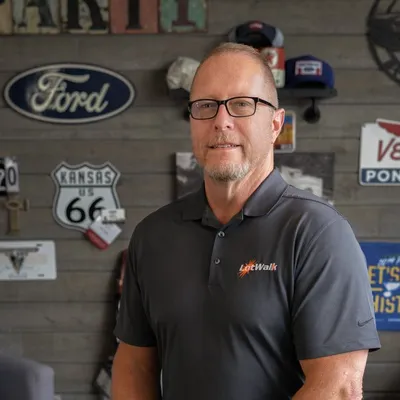
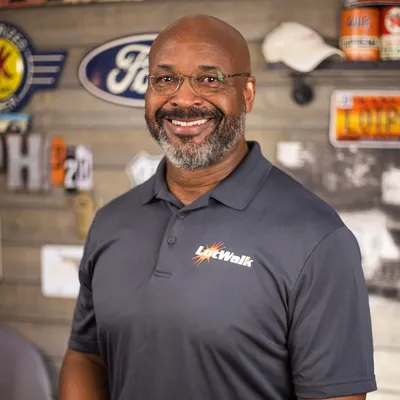
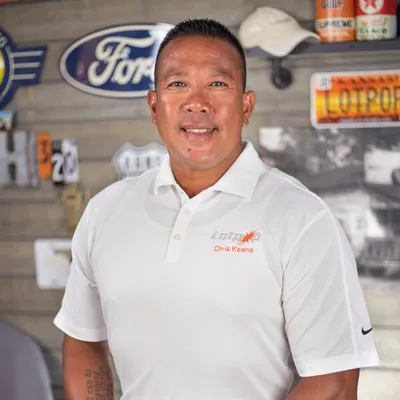
Full video episodes now live on the LotTalk YouTube channel.
Watch on YouTubeFrank Knox's core message: there are no bad acquisition channels, only bad strategies around how you buy. A $25,000 car is worth $25,000 whether it comes from a trade, the street, the service drive, or the auction; what changes is your cost of ownership (buy fees, PSI, transport) and what the car is worth to you based on your pack, your recon, and whether your store is the best end user for it. Knox tells dealers to lean on scarcity rather than market day supply, appraise every car that touches the store, and hold a CarMax-style standard of winning 30 percent or more of appraisals. His framework for executing it is CARS: Clarity, Accountability, Results, Standards.
What you'll walk away with
- There are no bad acquisition channels, only bad disciplines around them. Trade-ins, street purchases, the service drive, and every auction platform all work. Knox says the strategy behind how you buy is what separates top dealers, not the source.
- The market sets the value; your data sets what the car is worth to you. A $25,000 car is worth $25,000 everywhere. If you are the best end user with 10 leads waiting, it may be worth $26,000 to you. If it sits 90 days every time you stock one, it is worth less.
- Lean on scarcity, not market day supply. Knox watched a 21-day MDS vehicle sit 120 days and a 130-day MDS unit fly off the lot. MDS tells you how a vehicle traveled 30 to 60 days ago; scarcity tells you what is coming behind it, like 40 rental Suburbans waiting to flood the lane.
- Stop shopping the auction from 10 to 2 like everyone else. Prices spike in the peak window because every dealer is watching the same cars. CarMax buyers stayed until the last car ran and bought the back half of the run significantly cheaper. Knox bought two F-150s at 8 p.m., two grand back of MMR.
- Appraise everything and win 30 percent or more of your appraisals. CarMax and Carvana put a number on every car and work the funnel. The CarMax standard was buying roughly 30 percent of appraisals, and Knox believes the bar has only moved up since.
Episode chapters
Jump to the part you need. Timestamps match the audio and video.
- 00:00Cold openChris and Renaldo set up the acquisition theme and introduce Frank Knox.
- 03:42A $25,000 car is a $25,000 carTwo acquisition groups, one value. Only the cost of ownership changes.
- 07:00What the car is worth to youPacks, recon, and being the best end user on a unit.
- 10:17Strategy by make, model, and mileageRecon time, parts availability, and lessons from 7,000 cars at Off Lease Only.
- 14:17AutoAcquire AI and Unique Auto SourcingTurning your retail data into buying dials instead of renting someone else's widget.
- 17:56Wholesale brain vs. retail exit strategyKnow the wholesale market, but buy for how your store retails.
- 25:31Scarcity over market day supplyThe 21-day MDS car that sat 120 days, and the rental Suburban play.
- 32:38Everything is 3 grand over MMR? Only in your windowWhy the 10-to-2 auction window distorts what dealers think the market is.
- 38:33The CARS frameworkClarity, Accountability, Results, Standards.
- 44:34Appraise everything, don't discriminateCast the CarMax-and-Carvana-wide net across every channel.
- 48:01The night edition Ram dealerKnowing your buy list cold, and what happens when buyers stray from it.
- 55:10Win 30 percent of your appraisalsThe CarMax standard Knox carried for 17 and a half years.
- 56:39Lot predictor data and buying dialsFour real stores, days to sell vs. percent of market, and setting dials with data.
- 01:06:10Recap: the eight takeawaysChris runs the list, and Frank closes with data and discipline.
Why acquisition is the battle of 2026
With John Anderson finishing up vacation, Chris Keene and Renaldo Leonard bring in the guest Chris teased at the end of the last episode: Frank Knox, founder of AutoAcquire AI, partner in Unique Auto Sourcing, and a 17-and-a-half-year CarMax veteran who later helped run inventory at Off Lease Only, one of the largest independents in the country, with as many as 7,000 cars in stock at a time. The topic is the one every dealer is wrestling with this year: how to keep the lot stocked with profitable inventory when the market is tight and margins are compressing.
Knox's opening point sets the table for the whole hour. A $25,000 car is worth $25,000 no matter where you buy it. Group one is your trades, street purchases, and service drive. Group two is the auction, whether you are standing in the lane or sitting on simulcast. The value does not change between them. What changes is your cost of ownership: buy fees, PSI, transport, and holding time all stack on top of an auction car. And what changes even more is what that car is worth to you, based on your pack, your recon costs, and whether your store is the best end user for that unit.
No bad channels, only bad strategies
Asked whether buying direct from consumers beats the auction, Knox refuses the premise. In his words, there are no bad channels to go buy a car, only bad strategies around how you go get it. The strategy has to flex by make, model, mileage, and recon reality. A car with hard-to-find parts needs a different buy number than one you can photograph and front-line in two days. A 60,000-mile unit can look great on paper and then eat its own gross in the shop, which can make paying a thousand dollars more for the lower-mileage example the smarter buy.
There are no bad channels to go and buy a car. You may have a bad strategy around how you go and get that car, but there are no bad channels.
Chris adds the discipline piece: stop expecting auction cars to carry the same copy average as trades. The margin target is different because the cost of ownership is different. What the auction car does buy you is a customer, and as Chris puts it, you can replace cars all day long, but you can never replace a customer.
Scarcity beats market day supply
Renaldo brings up the metric dealers anchor on most: market day supply. He has watched a vehicle with a 21-day MDS sit in inventory for 120 days, and dealers pass on 130-day MDS units that their own history shows they knock out of the park. Knox says he leans on scarcity instead. MDS is a snapshot of how a vehicle traveled weeks ago. Scarcity asks what is sitting behind that unit right now: what is on the rental car lists, what is no-saling at auction, what is about to flood the lane.
His Suburban story makes it concrete. Rental companies were sitting on a pile of them and kept dropping prices. His team bought a couple cheap, the dealer turned them fast at about a grand each, and the market chased the play until rental floors came back up and the segment flooded. So they waited, let the rental companies drop again, and jumped back in under everyone who overpaid. MDS alone would have said stop buying Suburbans. The data said buy them cheaper and undercut the dealers who did not know the segment as well.
The 10-to-2 window is lying to you
When dealers tell Chris everything is running two or three grand over MMR, Knox's answer is blunt: everything is over MMR in the window you are watching. Most used car managers can only watch lanes from 10 to 2, which is exactly when everyone else is watching. CarMax built its buying advantage by being the last buyer standing in the lane; by car 200 in a big GM run, Knox's buyer was popping units off with nobody left bidding. Knox still works that way today. The night before this recording he was at his screens at 8 p.m., spotted two F-150s opening three grand back of MMR, called his dealer in Atlanta, and bought both trucks two grand back of the money.
CARS: Clarity, Accountability, Results, Standards
Knox's framework for executing an acquisition strategy is the acronym CARS:
- Clarity: the data tells you exactly which cars to go buy. Tools like LotWalk hand you the play; you have to run it.
- Accountability: someone checks whether you ran the play you were given, and busts you in the chops when you bought something else.
- Results: the scoreboard, which feeds right back into accountability.
- Standards: what you do to get the results. Watch every auction within 500 miles, not 75. Watch every run, not just 10 to 2. Sit in front of the screen for 10 hours if that is what it takes to find the one night edition Ram that fits your buy list.
His night edition Ram dealer is the model. The dealer only wants crew cab night editions with the big screen, will pay up to 101 percent cost to market, and does it gladly because those trucks sell at 105 to 107. That is a buyer with clarity and standards. The buyer who grabs a chrome-wheel Laramie two grand back of the money because it looked like a deal is the one explaining 45 days later why it is still on the lot.
Appraise everything, win 30 percent
The wide-net play is the one Knox most wants dealers to copy. CarMax and Carvana appraise everything and put a number on every car, then work the funnel. Carvana now acquires roughly 60 percent of its cars through agentic AI. Knox's standard from his CarMax years: buy roughly 30 percent of the cars you appraise, and he suspects that bar has moved up to 30 to 35 percent since. Every service drive ticket should get an offer. Every channel, every platform, every hour of the run list. Bandwidth is the honest obstacle, which is why services like his exist, but the standard does not change.
The Monday-morning action plan
Here is how to put this episode to work this week:
- Reset the math on auction buys: accept a different margin target on auction cars because the cost of ownership is different, and stop comparing them to trade gross.
- Build your best-end-user list: pull your historical sales and lead data and write down the exact units your store turns fast and profitably, down to trim and equipment, the way the night edition Ram dealer has.
- Add scarcity to your buy decisions: before you trust a market day supply number, ask what is sitting behind that vehicle in rental fleets and no-sale lanes.
- Expand the window: stop shopping only from 10 to 2 within 75 miles. Widen the radius, watch more platforms, and be the last buyer standing when everyone else goes back to their day.
- Set the appraisal standard: put an offer on every car that touches the store, including every service drive ticket, and track your win rate against the 30 percent benchmark.
- Run CARS on your buying team: give them clarity on what to buy, inspect what they actually bought, review the results, and hold the standards that produce them. For the selling side of the equation, start with the used car inventory management guide.
Get insights like this every week
Join the Insider Newsletter. Inventory tactics, podcast recaps, and dealer strategies. No fluff.
Transcript is auto-generated from the episode recording and lightly formatted. It may contain transcription errors.
Chris Keene (00:00): Well, welcome back folks. have tuned back in. is lot talk powered by lot pop. I'm Chris Keen, one of the co-hosts joined by the absolutely most gentlemen like individual I've ever met in my life. Mr. Ronaldo Leonard. Good morning, sir. How are you?
Renaldo Leonard (00:19): Good morning, brother. I am fantastic. Locked, cocked and ready to rock.
Chris Keene (00:22): I love it. love it. Come on, let's do it. But hey, I've got to say we've only got one more week. And then we get our brother John back. He'll be back from his couple week vacation. Brother, I hope you've got rested. I hope you've just decompressed and you're ready to rock and roll because next week's show, I promise you, Mr. Anderson is going to be bringing some heat.
Renaldo Leonard (00:48): Absolutely. yeah.
Chris Keene (00:48): with some rest and relaxation he's had. So brother, we've missed you. we can't wait to see you back, but Naldo this week, I left an Easter egg. kind of dropped a little grenade at the end of last week's show. So listeners and viewers acquisition, acquisition, acquisition, you restocking the lot. What we call here a lot, pop feeding the beast. We get a guest today that arguably is.
Renaldo Leonard (01:02): Yes, she did.
Chris Keene (01:18): one of the top top three top three advisors in acquisition. Now here's the thing I love about it, Ronaldo. This gentleman we're going to bring on here just very, very quickly, but this gentleman we're going to bring on, he's walked the walk because he's kind of one of those founding fathers over the old CarMax world. which we all know CarMax, they got the blueprint to acquisition.
Renaldo Leonard (01:47): yeah. headed him and like a sewing machine. Absolutely. Yeah. And it was, it was greatly in part of his leadership, his vision in kind of the roadmap for the things that they were able to accomplish. And, know, I'm always fired up when we get a chance to, talk to my brother, Frank. Yes.
Chris Keene (02:03): Yeah.
Chris Keene (02:07): Yes, yes. So I'm super excited for that. So listeners and viewers, get your pens out, get your paper out. I know I say that every week, but I promise you as we have embarked on 2026, as we are preparing ourselves for that first wave in that beautiful, beautiful industry that we're in, where it's selling time, it's show time. Okay. You're going to want to have your pen. You're going to want to have your shit. Everybody got a damn digital note taker anymore. Turn the thing on right now. Get your pen out right now. Get your paper out right now. Cause you're not going to want to miss a single word, a single takeaway, a single note for the gentleman we're bringing on the stage right now. Brett. Let the man out, let the beast out. Let's get the man rolling. Let's get this show going. Mr. Frank Knox from an acquire auto acquire AI. Good morning, my brother. How are you?
Frank Knox (03:12): Good morning, good morning guys. Man, you guys talk me up. I need to deliver. I need to bring some fire this morning.
Chris Keene (03:20): Brother, we ain't even worried about it. No, no, no, no, are we worried about that?
Renaldo Leonard (03:20): You always do. No, not one bit. There's no doubt in my mind that he's always going to bring the heat, come off the top turnbuckle. And that's why I tell everybody that the church van is ready and the full congregation will be in attendance because he is going to spread the word and bring the truth.
Chris Keene (03:42): I love it. So Frank, I'm going to share with you the last statement I made for the last week's podcast. And I think you heard it, but I want to say it again here on lot talk powered by lot pop season three, episode two. I'm going to state it one more time because I've been preaching this gospel. Okay. If a vehicle is worth $25,000, the value of the vehicle is $25,000. You've got two groups that you can acquire that piece of inventory from group. Number one, you got your trade ins. You got your street purchases. You got your service drive. Those three things right there you have available to you as a dealer group. Number two, you got.
Frank Knox (04:36): That's right.
Chris Keene (04:38): You auction now, whether that's standing in the lane, eating a dollar hot dog, getting heartburn raising your hand or you're on the simulcast. It doesn't matter if it's OVE. It doesn't matter if it's smart auction. It doesn't matter if it's Mannheim. It doesn't matter if it's edge. It doesn't matter who it is. It doesn't matter. Okay. You got group number two, which is the auction. So group number one, where you could acquire a piece of inventory from the street. your trade ins, your service drive, group number two, auctions, fill in the blank, any auction. But the value of the car is still $25,000. The thing that we're trying to get dealers to remember, because they're all educated, they understand this. But when now you acquire that piece of inventory from group number two, the auctions, you are now talking about cost of ownership. changes. PSIs, buy fees, transport, plus, plus, plus, Okay. But that doesn't change the fact that it's a $25,000 vehicle. So one of the things that we hear all the time, is, my gosh, you know, where am going to find these cars at? I can't keep buying them from the auctions. Well, yeah, you can.
Frank Knox (05:49): That's right.
Chris Keene (06:03): You just got to get your mindset right. That my cost of ownership is going to be higher and yes, my margins are going to compress for a minute. And then the second part of that Frank. Is if I do a good job.
Frank Knox (06:09): Thank you.
Chris Keene (06:18): of feeding the beast, what we call it here at lot pop, as in bringing more of the right inventory in, not based upon a wholesale value, not based upon an MMR, but based upon in my market, in my store with my people, what we sell. Yeah. Your margins may compress cause your cost of ownership is higher, but you're improving your opportunities now to acquire inventory from group one, which is those trades. So Frank, I want to roll it over to you. I just threw a lot out there because I want the listeners and viewers to get their pen and paper ready because I know you're going to preach some gospel right around that topic right there.
Frank Knox (07:00): Well, man, so so good morning, everyone. Number one. And I hope everyone had a fantastic holiday season and kicking off the new year in great fashion. But look, you're right. The reality is this a car is worth what that vehicle is worth. Right. And let's use that number. Twenty five thousand dollars. And if the car is worth twenty five thousand dollars, it's worth twenty five thousand dollars. no matter where you go to buy that car. Now, the question becomes, what is that car worth to you? That doesn't dictate what that car is worth in the open market. So what it's worth to you, you may determine that that car is only worth $21,000 to you because you have a $2,000 pack in your shop. Your shop has to eat as well and they're going to put $1,500 into that car. And then, you know, you got to make a little bit of margin on that car. And then you got to account for transportation and all of these other factors that go into your particular dealership, but other dealerships, other big competitors aren't playing by those same rules. And so we have to be able to understand that part first and foremost that
Chris Keene (07:57): Thank you.
Chris Keene (08:06): Right.
Chris Keene (08:17): Mm-hmm.
Frank Knox (08:20): You know, look, just because you have a large pack that goes into every vehicle doesn't mean that that's what the vehicle is worth. Again, it's worth that to you. But here's the other factor. And you brought up something. And I got this talking with Brian Kramer, and I continue to talk. And it's something that CarMax, and even when I was at Offleaf only, there, we started to really understand. what cars we were the best in users on. And so again, using that same theory of the car is worth this amount to me, didn't change the fact that the car was worth $25,000. If I'm the best end user on a piece of inventory, that car could be worth $26,000 to me. Well, why? Because I'm going to get that car in and I'm going to be able to sell that car and turn that car a lot faster than anyone else.
Chris Keene (09:07): Mm-hmm.
Frank Knox (09:14): And I know that I have a customer for that vehicle, right? And I can rinse and repeat that vehicle because, know, again, using the LockWalk software, I know I have 10 leads on that vehicle. I know if I go out and buy another one,
Chris Keene (09:21): You too.
Frank Knox (09:32): I'm going to turn that thing in 10 days as soon as I get it in because I have 10 other customers searching for it. And then I'm going to keep rinsing and repeating that over and over and over again, which may in turn raise the value of that vehicle to me, but it doesn't raise the value of that vehicle in the open market. And so at the end of the day, what you're talking about is these two buckets, right? Like, Hey, I can get a car direct from consumer or I can go to the auction and buy that car.
Chris Keene (09:34): Mm-hmm.
Chris Keene (09:47): Mm-hmm.
Renaldo Leonard (09:47): Right. Absolutely.
Frank Knox (09:59): At the end, is there one that's worse than the other? Not really, in my opinion, and I've said it over and over again, when you think about this, like there are no bad channels to go and buy a car. You may have a bad strategy around how you go and get that car, but there are no bad channels.
Chris Keene (10:14): Mmm.
Renaldo Leonard (10:17): Right. Yeah. And I think it's that strategy that set the best performing dealers apart from the rest of the industry or the rest of their competitors. But that strategy is, I mean, it's deep. got to go, you got to do the research, work the numbers to figure out exactly what strategy is going to work for each specific vehicle.
Chris Keene (10:17): Mmm.
Renaldo Leonard (10:44): as opposed to just putting a strategy out there over your entire inventory. Because you alluded to it earlier, if you have a vehicle that you sell and you sell rapidly and you know you've got a storehouse of leads on, that strategy is going to change a little bit from a vehicle that you don't sell as fast or are able to run through the recon process a little faster. So can you talk to how that strategy should be variable depending on
Frank Knox (10:48): What? the?
Frank Knox (11:08): Yeah.
Renaldo Leonard (11:13): different class or you're making model a trim that a vehicle might have experience with.
Frank Knox (11:19): Yeah, look, you know, the reality is like when I think about this, you know, you can look at. So let me back up. There's a couple of ways that I've looked at this in the past. depending on the make model, yeah, I'm going to have a different strategy for make model, right? I'm going to understand what cars require extensive reconditioning from a make model standpoint. And so with using that logic, I may know, look, this car, it's harder to get parts. It may take me longer through the shop. I need to have a different strategy for that car because my, my, my, you know, look, my days, days to retail, my days to front lot. are going to be different on that car than if I readily have those parts available and I can buy that car and get that car out to the front within two days and have that car photographed. It's a different strategy for those cars. It's a different strategy for the mileage on vehicles, right? If you're truly tracking your data and you understand, and I always had so working for big companies like CarMax and then I left there and went to Offleaf only and you know, most, you know, some don't know that in between me being out on my own and in CarMax, I spent a few years at AwfullySonly, one of the largest independents in the country, right? I had 7,000 cars at times in inventory and we had to have a thorough understanding of what cars we could get to the front lot. the fastest, but we also had to have a thorough understanding of, okay, if I go out and buy cars that are over 60,000 miles, those cars may look really, really good on paper, but the amount of reconditioning it's going to take to get that car to the front lot, it's going to eat through whatever profits I thought I had. And so it may make sense for me to go and buy that lower mileage car and pay a thousand dollars more to get that car than it would for me to buy that car with 60,000 miles.
Frank Knox (13:15): So those are the things. So in warranty, out of warranty, the mileage on the vehicle, the make model of that vehicle, right? The availability of parts. These are all things that you have to have the data to understand what cars do I want to go long on and what cars do I need to maybe hold tight and maybe I need to really look to buy that car at market or back of the market because I don't know how soon I'll be able to get that car to the front lot.
Renaldo Leonard (13:46): Yeah, it's such an intricate process to handle successfully. And I know that you part of a new venture that we've had a couple of conversations around offline. But why don't you talk to us a little bit about how you are being able to package that information and make it an advantageous situation to have a conversation with you based around these strategies. and the acquisition process.
Chris Keene (14:15): Thank
Frank Knox (14:17): Yeah, so, so I'm part of two, two ventures really that compliment each other. Right. So for most know that, you know, I'm, you know, I've taken on a new assignment with auto acquire. But I'm also very much involved with unique auto sourcing and sales. Because I need to continue to thoroughly understand the wholesale market and how the wholesale market is behaving and use that information to help dealers understand, are the cars that are really moving in the wholesale market. Here are the cars that, if I have that car, let's call it a Lexus.
Chris Keene (14:42): Mm-hmm.
Frank Knox (14:59): Is 250 or 350 f sport. Well, we know that there is a good end user on that car that more than likely is going to pay. above market on that vehicle, right? So I know I can go after, can be really, really aggressive on that vehicle. But here's the thing, here's the challenge. If you're going out there you're trying to buy that car direct from consumer, do your tools, whatever tool you're using, whatever widget you have on your website, does that tool know that you want to aggressively pursue IS350F sports? Chances are it doesn't. And so you're going to be in line with the rest of the instant offer marketplace. Well, we want to be able to give the dials and that control to customers to say, to our clients to say, look, if I have all this rich data, again, if LightWalk gives me all this rich data, And I say, hey, this is the car that I need to go out there and buy. Why am I relying on another widget to put a value on that car rather than looking at the value for myself and saying, all right, I already know I'm the best end user for this vehicle. I already know that I should be sourcing this car because all the data told me I have leads on it. I sell them in 15 days. I sell them at a thousand dollar front end gross. Whatever the information is that you have. Well, that information has got to talk to your system to tell your system, go out there and go out and find this vehicle. And you might have to pay a little bit more than what everyone else thinks the market is on that vehicle. I'll give you in car match does this the best of anyone. And I think Carvana is probably caught up now as well. And that is they're looking always at their historical data to tell you exactly.
Chris Keene (16:33): Mm-hmm.
Frank Knox (16:53): Hey, here's what we're selling well. Here's the profitability that we have in that car. Here's why we need to rinse and repeat that behavior. But they're also looking at the market and going, also, there's a scarcity issue in the market. And because of that scarcity issue, I know that I can go out and pay a little bit more for those vehicles. And if I do that, then I'm going to have those vehicles to be able to sell when no one else really has them. So all of these factors. are truly what drives the behaviors and drives what your what your price should be on a vehicle, right? Again, the market is the market. Hear me loud and clear. The market is the market doesn't change the fact that the market says that vehicles worth $25,000. It's worth $25,000 to the majority of people out there. But to me, if I know my data, it may be worth $26,000 or It might be worth $24,000 to me, but all of those other things don't change the fact that it's worth what it's worth in the open.
Chris Keene (17:56): So Frank, with that being said, because I feel like liberal phrase, let me take the word feel out of there because I witness it every day. Ronaldo witnesses it. You you witness it.
Chris Keene (18:12): whether you're a used car manager, whether you are a GSM GM owner or you're a buyer for a store. Many times we get caught in the void of, we get caught in this void of the vehicle is worth this wholesale, forgetting that we are trying to acquire a vehicle for retail. So I think they get very much caught in this, this really void of, my gosh, the wholesale value of it's this, the wholesale value is this, the wholesale value is this. Forgetting that they're buying the car for a retail exit strategy. Do we need to understand wholesale? And this is what I'm hearing you saying. We need to understand the wholesale market. If I'm not the best in user. for this piece of inventory because we don't pick our trade-ins, our trade-ins pick us. So I do from that vantage point need to understand the wholesale market. I need to understand the wholesale market if I spend all this money to go tell my market that I don't care if you buy a car from us, I wanna buy a car from you. But maybe that piece of inventory that John Doe brings in is not a good retail piece for me. So I do need to understand the wholesale market. But before understanding the wholesale market in the retail market, I need to know my retail market. Because that 25 grand vehicle could be 26, 26 and a half, 27 grand. Because I can see that I can sell the rig.
Chris Keene (20:14): for 30 and a nickel, 31 grand.
Frank Knox (20:18): So, so your best, your best. Yes. Yes. So your best, your best wholesaler. So Justin Campbell, who's, you know, my partner owner of unique auto, Justin, Kim was really amazing at understanding the wholesale market and how the wholesale market and how the retail market impacts his wholesale market. Meaning.
Chris Keene (20:20): Am I hearing you right of what you're saying? Am I understanding that right?
Frank Knox (20:47): If he doesn't have a thorough understanding of when I bought this car, what dealer is going to come into my lane and buy this car from me? I lose. So there is no wishful thinking, right? On the wholesale side, your best wholesalers, know, Justin Campbell, Unique Auto, Bob Hollins head, give me the van, right? Like all these guys, they understand who's coming into my lane to buy this car. Am I just taking a chance? and buying a $50,000, $100,000 car, I already have someone in mind that's going to show up and buy that car. So that's number one. But then you think about this, and you go, so how does that translate to me, the retailer? Well, I need to work backwards. I need to understand that if I don't have a customer for this vehicle, All the data points to, I don't sell these things well at all. I'm a Ford store and this is a Nissan Altima and I haven't sold a Nissan Altima in the last 90 days profitably. And every time I have one, I'm sitting on that vehicle and it's waiting to age out on me. Why I have to understand that? Because my value, I'm not going to give market value perhaps. on that vehicle, knowing that I have to go take that car to auction and I need to be able to sell that car profitably at auction. So my value might look a little differently on, that vehicle, right? More times than not, when I hear it, and I talked to dealers across the country and I hear the same things that you hear, right? Like, well, wholesale, wholesale, I got to have a wholesale exit strategy. Why are we thinking about wholesale exit strategy?
Chris Keene (22:25): Mm-hmm.
Frank Knox (22:39): When you just told me you have five leads on that same like vehicle and you could sell the one today and have four more customers lined up tomorrow that still want to buy this vehicle. Why are we talking about wholesale exit strategy on a vehicle that clearly is a vehicle that you're going to retail profitably and turn it fast.
Chris Keene (22:51): Mm-hmm.
Frank Knox (23:05): That's the part that doesn't make a lot of sense when you hear that. And so when I say that back to dealers, go, you know what? You're right. I could be stronger on this vehicle. Great. Let's go be stronger on that vehicle. Let's be stronger on that vehicle. And let's be stronger on that vehicle, whether we're stronger on that vehicle in the appraisal lane, my service drive, Facebook marketplace. Let's be strong there.
Chris Keene (23:16): Mm-hmm.
Chris Keene (23:33): Mm-hmm.
Frank Knox (23:34): Also, equally, let's be strong at the auction on that vehicle as well. And here's the kicker. I need to be just as strong at the auction. Otherwise, I'm going to miss a chance to sell that vehicle and have a customer for life. So I need to be strong. But here's the kicker that I look at. My margin targets probably are going to be different.
Chris Keene (23:59): There's no problem with they are because your cost of ownership is different. Well, but hey, listen, listeners of years already know I'm not going to be, I'm just going to, Hey, you can only see because I'm still handled up here. You can only see the W that's called, that stands for work. then the rest of this, the facts, but today we just talk about work. So we even talk about the facts, but I am going to tell you the fact of the matter is
Frank Knox (24:01): Look, Chris, I was trying to be polite.
Renaldo Leonard (24:02): No, no, no, no, no.
Chris Keene (24:27): The margin is going to be different because your cost of ownership is different. Stop sitting there trying to take a square peg and put it in a round hole and think that you still will run $3,700 a copy on a vehicle that you bought the auction. Frank's first takeaway. There are no bad channels for acquisition. And I added to it only bad disciplines to the acquisition approach. Okay. So stop thinking that you're going to sit there and make your mortgage payment. on auction vehicles, because you're not. But what you are, it is that second part you talked about, Frank. You're going to get a customer for life. So now what's that worth? What's that worth? Because you can't replace a customer. Listen, I learned this back in 1994 when I first got the car business by a guy named Ken Bailey. Okay. He sat there and told me, says, King, you can never replace a customer, but I can replace all these cars. Drop of a hat.
Frank Knox (25:28): Yep, 100%.
Chris Keene (25:31): No, no, go.
Renaldo Leonard (25:31): So when we're talking about that information that people are using, that's directing them to or from having a multi-channel approach. One of the conversations that I have, know, Chris, it tickles me to death when I hear you have this conversation, but when guys are really anchoring their decisions around one metric, that and it I love to hear Chris talk about it because he will get in somebody's grill to explain to them that market day supply and that market day supply number is irrelevant once you own the vehicle. And I kind of had that validated this week. was looking at a particular dealer's inventory and they had a vehicle that was time that they acquired it. Market day supply number is at 21. But here we are 120 days later and it still sits in their inventory. And I've also seen the reverse happen. Looking at vehicles for somebody to acquire and say, well,
Chris Keene (26:38): It's not
Renaldo Leonard (26:48): That vehicle has 130 day market day supply. I'm not going to touch that with them. Yeah. And I'm not going to touch it. And then we go into their, you know, their history and they have been just knocking those things out of the park. That particular, your make model in terms of vehicle, they've had nothing but unprecedented success with it. What is your feeling about that metric?
Chris Keene (26:51): Even a 75 day people freak out over those.
Renaldo Leonard (27:17): and dealers kind of anchoring all the decisions that they make, wholesale versus retail and all that good stuff to that number.
Chris Keene (27:25): Mm-hmm. Mm-hmm.
Renaldo Leonard (27:29): What do you think?
Frank Knox (27:31): So I tend to lean more towards scarcity than I do market day supply. when I say that, here's what I'm looking at. So I have the luxury of having a team of people and myself that we're looking at auctions every single day. We're seeing the number of cars that are rolling through. We're getting the reports. We're getting the rental car list. We can see it all.
Chris Keene (27:54): Mm-hmm.
Frank Knox (28:01): And what I know is this, that I could take a car in today, and yeah, it may be a 21-day market day supply today. But if I don't know scarcity behind that vehicle, meaning what's out there in the open market waiting to be sold, if I don't know what's no selling at the auction, well, then my market day supply doesn't really mean anything now, does it? Because if I took that one car in and, Hey, I sell that car and I've sold it extremely well and I took that car in. However, behind that one that I took in, there's 40 that are waiting to be sold and I know that the rental car companies are going to start chopping those things down. and I know that the market is going to get flooded with those things. Well, I got to be real quick to turn that car. I'm not saying not to take it in. I still want to take that car in. But my strategy changes on the basis of what's out there in the open market. My strategy changes based on what's no selling at the auction and understanding that metric. Right. And the only way you can do that. And this is a challenge for everybody because bandwidth becomes an issue.
Chris Keene (28:54): Mm-hmm.
Frank Knox (29:12): You can't sit and watch the auctions if you're a used car manager or director for 10 to 12 hours. But I have people that try to do it.
Chris Keene (29:18): Uh-uh.
Frank Knox (29:20): I have people who I talk to on a regular and they go, Hey, look, man, I'm trying to buy some cars and I'm trying to desk the steel and I got this appraisal waiting and I got to do this and the phone's ringing and I got a text message and you know, and I got to talk to my finance guy and then my GM wants to have a meeting and then I got the lot pop guys, they're calling me and they want to have my consulting session and blah, blah, blah, on and on and on and on. How am I going to sit and truly know, engage the market if I'm not watching the market?
Chris Keene (29:42): huh.
Frank Knox (29:52): How am I going to truly understand market day supply if I don't understand the scarcity issue, if I don't understand the no sales that are occurring in the market and what's coming behind that one unit that I just happened to buy? And I'll give you this example. I saw it not too long ago happen with Suburbans. Suburbans, I want to say rental car companies,
Chris Keene (30:09): But, go ahead, go ahead.
Frank Knox (30:20): They were sitting on a ton of them. I watched them and they just kept price point dropping, dropping, dropping. Eventually it got low enough where I thought, okay, you know what? That might make sense for the dealer. Hey, Mr. Dealer, you should probably buy a couple of these. We bought a couple. He turned them really fast. Boom. I'm pricing these things. I bought them. I'm going to make a grand on this suburban and I'm going to move on. Right. $40,000 car. He says, Hey, I'm making a grand on it and I'm moving on. Nope. No real pack. No, no, no, no, no, no, no, no, no, no, no, no, no, no, no, no, no, no, no, no, no, no, no, no,
Frank Knox (31:19): $49,000 for this vehicle. That's seven grand or so of money that I can put negative. So people started pricing them up. Well, what did the rental car companies do? Oh, our floors are going to be a little bit higher. Right? Well, now the market flooded with these things and nobody wants them. And so what did we do? Well, we played the game. All right. Rental car companies are still holding them. Everybody else paid $42,000, $43,000 for them.
Chris Keene (31:34): Mm-hmm.
Frank Knox (31:45): All right, we're going to wait. We're going to see what the rental car companies do. The rental car companies drop the prices. We jump back in. We're going to buy them again. And now we're going to undercut everybody else in the market. So that's, that's the value of understanding that market day supply, but not leaning on that market day supply, because the market day supply would have said, don't buy any more suburbans. But we knew that his data showed. Hey, when we bought these things in the low 40s, we sold them within less than 20 days. We made a grand, we made three or four grand back in and we did it a couple of times before the market caught up. Well, market day supply would have said, well, now the market's flooded with them. Don't go buy any more of these things. Well, no, I could still buy them. I just need to be able to buy them cheaper and I need to be able to undercut competitors that maybe don't know the data as well as we knew that data.
Chris Keene (32:38): Okay. But you, you talk about that right there, Frank and the pushback. always hear from dealers. Well, Chris, you can't buy anything cheaper at the auction. We're watching everything go to $3,000 over MMR. Now we're doing it. Now what?
Frank Knox (32:52): You're watching everything go two or $3,000 over MMR in the window that you're watching.
Chris Keene (32:58): OOF
Renaldo Leonard (32:59): And when you change the things you look at, the things you look at change. that was just, you know, we used to bring that to the market when I was with the auto and I started with the stock wave. and widening your scope, casting in a broader net in order to catch bigger fish. Because everybody has their, you know, maybe their 75 mile radius. of where they're looking to acquire vehicles and going out and also taking in data on different segments of vehicles where those types of deals are kind of hidden unless you dig into it and get into the metrics.
Frank Knox (33:43): Yeah. And when I say that, like if you're watching auctions, Chris, Ronaldo, if you're watching auctions and you're watching auctions at the peak time of the day, what do you think everyone else is doing? What do think the prices are in that that window that you're looking at? Right. You're watching cars from 10 to two because that's the time you have. And that's not a knock on anyone. It's just the reality. use card directors and use car managers, don't have the bandwidth to sit in front of that computer for 10 to 12 hours. They just don't. And so while you're watching in that short window from 10 to 2.
Chris Keene (34:21): to effectively write, but to effectively sit further because when you're in the dealership, try to sit in front of that. You got seven thousand bullets whizzing by your head. So they can't effectively do it.
Frank Knox (34:30): Yeah. So which is why the concept was born with unique auto sourcing of look, we're going to have buyers that will source for dealers that are going to sit in front of their computers from 7 a.m. till 10 p.m. at night sometimes. Right. And all of sudden, and I'll give you a perfect example. Last night, Chris, I'm at my computer and I'm watching cars at 8 p.m. I started my day at 4 a.m. yesterday. It's 8 p.m. I was still sitting in front of the computer looking for a few cars, seeing what was out there, seeing what was happening. And I called up my used car manager at one of the stores down in Atlanta and I said, hey, I'm watching I'm watching these trucks, a couple of F-150s. And man, these things seem pretty cheap right now. Opening bid is three grand back of MMR. Looks like a dealer is just trying to unload them. What do you want to do? Man, I'll take both of them. Great. I'll just I'll put a number and let's see what happens. Chris, I bought both of those trucks, both of those trucks, two grand back of MMR. Not that MMR is the end all be all, but what I do know is that truck has bought cheap enough for this Chevy dealer to put on his lot to sell cheaper than any Ford dealer in a place where the market day supply would seem a little bit higher than what he would want. But at that price point, It means that he's allowed to enter the market with a truck that's priced probably ranked one through five in terms of the price and still be profitable. So again, it's not that cars are always doing two or three grand above the market. It's the window that you're looking in. Those cars are probably doing that, right? It's like going to the grocery store and saying, hey man, I showed up at the grocery store at 2 p.m. on a Saturday afternoon and all the steaks were picked over. There's no good steaks out there anymore.
Chris Keene (36:30): Ha
Frank Knox (36:32): But if I went at 7 p.m. on Saturday when they replenished everything, I'd probably get the butchers cut.
Chris Keene (36:45): You've got me up to take away number five. This is why I wanted Frank on today because listeners and viewers, I promise you at the end of this call, I'm going to recap these and I'm strongly recommending that you go back to lot talk podcast.com and listen to this again or go to YouTube or go to Spotify or go to Apple and find this one because Frank is spitting the gospel out here.
Renaldo Leonard (36:49): Yeah.
Chris Keene (37:15): in the thing that is probably one of the most puzzling things or quite frankly, you know, I'm going to arguably say one of the things that our dealer brethren out there get so much paralysis by analysis from and really kind of overthink it. In my opinion. Okay. Now, Frank, I know you consult with a lot of dealers, your services through Unique and AutoAcquire AI, both your services that you represent. Unique AutoSourcing and AutoAcquire AI, I know in both of those, in your initial consultations, in your ongoing consultations, It's almost like you just want to grab somebody by the collar and slap a real hard for a reset and say, whoa, whoa, stop overthinking this. Here's the simplicity of this. It is not rocket science. is fundamental, basic blocking and tackling. but being educated on how to block and tackle. So I feel like that's what the almost simplicity of it is.
Frank Knox (38:26): But yeah.
Frank Knox (38:33): Yeah, so look.
Frank Knox (38:37): Botwalk does an amazing job of setting a dealer up and providing them with some data. So you have that piece of the puzzle. Now you need to be able to take that piece of the puzzle and go execute it. And I talked about this this morning on another podcast. Brian Kramer and I, we were chopping it up. And we came up with this acronym. And you'll probably listen and hear it. But the acronym I came up with was CARS.
Renaldo Leonard (38:38): .
Frank Knox (39:07): It's all about cars, right? It's all about cars. And people are like, well, what does that mean? Well, it's about clarity. It's about accountability. It's about results. And it's about having standards. With those four things, you need to be able to go and execute. And you will execute at a high level if you have all of those things. So when you think about that, well, Clarity is hey lot walk is telling you hey, this is what you got to go do right here Although here's all the information you just got to go do it But now there has to be somebody who holds you accountable Like you guys who are punching people in the mouth all day long on dude. Here's the data. Here's the information All you got to do is go and execute this play that we're handing over to you, right? But then there is the the other pieces of the puzzle right that accountability
Renaldo Leonard (39:47): you
Frank Knox (39:59): that you've now placed in their house, well, now I need to be able to deliver some results, right? But in order to have the results, the result is, hey, go out and buy five cars. Well, what's the standard? How am I going to go out and buy five cars? Well, the standard may be I need to look at every auction within not 75 miles. I need to look at every auction within 500 miles. I need to look at every auction that's running from not just 10 to 2. I need to look at every auction and I need to be the last person standing in the lane. That is the standard when I was at car Max. That was a standard. We didn't leave the auction into the last car ran. You know what happened by the time GM got to those last 20 cars.
Renaldo Leonard (40:52): We're just clicking off.
Frank Knox (40:55): We're popping them off because nobody else is standing in the lane. Nobody else is watching the monitor anymore. People are back to their day, their normal day, especially if it was a large GM run, because now it's two or three o'clock in the afternoon. Right. And no one wants to. Well, yeah, like, right, right. Like there are times and I remember them vividly standing in the lane in Milwaukee. Right. It's freezing cold out.
Chris Keene (40:59): Mm-hmm. Mm-hmm. Mm-hmm.
Chris Keene (41:10): and they're all ready to get the hell out of there.
Renaldo Leonard (41:12): Everybody's full of hot dogs.
Frank Knox (41:24): And I'm looking around and it's us and maybe one other guy and it's 12 noon, 1230. They're on car 200. This is back in the hay day, right? Like they're on car 200 in the GM lane and my buyer, he's just standing there and he's just fired. He's just fired, fired and he's buying cars and he's buying cars significantly cheaper than that first car that ran through the lane, right? Why?
Chris Keene (41:49): man, I'm gonna tell you, Frank, those, those car max buyers used to piss me off. I'm not like, I, was, I honestly, back in the day, I was that guy. I didn't work for car max, obviously, but I was that guy that would be the one, the last ones to leave, just trying to find that good deal. And I'm sitting here watching this car max guy going, are you freaking kidding me? And I honestly, though, you, you talk about that, that first car that the car max guy bought to the last car.
Renaldo Leonard (41:54): You He
Chris Keene (42:20): We used to get so pissed off and just would really want to, you know, take that car Max got back and whip his ass because we're sitting there going, this guy is completely screwing the whole market up because he's just standing there with his hand in the air in his, his notebook. And we all poke fun at him because that dude didn't know the car business from come here and sick them. Okay. And he stayed in there with his hand in the air, looking at his notebook and then puts his hand down because The date they told him to.
Frank Knox (42:54): Say that again. Say that again. Who told them to?
Chris Keene (42:54): But he bought those cars at the beginning. Yeah. The data told him to. Okay. So, but then by the time it got to the end, I picked up on what he was doing. I'm like, well, shit, man. He, for, bought a hundred cars and 40 of them at the beginning of the day, he bought way off the mark.
Renaldo Leonard (42:56): Yeah. The data.
Chris Keene (43:20): But the last 60 he bought right, so what are they doing? they're going to average those out. So I was like, that is freaking genius. Now we didn't have the resources to be able to go do that, but I understood the principle.
Frank Knox (43:38): That's the key understanding it and figuring out like, all right, like when I hear when I hear that statement that you said, dealers are saying, hey, look, everything selling 2000 3000 above MMR man. Tell you what, I wish that were true because if that were true, Justin Campbell and Unique Auto probably retire, right? Like Bob Holland said would have already retired, right?
Chris Keene (43:57): Well, for the third time, Hollins had would have retired.
Frank Knox (44:06): Right. But what we know is that that's not true. Again, you're able to look at a car in a limited amount of time on a limited platform. So if you were to come to my office, you'd see four monitors. You'd see four different auction platforms. You may see ACV up. You may see a Dessa. You may see Mannheim. You may see Smart Auction. Right. You may see Open Lane. may again.
Renaldo Leonard (44:07): You
Frank Knox (44:34): Don't discriminate about where you're going to go and find the inventory, right? With auto acquire, I'll shift gears and talk about auto acquire, right? Don't discriminate about where you're going to put and what cars you're going to put offers on. I say that like, again, cars coming through your service drive, every one of them should have an offer.
Chris Keene (44:57): Yeah, yeah.
Frank Knox (44:57): I truly believe this because this is what CarMax and Carvana do. They cast this wide net that we're going to appraise everything. We're going to put a number on everything and then we'll work it through the funnel. And so that logic is what AutoAcquire uses to say, look, put a number on every one of them, but turn your dials where you need to turn your dials so that that card makes the most sense for you based on if this is a hundred percent of the market. And you know that you sell that car better than anyone else. Why are you at 100 % turn your diet to 105 %? Beat some of these other major players at their own game. But look at everything and that's I guess when we when we start, you know, nearing to our closing time here, that's the one piece I want people to really take away is don't discriminate about where you're going to go shop for cars. Don't discriminate.
Chris Keene (45:35): Mmm.
Chris Keene (45:55): Yeah, I had that as the very first takeaway.
Frank Knox (45:59): Yeah, don't discriminate about what you're going to put a value on. Because if you're discriminating in those two ways, you're not going to find the best deals out there. You're always going to assume that everything's performing above the mark.
Chris Keene (46:17): But that definition though of the best deal people correlate the best deal to a dollar figure versus the best deal is how in my store in my market with my people how we retail am I right or wrong Frank?
Frank Knox (46:39): You're right. The best deal is the one that you can be profitable on and gain a customer for life on. That's the best deal.
Chris Keene (46:46): Okay. So listeners and viewers, I want to make sure you caught that because we're not at when you're training dealers. That's, that's where our thought process is. Here's the facts. Let's work the facts and the facts are X. It worth showing them X as in this is where you are moving in our lot predictor. We're showing them where they sell at.
Renaldo Leonard (46:51): That's a shift.
Chris Keene (47:13): And Renato, is that not one of the hardest things that we have to try to get dealers over the hump in their thinking?
Renaldo Leonard (47:20): Absolutely. I mean it's it's almost like you know you have to grab him by a headlock drag him through the door and Present those facts over and over and over again before it starts to sink in What's most important about this vehicle is how you and your people sell it not the market data that you get and That is what you want to focus on time time and time and time again. I'm sure
Frank Knox (47:40): Yeah. Yeah, I would love to know, Renaldo, and sorry to cut you off there, but I would love to know when dealers are saying, you know, look, I can't find those cars at what you're telling me I need to find them at. I would love to know how many cars
Renaldo Leonard (47:48): No, no,
Frank Knox (48:01): Did they look at how many light cars? So let's use something. have a, you know, look, I have a couple of CDGR dealers that we work with and we buy for, and I consult with and they're, they're on our auto acquire platform. So, know, when I, when I go and talk to dealers, we're talking to acquisition and we're coming at it from all angles. Hey, unique auto, can help you there. Auto acquire. can help you in this way. Package those two things together and you're going to be off and running. Right? I have a dealer who The only pickup truck he wants is the night edition Rams.
Chris Keene (48:36): Hahaha
Frank Knox (48:37): He that's that's the one he wants. It has to be a crew cab. It's got to have the big screen. It's got to have the 20. He's he can go back and forth whether he needs 22s or 20s or whatever. But it's got to be a night edition and it's got to have the big screen. And if it can have it and if you can find one with a panel roof, I'll take that one. But he always tells us at the end, like, look, and if we got to be one hundred and one cost to market on it, I'm OK. because I sell them at 105, 107, right? Here's someone who knows their inventory, knows that every time I get one of these, I turn that thing well. I know what that competitive set looks like. I know that the competitive set on Big Horns or Laramie's, it's all of the base ones that don't have all of these equipment. So I want to be different than everybody else. I'm not going to blindly search for the one. that I think is a good deal because I may find that Ram Laramie that's a good deal. And I've seen this happen many times. Ram Laramie that looks like a good deal. It's got the small screen. It's got the small wheels. It's got the chrome wheels and they're going, man, they're pounding their chest, man. I ripped this thing two grand back of the money. And then, you know what happens 45 days later? I go, why is that car still sitting on you?
Chris Keene (49:45): Hmm
Chris Keene (49:55): Because they didn't have clarity.
Frank Knox (49:58): We can go.
Chris Keene (49:59): Okay, because they didn't have clarity. And there's two things I want to do real quick as we were running out of time here, damn it. But I want you to go back through that acronym. And I just want to make sure this that we understand the definition of that clarity. Simplistically, this is what this is what we need. What was accountability? I missed that one.
Frank Knox (50:20): So accountability is, and I'll use you guys as an example, that's accountability, right? Here's what we told you to go out there and we told you what to go do, right? You decided to go do something else and here's what happened as a result. And I gotta bust you in the chops a little bit. and ask you why did we make that decision when we knew what we were supposed to do and whether that's clarity from you guys, whether that's clarity from the GM, whether that's clarity from whomever. Right, there's got to be that clarity defined and then it's to be that accountability that's coming behind it that says now I'm looking and you did something completely different than what I told you to do. That's that's that accountability, right? The results. That's the easy thing. I can look at the results. I can look at the results and I can use those results to go back and hold you accountable for the decision that you made after you've had the clarity that said, hey, this is what you should have done in the first place. And then the standard. So cars, clarity, accountability, results, standards, the standards are what you do to get the results. So results, that's what you get or what you got. standards are what you do to get that. And so when I think about standards, when we say, hey, you were told to go out there in this example, using Rams, we know that Ram 1500s, big horns, they perform extremely well if they're night edition with a big screen in the panel and the right rims. We know that. Right. If I choose to not go and execute that play,
Chris Keene (52:00): Right.
Frank Knox (52:09): Well, then there's got to be accountability. Why did you buy this truck when we know that the other trucks work better? Well, I bet I bet Chris, when you talk to these to some of these dealers, what it's going to come down to is they didn't have the standards in place to make sure that they got the results. There wasn't a standard that said, hey, look, understand that you're going to look at 25 Ram 1500 night editions and you only buy one.
Chris Keene (52:28): Mm-hmm.
Frank Knox (52:38): The standard is, hey, I don't know what it's going to take, but you may have to be parked in front of that computer for 10 hours until you find that one Ram night edition that works for us. Those are the standards that get you the results. What happens with dealers that I see, and I can't speak for every dealers, because I know we have some pretty sharp dealers out there that execute at a very high level.
Chris Keene (53:00): A lot of-
Frank Knox (53:03): But when dealers fail at this and I talk to them and try to find out, why did we fail at this? There's a time factor that comes into play. There's a bandwidth issue where they say, Frank, I didn't have, I didn't have the time to sit there and just shop for that one unit. So I ended up buying this other one, or I ended up paying a little more for this one than maybe I wanted to buy because, I just, I couldn't find any. Well, they're out there, but you got to have the time. You got to have all the platforms. You got to be willing to search in all the places. You got to use again and bringing it full circle. You got to use every channel. If I know I need night edition Rams, that means that every service drive ticket that comes in, I need to be on every night edition Ram. It means that I gotta be scouring Facebook marketplace to find night edition rams. It means I gotta be on every auction platform, ACV, Smart Auction, Open Lane, Mannheim, Odessa, Edge Pipeline, which is America's auto and dealer's auto auction. I gotta be everywhere. Bandwidth becomes the issue because most dealers don't have the staffing to be everywhere. CarMax does. Carmana is using 60 % of their cars are being acquired through a Gentic AI. So the two biggest players have figured out how to do it. We as an industry, we need to figure out how we're going to compete.
Chris Keene (54:35): So those standards, and I wanna talk about that, because I've just kind of edited my notes here on that for the takeaways that I'm gonna give here in just a few minutes for everybody. But simplifying that to broadening your available resources and time to acquire inventory to execute. on the results you're trying to drive. Am I saying that right?
Frank Knox (55:10): Pretty, yeah, pretty much. I think it, look, when I think about my time in CarMax did a really good job of engraving standards into my head because we knew that for every 100 cars that we appraised, we were going to buy roughly 30 % of those cars. But we knew like, hey, if...
Chris Keene (55:30): Is that still is that still a good standard number?
Frank Knox (55:33): It's a great standard number. think CarMax has actually tried to move that number up. I don't know truly what the number is, but I'm going to bet that that number still is, they need to acquire 30 to 35 % of the cars they appraise.
Chris Keene (55:46): But let's the only reason why I said the only reason why I said that Frank, because you spent 16 years with CarMax. 17 to have 18 years, a long ass time. Okay. But the benchmark was 30%. Then I don't see any reason why that number would have went down.
Frank Knox (55:53): 17 and a half, but yeah, who's counting? Yeah.
Frank Knox (56:08): Exactly.
Chris Keene (56:08): especially in today's landscape. I can see, especially after COVID, when we did have inventory constraints and we had, you know, everybody out there saying, Hey, I don't care if you buy a car for me, I need to buy yours. So, um, I, arguably, I would say that number has probably gone up, but a good number in standard is when 30 % of what we appraise.
Frank Knox (56:26): in
Frank Knox (56:37): Yeah.
Chris Keene (56:39): Okay. I love that. So Frank, I want to share something with you because, and I'm going to do this, Brett. I know you're probably going, Chris, we're about to run out of time here, but I'm going to share my screen and I'm going to do everything possible to explain it right to those that aren't watching, but are listening. But those that are watching, I'm going to share my screen here for a minute. If Frank.
Frank Knox (56:40): Yeah.
Chris Keene (57:07): Having this information here, when I show you four different stores and all I did was we call it, you know, spin the wheel, stop on a dealer. And we do this every time that we're talking either with a new perspective, you know, lot block client or trying to get people to understand that the predictive information we're showing them is based upon factual data and how they need to really harness it. Okay. This right here is a Highline store, it's a Porsche store. Now, what I wanna show you here, this is their data of what they have sold over the last couple of weeks. And if you look, their actual was 50 days at 98 % as a whole. Where predictive data was showing. 46 days at 97%. So you could see we're within 1 % showing. What we showed them was is, hey, collectively 97%. Okay, you're rolling 98. Great. Here is franchise dealer here, know, a domestic store. 39 days at 98%, 46 days at 98%. Here's a dealer in Canada. 70 days at 103, 58 days at 101. Here's a franchise dealer here in the United States. 43 days at 92, 40 days at 92.
Chris Keene (58:53): But when you take all of these back to the Highline store, we're showing. that this dealer was doing it four days longer to gain that 1%. So our consultation with them would have been, hey, what's that four days costing you when you look over your total inventory? Is it worth that 1 %? This dealer right here, okay, you're 39 days at 98, you're 46 days at 98, your inventory is starting to move slower in your market. This dealer right here, yeah, you're 2 % less, but you're 12 days faster. Now what's your net return? What's your net to gross to look like? And this dealer right here, we're three days slower, but still drawing the same money, so good job.
Frank Knox (59:41): Right.
Frank Knox (59:47): and that's
Chris Keene (59:50): Okay. So things like that, if you had that information, how does that change? If you know this information, if you're, if you're a lot walk, paying dealer and you know this information, how does that help you in your buying strategies now?
Frank Knox (01:00:08): Yeah, so from a high level, right? Like I understand, like, hey, look, whatever I have currently in stock, right? If the predictor is showing me that, look, I'm going to perform better on these units than historically I have. Well, then I want to go granular. Like I want to go even I want to go further down and I want to see, OK, well, what are the cars that we have now that are different than maybe what we've sourced in the past? And then again, I'm to use that information to go out there and duplicate. My efforts, right? The the other part of this, right, like the other part of this is if if I know that right now I'm turning cars.
Chris Keene (01:00:43): Mm-hmm.
Frank Knox (01:00:55): faster, right? And this, this is, this is always a challenge because I can look at things and say, man, I'm turning cars a lot faster, but if I'm turning cars a lot faster and I'm giving up margin to do so, then I got to be really careful. And I see this, I see this often, and I've talked to dealers about this, right? Like dealers get really, really excited about the fact that, look, I'm turning my cards really fast.
Chris Keene (01:01:07): Mm-hmm.
Frank Knox (01:01:24): And I took a little bit of a hit on my profitability, but I'm turning cards really, really fast. The other thing I see is that we've
Chris Keene (01:01:32): Which means by, which means my net to gross is going to be better. Okay.
Frank Knox (01:01:36): Right, right. And that's a good thing. But the other side of this is I'm over leveraged on inventory and I start screaming about how I own market share. But then I go and start looking and going, you're over leveraged on inventory and you're selling more than the market is commanding. However, the problem is that you're giving it all away. So what good is it, you know, unless that's your strategy. What good is it to over leverage on one segment of inventory to grab market share only to sell that inventory in a place where it's not profitable anymore?
Chris Keene (01:02:05): Mm-hmm.
Frank Knox (01:02:11): So all.
Chris Keene (01:02:11): Because you're because you're giving away your profits with that aging inventory sitting on your lot.
Frank Knox (01:02:19): That's right. That's right. So all of that stuff, like, so all that information becomes for me really meaningful, especially as I'm talking to dealers and I'm trying to help them, you know, on the auto acquire side, we'll go in and I'll consult with dealers to help them set their dials to where they can be successful in acquiring the inventory. When I start seeing cars that are on their lot that are aging and they're telling me, man, we sell these really, really well. Let's turn our dial. Well, hold on.
Chris Keene (01:02:39): Mm-hmm.
Frank Knox (01:02:48): Turning your dial up is absolutely the wrong answer. You're already over inventory on that segment or that make model. Let's turn the dial down, see if we can absolutely get some to offset to your point with the card max guy was doing in the lane. I'm going to pay up for some of these over here, but I'm going to get these a little bit cheaper and I'm going to average that inventory out. to make sure that I'm successful. Same thing applies when I'm, again, when I'm trying to help dealers with setting their dials, I'm using that information to say, look, here's what we want to go after versus what we don't need to go after. And all the information, all the data is telling me.
Chris Keene (01:03:24): So it's essentially the, it's the framework to your buying strategy.
Frank Knox (01:03:29): That's right. Yeah. mean, historical sales has to be, it has to start with your historical sales to understand what you're going to go out there and buy. There is no, there is no world anymore where you can use your gut feeling to say, no, I think I'm going to sell this thing. I think it's super cool. I'm going to go out there and buy this thing because it looks great. But if your data tells you that, as great as it looks, it, you know, look, there are some really good looking paperweights as well. Right.
Chris Keene (01:03:38): my gosh, Frank.
Frank Knox (01:03:59): And maybe what you're doing is you're going out there and you're buying that car to be a paperweight that ends up coming into your dealership. it looks like, my VDPs are up on that car because everybody's coming to my website to look at the real cool car. But that doesn't really matter if no one's coming in to buy the real cool.
Chris Keene (01:04:17): Yeah. If nobody's raising their hands showing interest in it, doesn't matter. mean, VDPs are very important, but that's just the first phase because what you're trying to drive is an opportunity.
Frank Knox (01:04:30): Yeah, yeah.
Chris Keene (01:04:32): Man, Frank, this, my gosh. So listeners and viewers, because you know, Brett's trying to give us the hook and Frank very, very soon need you back on because I want to take a portion of what we talked about today. And I want to take that a little bit deeper. Okay. And that portion is the understanding of our historical data. against the imperfect market that drives the market day supply numbers. Because there's a very imperfect market that is driving quote unquote price to market that is driving quote unquote market day supply. But listeners of yours, I want to make sure you guys hear me very clear. Do we dismiss market day supply? No.
Frank Knox (01:05:19): That's right.
Chris Keene (01:05:31): because that helps me understand what that travel rate was on a vehicle 30, 45, 60 days ago, but that is not applicable of how in my store, in my market, with my people, how we're gonna retail today. Okay, so it's important information, especially if I'm not the best end user for a vehicle. So market day supply, that is a very, very good number, but it's not the end of the story. So to recap, Frank, because like I said,
Frank Knox (01:06:09): Thank you.
Chris Keene (01:06:10): I want to have you back on very, very soon. And Ronaldo, he had to bounce. He had to go to a funeral. know, John's been on vacation. know those two are going to have a lot more questions around this because it's something that we fight every single day. And I say fight that we're trying to help walk dealers through. We're fighting it with them. But for now. And folks, usually it's two or three takeaways, but today I've got six of them, seven of them. got seven of them. So listen up very closely in these last couple of minutes, get your pen and paper out takeaway. Number one, there are no bad channels for acquisition, only bad disciplines to the acquisition approach. Takeaway number two, knowing the data to understand which cars can go. You could go long on. but also understanding things like that parts availability. And from day one, understanding what potential recon time constraints you may have because your shop may not be equipped for an abundant amount of acquisition that you bring in. You gotta be careful with that. You gotta understand that. Take away number three, knowing your market and your customer base. To start with the decision of disposition on day one, is this retail, is this wholesale takeaway number four scarcity. I loved this one, Frank scarcity. I actually loved all of them, but scarcity takeaway number four over market day supply. Again, market day supply is a good number. But a piece that a lot of dealers don't talk about anymore is exactly what you talked about, Frank, the scarcity of a vehicle, leaning more on what is out there and not out there in the open market against how we sell, but what we need. Takeaway number five, having a true data scientist at your disposal.
Chris Keene (01:08:21): to find those windows of time when inventory falls into your strategy. I think that's a very important one. Now you may not be able to equip your dealership with somebody to glue themselves in front of a computer all day long, and that's their only job. But there are resources like unique auto sourcing, like auto acquire AI. to be able to be that true data scientist for you. Takeaway number six, the acronym, Frank, I love this. It's all about cars, clarity, accountability, results, standards, knowing what you need, then knowing what you need and actually being accountable to doing it. Deliver the results based on the facts of the clarity and accountability. and having that strong standard to broaden those available resources and time to acquire that inventory to execute on the results that you're trying to drive. Takeaway number seven, the final one that I had, win 30 % or more of your appraisals. Frank, any last closing thoughts? 30 seconds here, buddy.
Frank Knox (01:09:48): Yeah, so look, I think you summed it up nicely. At the end of the day, it's going to be a challenging year, again, for acquisitions. We know that. It's going to get tight in the market. Margins are going to compress. Right now, it is ultra critical for everyone that is in your organization that is putting a hand on a car to buy a car. It is so critical.
Chris Keene (01:09:57): Thank
Frank Knox (01:10:17): that they are using data and discipline when they're making their decisions. Data and discipline will get everyone that we represent, that we work with, through what will be a very challenging season. Not challenging from a sales standpoint. I think sales are going to be great. But when sales are great, acquisitions become that much tougher. That's what working on. So data and discipline is what
Chris Keene (01:10:19): Mm-hmm.
Chris Keene (01:10:43): Mm-hmm.
Frank Knox (01:10:47): what I'm looking at.
Chris Keene (01:10:49): All right, well, there's takeaway number eight, folks. You heard it from the great Frank Knox data and disciplines that data and disciplines is 1,000,000%. What we got to have. And that's not just in the acquisition that is in also the sales end, the merchandise again, the reconditioning in the lead management in you got to have that data and discipline. to win in 2026. Frank, I love it. I love it. I love it. This is fantabulous. This has been a great one. And I hope to viewers and listeners, I hope you have tuned in and I hope you've taken a lot of notes and I hope 1 million percent. You reach out to myself here at lottalkpodcast.com, reach out to Ronaldo, reach out to John Anderson, reach out to any of us. Because if you need that data scientist, that true data scientist, if you need that help with the acquisition, please, please, please reach out and we'll get you connected with Frank. On behalf of Lot Talk, powered by Lot Pop. I'm Chris Keene, one of your co-hosts. We thank you for tuning in and we'll catch you next week. Same bat time, same bat channel. Thank you all so much. Appreciate you.