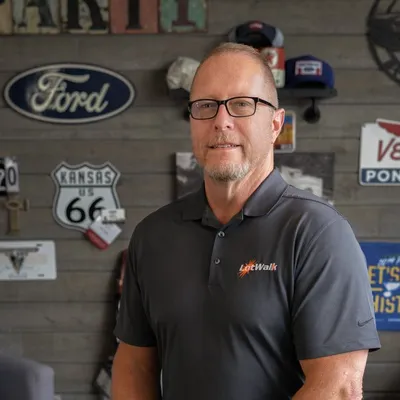
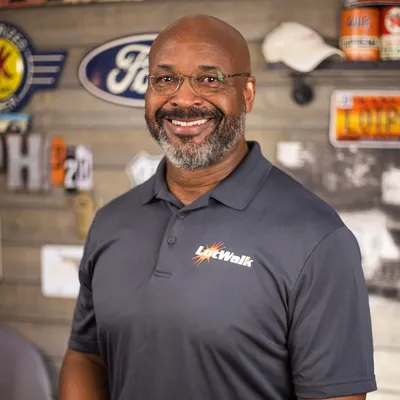
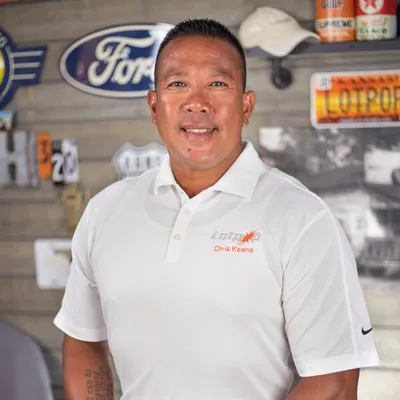
Full video episodes now live on the LotTalk YouTube channel.
Watch on YouTubeCar shoppers are moving from typing 'used cars for sale near me' into Google to asking AI tools direct questions like 'is 100,000 miles too much for a used F-150' or 'what's the best used SUV for my family of five under $25,000.' With about 50 percent of users now interacting with AI search and zero-click searches growing, the dealerships featured in those answers win the shopper, and the average prospect visits only 1.2 dealerships before buying. The episode gives dealers two moves to make now. First, turn your website into an answer machine: publish 10 to 15 pages, one per real buyer question your sales and BDC teams hear daily, each with the question as the headline and a direct answer in the first sentences. Second, rewrite your 20 highest-traffic vehicle descriptions by hand, because factory feed descriptions are invisible to generative engines; add who the vehicle is perfect for, why it is a strong buy in your market, and regional relevance.
What you'll walk away with
- Shoppers ask AI direct questions now, not keyword searches. Instead of 'used cars for sale near me,' they ask 'is 100,000 miles too much for a used F-150' or 'best used SUV for a family of five under $25,000,' and the store inside the answer wins.
- Factory feed descriptions are invisible to generative engines. A VIN explosion and OEM bullet points give AI nothing to cite. Rewrite your 20 highest-traffic units by hand with who it is perfect for, the why-buy, and regional relevance.
- Your website needs 10 to 15 question-based pages, one page per question. Pull the questions your floor, BDC, and service drive hear every day, make each question the headline, and put the direct answer in the first two to three sentences. Structured, clear human answers are the fuel AEO runs on.
- Prospects do 19 to 21 hours of research and visit just 1.2 dealerships before buying. Renaldo's point: every lead question is a test, and the shopper usually already knows the answer. Factual, fast, transparent responses decide whether you are the 1 in that 1.2.
- AEO does not replace your SEO spend, it empowers it. About 50 percent of users already interact with AI search, so the dollars you put into SEO and SEM only stay relevant if your content is concise, authoritative, and conversational enough to be featured in AI answers.
Episode chapters
Jump to the part you need. Timestamps match the audio and video.
- 00:00Cold open: a duo this weekJohn is in the field with a top Dallas-Fort Worth Ford store, sharpening the axe.
- 02:33Demand training from every vendor you payIf a third party has no live continual education, reconsider who you do business with.
- 04:08Why dealers plateau and how proactive coaching breaks itBucket management, the 40-yard dash analogy, and unlimited training.
- 12:04Brett scraps the agenda: meet AEO and GEOThe COO brings two terms back from a CRM conference and the show pivots live.
- 14:30AEO defined: it empowers SEO, it does not replace it50 percent of users interact with AI search, and zero-click is growing.
- 17:47How shoppers actually phrase it nowIs 100,000 miles too much for a used F-150? Best used SUV for a family of five under $25,000?
- 19:30Why AEO is becoming essential, and the questions to ask your vendorsListing sites, website providers, and ad agencies all get the same call.
- 24:00GEO defined: discovered, cited, and summarizedFrom keyword rankings to being the authoritative source in conversational answers.
- 26:07Every lead question is a test19 to 21 hours of research, 1.2 dealerships visited, and the shopper already knows the answer.
- 28:20Move one: turn your website into an answer machine10 to 15 question-based pages, question as the headline, direct answer first.
- 30:51Move two: rewrite 20 vehicle descriptions by handThe Colorado Tacoma example: geography, buyer intent, use case.
- 39:29The generational numbersGen Z AI usage at 70 to 82 percent, millennials the biggest buyers, 79 percent preferring AI for recommendations.
- 44:19Who does the work, and what to do when vendors blink
- 47:32The three-part closeReview the show, press your vendors, and start making your website conversational.
The agenda got scrapped backstage, and good thing
Chris Keene and Renaldo Leonard ran this one as a duo while John Anderson was in the field with a top Dallas-Fort Worth Ford store. The plan was a deeper episode on training. Then producer and COO Brett Branstetter came backstage with two terms he picked up at a conference for the CRM platform Lotpop uses internally: AEO and GEO. Answer engine optimization and generative engine optimization. The crew tore up the agenda and researched it live on air, because the implications for how customers find dealership inventory were too big to sit on.
The search behavior shift, in dealer terms
Renaldo laid out the change in one comparison. Shoppers used to type a generic search like new cars for sale or used cars for sale near me and get a page of links. Now they open an AI platform and ask a direct question: is 100,000 miles too much for a used F-150? What's the best used SUV for my family of five under $25,000? The engine answers instead of listing, which is why zero-click searches keep growing and why, per the research the crew pulled live, about 50 percent of users already interact with AI search. The crew was clear on one thing dealers will be relieved to hear: AEO is not a replacement for SEO. It empowers it. But if your content is not relevant to answer engines, the money you pour into SEO and SEM leaves you as nothing more than a brochure.
AEO and GEO, defined
AEO, answer engine optimization, is about securing visibility inside AI-generated answers, which demands concise, authoritative, conversational content. GEO, generative engine optimization, is the practice of structuring web content to be easily discovered, cited, and summarized by AI-powered engines. It shifts the focus from traditional keyword rankings to becoming the authoritative source in conversational, synthesized answers. The key tactics named on the show: clear semantic formatting, direct answers, and high brand authority. Chris connected it straight back to the showroom: a consumer who sends a lead is already conditioned to expect a direct answer, so meet the customer where they are at.
Every lead question is a test
Renaldo put the lead-handling stakes in numbers dealers already know: the average prospect does 19 to 21 hours of research before reaching out, visits about 1.2 dealerships before buying, and AI has multiplied how deep that research goes.
When we're handling a lead and a question comes in, from today to the end of time, you have to assume they know the answer to that question before they ask it.
The question is a test of your authenticity, integrity, and interest in meeting them where they are. Factual, relevant, fast, transparent answers decide whether your store is the one they actually walk into.
Move one: turn your website into an answer machine
The first of two actionable takeaways Brett fed into the show. Most dealer websites are glorified inventory spreadsheets with pretty pictures. The fix:
- Collect the real questions: sit down with your floor salespeople, your internet or BDC team, even your outsourced BDC, and list the questions customers ask every single day.
- Pick the top 10 and publish one page per question: examples from the episode include is 100,000 miles too much for a used truck, best priced used SUVs under $25,000 in Dallas, and can I get approved with a 620 credit score.
- Structure each page the same way: the clear question as the headline, a direct answer in the first two to three sentences (Chris argues the first sentence), a deeper explanation, and three to five internal links to relevant inventory.
The reason it works: AI systems love structured, clear human answers. That is the fuel AEO runs on.
Move two: rewrite 20 vehicle descriptions by hand
Factory feed descriptions are invisible to generative engines, something the Lotpop team has said for years about merchandising in general. Pick your 20 highest-traffic vehicles and rewrite them manually, adding who the vehicle is perfect for, why it is a strong buy in your market, regional relevance, and real condition commentary. The episode's example: instead of 'this 2020 Toyota Tacoma features...,' write 'If you're in Colorado and need a mid-size truck that handles snow without killing you on gas, this Tacoma is one of the safest bets under $30,000.' That one sentence hands AI three pieces of context, geography, buyer intent, and use case, and hands the shopper a conversational invitation instead of OEM bullet points. As Renaldo noted, it is the hot buttons and buying motives dealers have always sold on, now formatted so the engines can serve you up. It pairs directly with disciplined merchandising basics like getting your photos right.
The buyers are already there
The crew pulled the generational numbers live. Between 70 and 82 percent of adult Gen Z reported using generative AI tools so far in 2026, with 70 percent using them weekly and some studies showing 93 percent of young knowledge workers using AI regularly. Millennials, the largest group of new car buyers in 2025, heavily use AI in the purchase: 79 percent prefer AI for recommendations and 68 percent for financing research, and roughly 75 percent have used ChatGPT, often as a life advisor. Chris's homework assignment: go look at the dates of birth on your last 100 credit apps. This is the base of your dealership's next decade, and the dealers who adopt fastest see the best results. The internet was not a fad, and neither is this.
The Monday-morning action plan
Straight from the close of the episode:
- Build the question list this week: pull your sales, BDC, and service teams together and capture the 10 to 15 questions customers ask daily, then publish one answer-first page per question.
- Rewrite your top 20 descriptions: highest-traffic units first. Who it is perfect for, why buy this vehicle, regional relevance, real condition commentary. Retire the factory feed.
- Call every vendor you pay: listing sites, website provider, digital marketing agency. Ask what they are doing about AEO and GEO. If you get the deer in the headlights, start shopping, and ask your dealer network who they use.
- Make the website conversational: pages and pages of answers protect the money you already spend on SEO and SEM by keeping it relevant where shoppers actually ask.
Get insights like this every week
Join the Insider Newsletter. Inventory tactics, podcast recaps, and dealer strategies. No fluff.
Transcript is auto-generated from the episode recording and lightly formatted. It may contain transcription errors.
Chris Keene (00:00): In this week's episode, we find out what made Chris say this. I'm going to call you out and thank you for that. Here we go, folks. Welcome back. You have tuned in again to Lot Talk powered by Lot Pop. I'm Chris Keene, one of the co-hosts. We're just a duo today. It's myself and Mr. Ronaldo Leonard. Ronaldo, how are you, my brother?
Renaldo Leonard (00:26): Hey, my man. You know me. If I were doing any better, I'd have to be twins to take it. It's all good in the hood.
Chris Keene (00:31): But you are a twin.
Renaldo Leonard (00:33): Hey, well, we ain't got to get into old stuff.
Chris Keene (00:39): Well, listen. I mean, we're just a duo today. You know, our triplet, he is in the field. He is moving and shaking right now. He is actually in store doing some consultation. He's doing some training. You know, one of our just great dealers down in the Dallas-Fort Worth Metroplex. Arguably, I would say definitely a top three Ford dealer there in the Dallas-Fort Worth Metroplex. And you know, I commend them, Naldo. I commend this store. No matter how good they are, they're always trying to find more juice out of the squeeze. And they're out there just sharpening that axe. Sharpening that axe. You know, each and every time that I've ever interacted with them, that's all they want to do, sharpen that axe. That's what the great ones do, man, you know? Right.
Renaldo Leonard (01:33): Um, I think it was when we were talking to Mr. Benstock. He said that he dives into not what we got, but what we didn't get, to figure out a way to get it. And so, every single day, to fight off, yeah, you know, that feeling of complacency and resting on your laurels, you got to dig. You got to continue to dig. You got to continue to sharpen the axe. Drill, rehearse, perfect, so that you can get all the juice out of that squeeze. And that's why they are where they are. And that's also why John is where he is. Helping them navigate that and find instances where we can continue to move the needle to get every ounce of profit out of the processes that they have in place. Absolutely. So, proud of him and proud of them for continuing their commitment to make sure that, you know, we level up every opportunity that we get.
Chris Keene (02:33): Yeah, million percent. And Ronaldo, I don't think it's out of context in any way, shape, or form that, you know, listen, if you're a third-party, an indirect, you know, person to the automotive industry listening in on this podcast right now, you know, I may stir the pot a little bit here, but hell, what's new? Right? So, but I will say this, you know, dealers, whether you're a salesperson, BDC, sales manager, GSM, GM, platform, C-suite, owner listening in on this podcast, I implore you to pick up the phone, and anybody that you're doing business with, whether it's digital marketing, whether it's inventory management tools, whether it's your CRM, whether it's digital retailing, F&I tools, whatever it is, anything you're spending money on, if that third-party does not have readily available to you training to sharpen that axe, continual education to keep that blade crisp, you might want to reconsider who you're doing business with. I mean, Ronaldo, you're our director of training here at Lot Pop.
Chris Keene (03:48): Every day, every week, every month, every year, you have a consistent amount of existing clients of ours jumping on your calendar for additional training or continual education. Talk to our viewers and listeners about that for a minute.
Renaldo Leonard (04:08): Well, you know, initially when we get with dealers, sometimes there's a little paradigm shift that we have to attack, from the way that they do business to, you know, just buying in 100% to the philosophy of inventory management by buckets. And well, there are a few folks out in the world that will tell you that age buckets and managing your inventory by age buckets is not the right way to go about it, but when we get to the point where a dealer is all in with us and we have to tweak a couple of thought processes to get them in line so that they're getting the results that they want to see, you know, driving whether or not they're stocking what they're selling and selling what they're stocking, and they're selling the majority of their inventory when it's most profitable, right? They step away from what they were doing in the past and embrace how we view things and the data that we provide to them. Now, as they go on that process and they are, you know, embracing those concepts, they start to see that lift. But, it happens every single time. You'll get to a point where you plateau. And they'll think about it and like, "Well, wait a minute. We were headed up and to the right on the chart and we've kind of flattened out. How do we continue to get that going back in the right direction?" And so, they'll put time on my calendar. We'll sit down and we'll take a look at all the processes that we implemented and the type of improvement that it brought. And then start to dig into other metrics that are indicating what's going to be shifting in the market. So, they come from getting to that place where we're getting the results that we want, but in order to level up, we have to start looking at things at a proactive stance as opposed to reactive. So, that takes more time, takes more training on which metrics are going to identify what's coming that direction. And then grabbing clarity around those to kind of layer that on top of what got us to where we are. You know? So, it's just like with anything else. What's the first thing you learn how to do when you're a kid? You learn how to crawl, right? And the next step is to walk, and then to run. But there's levels to it. Some people run, let's use a 40-yard dash for example. Somebody runs a 40-yard dash in 12 seconds, but there are people out there that want to get down to a 6-second 40. And then a 5-second 40. In business, it's the same thing. We want to get to a service absorption rate of 97%. There's some things that you need to adjust to move you from that 80% rate. And so, we're here for them every step of the way. They get unlimited training, unlimited access to our schedule, free of charge. All they have to do is just wave the red flag and let us know. This is what we want to accomplish. This is where we are. How do we go ahead and move to the next level? And so, that's what brought John out there. You know, I miss him, but I support him 100% cuz I know he's out there spreading the gospel, and he's sitting down with those folks and getting them hooked up like a tow truck.
Chris Keene (07:34): Oh, there's no doubt. I mean, they waved the red flag. You know, speaking of waving the red flag, okay, I'm going to digress for a minute. Should be no surprise to any viewers or listeners that I'm going to digress. We need help. We need help in a big way. Now, a lot of y'all, we've had so much, just absolutely raving response from you guys. Your mail comes in asking great questions. We have people all the time reaching out to us. Well, man, I listen to you on the podcast, this and that, da da da da da. That's great. Thank you. Thank you. Thank you for that. But, if you're listening right now on Apple, hit pause. I want you to scroll to the bottom. We need your help. We need some reviews. No different than you ask your customers that pay you for buying cars or using your service department, you beg and plead for reviews. We're asking for the same thing. Beauty of this is you ain't paying us. We bring great guests on all the time to help pour back into this industry. That was the design of this, but we need your help. So, hit pause, scroll to the bottom, leave a review. Okay, save it. Share it. Now, if you're on Spotify, if you're on YouTube, like it. Share it. We've got to get your help with this, folks. We want to reach even more people. As a matter of fact, some of these guests that we have brought on, they've stumbled across the podcast going, "Oh my gosh, I would love to come on the podcast to share some of the automotive gospel out there with you." So, the more you guys keep liking it, sharing it, writing reviews if you're on Apple. I cannot beg you enough. Get on the Apple, roll down to the bottom, leave a review. Hey, listen, if you want to leave a bad review, leave it, too, but leave a review. Okay? We need your help. We're asking you. Please, please, please, cuz we want to reach more, and we want to be able to continue to bring valuable content to you guys about these podcasts, about our industry, about what's going on. Which actually leads me to, Ronaldo, it actually leads me to what we were talking about, you know, before we came on stage today. Now, we definitely want to talk about the training. So, I'm going to go back to that for a minute here. We told you what we do on training. Unlimited training. We don't charge our dealers for it. Okay, that's our choice. Okay? But even if you have to pay for it, it's well worth every last quarter to sharpen that axe.
Chris Keene (10:23): To get to that basic blocking and tackling. Sometimes we got to fall to the ground, back up, crawl again, so we can walk right, so we can get in that dead-on sprint. Get with your third parties that you're using. They should have for you continual education. They should have for you training. And I ain't talking about a video. I'm not talking about a workbook. I'm talking about a real live person that can make sure you and your team are applying it properly inside the condition of our industry today. That's the key. That continual education, that training needs to be applicable to what's going on in the now moment.
Renaldo Leonard (11:02): Absolutely. Very, very important.
Renaldo Leonard (11:04): And there's something about that one-on-one interaction that is going to help you roll up your sleeves, dig into it, customize the conversations, and give you actionable steps, actionable intelligence. That will help you move to the next level. Whether it be utilizing a tool or implementing new strategies. If they don't offer you one-on-one opportunities to dig down into it and get into the minutia, get dirty, then look for something else. Look for something else.
Chris Keene (11:38): You might want to consider something different. Yep. Oh, yeah, for sure.
Renaldo Leonard (11:43): Because the devil's in the details, no matter what you're looking at. Every time. And if you have someone who has an outside view that can come in and help you dissect everything and get you on the right track with a plan, with a process to implement, that is how you level up and that is how you're going to get all the juice out of the squeeze.
Chris Keene (12:04): So, hey, let's level up right now then, Naldo. I mean, I'm begging our listeners and viewers that are on Apple right now to leave a review for us. Why? Because that's going to help our search engine optimization. It's going to help spread the gospel in the digital world for us. And for those of y'all that paused and rolled down and left a review, I'm going to thank you in advance. And when you leave that review, when you like it, share it, comment on the YouTube or the Spotify, okay, well, I'm going to call you out and thank you for that. So, make sure you leave your name on the review. Make sure you leave your name when you comment. So, please, please, please help us with that. But that rolls right into, because like I said, we're trying to help our SEO. But backstage, before we went live just a few minutes ago, our COO, our producer to the stars, Brett, he brought something to the table that completely scrapped what we were going to talk about, which was deeper training, and thank you, Brett, for bringing that on. Absolutely. He threw two terms at us that are newer, and I've heard about them, Naldo, you've heard about them, he's heard about them when he was at a conference for the CRM company that we use internally. And it's two different terminologies. Viewers, I'm going to share it on the screen here in a minute. Get your pen and paper out. I'm going to do my best to explain it, but I hope everybody takes this as serious as we have discovered you should take it. So, it's two terms. Term number one, A E O. Term number two, G E O. Now, why are we bringing those up? Because, as you see on the screen right now, AEO, that is answer engine optimization. GEO, generative engine optimization. Now, I'm going to give full disclosure here, guys. This is new territory that we are actively working in. From our vantage point for LotPop, for two different reasons, we're going to explore this even more. Reason number one, like I said, for our company, for LotPop. Reason number two is so we could be educated as we continue our partnerships with our dealers, to be able to help coach, train, and lead the right direction. Maybe not have an answer, but damn sure get people moving in the right place. Answer engine optimization, generative engine optimization. So, through this, like I said, we were backstage. We pulled something else up. Went into what is the answer engine optimization. Well, first and foremost, it is not a replacement to SEO. Let me say that again. AEO is not going to replace SEO, but it's going to help empower SEO. It is the new buzz in the tech world, this answer engine optimization. Now, as you see on the screen, and listeners, if you've got your laptop or your computer or you're on your phone, you can look it up. The question I asked Google is, is answer engine optimization becoming more relevant? Now, this is going to make a lot of sense to you, because AEO is the chat GPT, that is the Google AI or Gemini, okay? And the answer came back of, yes, AEO is becoming critically relevant as AI-driven search. Now, right now, everybody's on this bandwagon in our automotive industry for AI AI AI AI. But, if your content is not relevant to AEO, you're going to waste a bunch of money in the SEO, and all you are is just a brochure. So, then it goes on to say that it's becoming critically relevant as AI-driven search replaces traditional link-based results with direct answers. 50% of users interact with AI search, driving a need to optimize for, listen close, concise, authoritative, and conversational content to secure visibility in those AI-generated answers. Now, Brett, he put a little comment here cuz he's backstage listening. He says, "Consumers are starting to go to chat GPT instead of Google for questions about cars and where to get them." And that's 100% true, because chat GPT was kind of, I think they might have been the first ones out there with all this AI, you know, generative answers and things of that nature, weren't they?
Renaldo Leonard (17:30): Yep. OpenAI came, I guess, to the market about three, four years ago, and it's been developing as we go along. And you know, as you mentioned earlier,
Renaldo Leonard (17:47): during our conversation, you know, you got chat GPT, you got Gemini, you got Claude, you got all of these things that have kind of morphed off of it. But no matter what type of AI someone is using or what platform, it's a big deal, and everybody is going in that direction to get their questions answered as opposed to searching in Google. You know, rather than going and typing in Google and asking new cars for sale or used cars for sale near me, they're going into an AI platform and asking questions like, is 100,000 miles too much for a used F-150? Or what's the best used SUV for my family of five under $25,000? And where we used to go to Google and just put in a generic search and then you'd have all of those links populated or businesses populate, people are asking direct answers. And if we are not generating, or I guess making that pivot to optimize and cash in on that trend, we'll get left behind. And that's why we're having this conversation, right? Is to prepare dealers to move in a direction that we're meeting our customers where they're at, right? But being ahead of the curve, rather than looking up in another year or so and asking the people you paying money to direct your advertising dollars to, what am I doing? I'm not getting business. So, um, yeah, that's where people are going now. And to your point, Brett did a fabulous job of bringing this forward to us.
Chris Keene (19:30): And man, I'm looking forward to diving into it. I mean, not only today, but just as we continue to move forward with this, recognizing the fact that here is a shift. Let's take advantage of it and help everyone that we possibly can with what we find out moving forward. With that being said though, okay, you kind of touched on this piece here. And for the listeners, after you gave me the answer, I mean, you talked about, you know, people are looking for, you know, best SUV for a family of five, etc., etc., under XYZ dollars. Okay, fine. It generates the answer. Well, I did the same thing, you know, is AEO becoming more relevant? Then of course it gave me an answer, but then right below that, it tells me why AEO is becoming essential. And now, listeners and viewers, you may be sitting there going, "Okay, but what about automotive?" And I'm going to get to that here in a minute. But, listen to what this is saying. Why AEO is becoming essential. Now, this is going to tie right back into, you know, training and sharpening your axe, because now what I'm thinking about, if I put my dealer hat back on, and it's talking about why AEO is becoming essential. Shift in user behavior. Okay, replace the word user with automotive consumer. Users now prefer immediate, or automotive consumers now prefer immediate, concise answers over visiting, listen, listen, over visiting multiple websites to find information, which is driving growth of zero-click searches. AI-powered search platforms like Chat GPT, Google prioritize synthesis, meaning brands must be the authoritative source for an answer to be featured. So, there's so much more, guys, listeners and viewers. I encourage you, go start researching this AEO. But when it talked about just those first two points of why AEO is becoming essential, shift in user behavior, AI-powered search. This is where I say sharpen your axe. Get with your third-party listing companies, get with your website provider, get with your digital marketing agency. What are we doing as a third-party company, listing site, AutoTrader, KBB, you know, CarGurus, Cars.com, TrueCar, whoever you're using? What are we doing as Team Velocity, dealer.com, you know, Dealer Inspire, whoever your website provider is? What are they doing to prepare your website to not be a brochure, to be conversational, because of the shift in user behavior, because of the AI-powered search? What are we doing to make these listings more relevant? Do we have the conversational, authoritative, concise answers to feed back to the consumer, the answers to the questions they're asking? Which, okay, when Brett first brought this up, I'm like, all right, well, how relevant is that to automotive? So, I went naysayer with some of y'all that may be listening, you know, all right, we got a good ad agency, we get a lot of activity on our third party. I mean, how relevant is that really to automotive? Well, listeners and viewers, is answer engine optimization being used in automotive dealer advertising? That's the question I asked. And who did I ask it to? Google AI. I could ask the same thing, and I'm going to show you, in Chat GPT here in a minute. But yes, GEO is actively being adopted by automotive dealer advertising to appear in AI-driven search results such as Google, Chat GPT, Bing, etc. Dealerships are shifting from, listen here, folks, traditional SEO to AEO and GEO to target conversational queries. Leveraging structured data and AI-focused content to ensure, what do we all want, to ensure visibility when users ask specific questions about their inventory, pricing, or service departments. Now, that GEO portion of it, this is a whole 'nother level. Okay? And I had to look it up because I wasn't 100% sure what it was, you know, just an old redneck down here from Oklahoma. Generative engine optimization, GEO, is the practice of structuring web content. Listen, this is so, so important. This is why I was telling you guys you got to get in this world and start understanding it. This is why, where we started talking about training, talking about continual education, your website provider, your third-party listing companies, get with them. Generative engine optimization, GEO, is the practice of structuring web content to be easily discovered, cited, and summarized by AI-powered search engines like ChatGPT, Google. It shifts focus from traditional keyword rankings to becoming the authoritative source in conversational, synthesized AI answers. Conversational answers. Key tactics: using clear semantic formatting, incorporating direct answers, and establishing high brand authority. Ronaldo, you know what that just told me? What that just told me is when a consumer sends a lead in on a piece of inventory, when they send an inquiry in, they're already conditioned to get, and receive, or expect direct answers. Or like we've said, Ronaldo, meet the customer where they're at. Right. Absolutely. Unpack that, Ronaldo. What's your thought?
Renaldo Leonard (26:07): Well, it's just that this trend has been here for the last 20 years. People will do their research, right? What do we tell our dealers? That on average a prospect has done 19 to 21 hours of research before they will even reach out to a dealer. Fast forward to AI now, and the level of research that someone can do on a vehicle, on a dealership, on a value proposition, has increased exponentially by being able to use these AI tools. And so, with understanding that, and we touched on it last week, maybe the week before, when a lead comes in, there's a question. And if you don't answer that question, you lost the opportunity to further that conversation with that prospect. Okay? So, that's the first level of it. When we're handling a lead and a question comes in, from today to the end of time, you have to assume they know the answer to that question before they ask it. They are checking you for your level of authenticity, your level of integrity, your level of interest in meeting them where they are at. It's a test. It is a test. Back in the day, it used to be, "How much can you come off of that vehicle?" Now, we're past that. They are going to ask you questions to make sure that you are going to be the type of individual or business that they want to do business with. So, you have to be factual. You have to be relevant. You have to have that level of speed in responding to those questions, to those leads. And you have to be transparent with everything that you do. But, to get ahead of the curve, you are going to have to implement all of that. The creativity, answering questions that might come up, frequently asked questions, in your initial offering, with your vehicles, with your dealership, with your website, to instigate a customer reaching out to you. Because they are going to 1.2 dealerships before they pull the trigger. Not giving everybody a shot at it. No.
Chris Keene (28:20): Not everybody's getting a shot. Not everybody's getting a shot at all. And you bring up a point, Ronaldo, that, you know, Brett threw in the chat here. I love this. I absolutely love this. This is fantastic. So, listeners and viewers, get your pen and paper out. Two actionable things that dealers can take away at the end of this episode today. Okay? But, I'm going to go ahead and give them to you now. Number one, turn your website into an answer machine. Turn your website into a source that has the answers. Okay? Most dealer websites are simply glorified inventory spreadsheets with a lot of really pretty pictures and hyperlinks. I added that in there. Brett didn't say that, I said that. Now, this one's really good. You need 10 to 15 question-based pages that directly answer real buyer questions in your market. Sit down with your sales team, ask them, "What questions do customers ask you every single day?" Now, when we say salespeople, we ain't just talking about your floor salespeople. It's very important, if you have an internet or a BDC team, you get them in the loop because they're getting a lot of that conversation via phone, text, email. If you're using an outsourced BDC, get them on the horn. You're paying them exponential dollars a month. They could take the time to spend with you and your team about these questions. Once you do that, pick the top 10. Publish one page per question. Publish one page per question. So, here's a couple examples that he threw in there. Is 100,000 miles too much for a used truck? Best priced used SUVs under $25,000 in Dallas. Can I get approved with a 620 credit score? Structure each page: clear question as your headline. Clear question as the headline. A direct answer in the first two to three sentences. I would arguably tell you that very first sentence. Give it to me, Mr. Straight to the point. Yeah, you know me.
Chris Keene (30:45): I mean, hey hey. This show business, baby. It ain't show friends.
Chris Keene (30:51): All right? Add a deeper explanation. Add three to five internal links to relevant inventory. AI systems, okay, now this is something, you know, Brett has studied quite a bit here. AI systems love structured and clear human answers. That is the fuel. That is the fuel to AEO. Structured and clear human answers. That's what feeds this intelligence, is people. Okay, second part. Rewrite 20 of your top vehicle descriptions. Factory feed descriptions are invisible. My God. I've been saying this forever and I know you've been saying this forever. John, Jasen, we've been saying this forever. Factory feed descriptions are invisible to generative engines. Pick your 20 highest traffic vehicles and rewrite them manually. If you're a Ford store, F-150 XLT two-wheel drive. If you're a Chevrolet store, Chevrolet 3/4 ton High Country Duramax diesel. Rewrite those. Add in there who the vehicle's perfect for. So, if you're a RAM store, okay, out my neck of the woods, RAM is very, very popular. Why? Because we have a bunch of ranchers and rodeoers. Point blank. So, if I was buying a new dealership today, I'd be writing that it's perfect for that barrel racer. I'd be writing it's perfect for that rancher, that cattle rancher. That's who I'd be writing it for. Okay? Why it's a strong buy in your market. The why buy? Why buy the RAM? Not why buy from the dealership, why buy the RAM? Okay? Any regional relevance? Okay? Real condition commentary. Instead of, this is your 2020 Toyota Tacoma, features, rewrite it. If you're in Colorado and you need a mid-size truck that handles snow without killing you on gas, this Tacoma is one of the safest bets under $30,000. But listen to what this has now. I'm going to read that again. Instead of saying this 2020 Tacoma features blah blah blah blah blah, rewrite it. If you're in Colorado and need a mid-size truck that handles snow without killing you on gas, this Tacoma is one of the safest bets under $30,000. So here's what that AI has. Here's what that answer engine optimization, this is what is helping them drive that result. This is what they're feeding off of. Okay? Here's that fuel. Now AI has three major pieces of context. Geography, Colorado. Buyer intent, something to get through the snow, something with good gas mileage. Use case. Well, this is a normal case in Colorado. Maybe they don't want a full-size truck cuz they live in the mountains. Maybe they go skiing all the time. Yeah, a full-size truck would get up there, a full-size SUV would get up there, but they would just rather have a mid-size truck because some of them roads get a little tight.
Renaldo Leonard (34:25): Oh, yeah. I mean, what are you thinking with all that? Well, and you know, those three things that you mentioned that this tailors the AI content with, geography, buyer intent, use case. Think about how you and I learned the business and how you would segment hot buttons and buying motives and then have to describe what the benefit was to the customer. You're doing that on top of providing AI what it needs to maximize what you have. Because if you just read through that, if you're in Colorado and you need a mid-size truck that handles snow without killing you on gas, this Tacoma is one of the safest bets under 30 grand. So, we talked about fuel efficiency, capability. Well, here's what they talk about. Safety, performance, appearance, comfort, economy, dependability. And the only thing they didn't touch there was safety. Um, but here's the thing. You're catering to AI, which is going to serve you up. On the other end of it, that customer who is reading that is getting a conversational invitation to look at this vehicle in a more personalized fashion. Yeah, that's me. I need a mid-size truck. Ooh, yeah, I want to save some money on gas. Yeah, and I will be using it driving around in the snow. Damn, that sounds perfect. As opposed to the bullet point description that I get from the OEM. I mean, when you think about it and you wrap your head around it, take your car guy hat off and look at it from a consumer point of view. Makes perfect sense.
Chris Keene (36:10): What we're doing here is making sense common again. It ain't so common. Well, we're bringing it back. That's going to be our next t-shirt. WTF, make sense common again. Common sense, it really is common.
Renaldo Leonard (36:27): Oh, yeah. And, well, I was just going to say, I mean, when you think about it, we both have kids that are, you know, fully entrenched in AI, using chat GPT, all these other platforms. What was it? We had the conversation in Kansas City earlier this week. You never ordered a meal from, what was it, Uber Eats, or
Chris Keene (36:46): Or what's the other one? Brett, what is it? Um, gosh. DoorDash.
Renaldo Leonard (36:53): DoorDash. Yeah. Yeah, there you go.
Renaldo Leonard (36:55): You know, we don't have experience with that. The dealers that we're talking to today, you see what I did there? I'm going to go ahead and kind of put that little AI spin on it. Dealers we're talking to today. If you are an older dealer, older sales manager, older general manager of a dealership, we have limited experience with these platforms. But, this is the way that our customers are searching out the answers that are going to lead them to us. So, we're going to have to embrace it. We're going to have to dig into it. We're going to do our homework. We're going to have to study. We got to go back to the big chief tablet and the crayons to pick it up. It's not all that difficult. It's not rocket science. It's just taking the time to understand it from a different point of view and making sure that we implement this into all of our merchandising, on the website, with the vehicles that we have to sell, with the services that we have to sell there at the dealership, if we're going to maximize the dollars we're investing in generating business for ourselves day in and day out. So, dig into it. It's not a fad. Contrary to popular belief, the internet's not a fad. We passed that stage. Mass adoption is where we are. AI and optimizing AEO and GEO, the people that adopt it the fastest are going to see the best results. So, dig into it and get after it. Give us a call. We'll walk down this journey with you.
Chris Keene (38:36): Oh, hey, don't think for 1 minute that I haven't already researched to Jamille. I did. I already
Renaldo Leonard (38:42): I got a note right here. It's like, man, we need to follow up with Jamille.
Chris Keene (38:45): Yeah, we need to get Jamille back on. Yep. Okay, from J&L Marketing, one of the leading marketing companies in the nation, I pointedly asked them. Here's the question I asked them, guys. The question I asked them was, AEO and GEO, are you guys, or have you guys already gotten way ahead of it, with improving your SEO and just your dealerships' businesses? And I'm waiting for a response from them, but I can almost bet you you're going to see a pretty crazy response. Now, you mentioned something, you know, about the DoorDash and the Uber Eats and whatnot, and you talked about us and made fun of me because I've never used it, because I haven't.
Renaldo Leonard (39:27): I haven't, either. I haven't.
Chris Keene (39:29): All right, but you talked about our kids, because we got some grown-ass kids already married off in the world. So, in the midst of that, I texted my son and my daughter-in-law. And I said to them, I said, "How often do you use Chat GPT or Google Gemini to get answers?" Now, mind you, they're grown, young 20s. They're that generation that's in the consumer market. My son just bought a car, okay? His response, "Pretty often. I use it a lot just in life alone outside of school." Because he uses it, you know, at the university, but he just uses it in general. My daughter-in-law replies with, "I definitely ask it a lot of questions." Now, that spurred me to do a little bit more research while you were talking about that older generation. So, here's what I did, folks. I want you to take a look at this real quick. I asked it a question: which generation uses chat GPT or Gemini AI the most? So, listeners, I've got it on the screen, viewers, you can follow along with me. Generation Z, born between 1997 and 2012. Go look at your last 100 credit apps and see what the date of birth is on those, guys. Uses generative AI tools such as chat GPT and Gemini the most. Between 70 and 82% of adult members of Gen Z reported using Gen AI tools thus far in 2026. This rate is higher than that of other age groups, particularly for education, content creation, and early career development. Okay, so that's what they're using it for. But, then you start thinking about all the other things that they've been searching on their browsers, and when they are searching for cars, you don't think for 1 minute that they're not getting retargeted and resurfaced up?
Renaldo Leonard (41:28): I think about that. 70% of Gen Z uses generative AI weekly. Some studies are showing that 93% of young knowledge workers regularly use AI tools. They are considered digital first and often view AI use at work as a career catalyst. I mean, wow. You talk about an opportunity. They may not be the majority of consumers that we are targeting, but that is going to become the base economically of a dealership's success. As we move along, you talk about targeting strategically. How are you going to be able to generate client base, income, and the future of your dealership? This is a unique opportunity to get into their face.
Renaldo Leonard (42:22): As they are building their careers, building their families, moving forward in life, progressing in life. And do you think that they're going to be the only ones that's using this? Everybody else is going to shut it off and say, "Ah, yeah, we'll just let the young folks take care of that."
Chris Keene (42:40): Hold on. Hold on. Let me pause you there for a minute. Let me pause you there for a minute. Okay. So, again, look what I'm using. Viewers, listeners, look what I'm using. I'm using the freaking AEO. I'm using Google Gemini. Okay? I'm using this right now as we speak. I didn't even think about that till just now. But I asked it, "Which generation is buying the most automotive in 2025?" Millennials. Born between '81 and '96, so the largest group of new car buyers in 2025. And then you talk about, you know, they heavily utilize AI to research. This is, you know, millennials and Gen Zs. Listen to this. They heavily utilize AI to research, with 79% preferring AI for recommendations and 68% for financing. 79% of them for recommendations, 68% for financing. So, I went on. How much Chat GPT are millennials using? Millennials, roughly 75% of millennials have used the tool. They often use it as a life advisor. So, really, I mean, when you think about who's buying our cars now? Millennials, Gen Z. And you just saw the statistics, you just heard the statistics. They're using the Chat GPTs, the Google Geminis, etc. Hell, your Brett, this generation below us, he uses it all the time. And he is a consumer in the market. Naldo, I don't know about you, but dealers got a lot of work ahead of them.
Renaldo Leonard (44:19): Well, but that's the thing about it. Um, it's a paradigm shift, but we have tools at our disposal that can cut this huge undertaking down to a minimum. I mean, you said it yourself. We went
Renaldo Leonard (44:35): straight to the answer engine to ask it to give us insight into maximizing the results we get from the answer engine. And it serves it up to you on a platter. And people in the dealership, every dealership has someone who is their go-to person for managing that website, creating descriptions for vehicles, creating content for the website, which all of this is going to take, we're going to need to kind of revamp. Yeah. Delegate.
Chris Keene (45:07): How about leverage the third parties that you're paying money to, with your third-party listings or your website provider, to help train and educate you. Your phone's going to be ringing off the hook. I ain't a third party.
Renaldo Leonard (45:21): What do you tell them, man? My phone's ringing off the hook. I'm not prepared for this. What the hell?
Chris Keene (45:27): Well, guess what? If the answer you get back from your third-party provider or your website provider is that they're not prepared to have that conversation with you, then you might want to start shopping.
Renaldo Leonard (45:37): Oh, wow. You know what? After we hear back from Jamille, we might need to have a round table with some of the vendors that are out there to see exactly where they are in the process and how they're gearing up.
Chris Keene (45:51): Seriously though, Naldo, I mean, if I were back in the retail dealership today and this was brought to my attention, AEO and GEO, I'd pick up the phone and I'd call my third-party providers and go, "Hey, help me out with AEO, GEO." And if they get the deer in the headlights, huh, what, you know, if I call my website provider and I get the deer in the headlights, or they blink one time, well, my next phone call is to my group of people, my circle, of, "Hey, who are you guys using for your website? Who are you using for your advertising? Who are you using for your third party? How educated are they on this, this, or this?"
Renaldo Leonard (46:28): Yeah. You know, this is the thing I love about what we do. We are always looking for opportunities to provide value to our partners, stay ahead of the curve, be proactive. And this is another example of how we've identified an opportunity that is coming around the bend.
Chris Keene (46:53): No, it's here. It's here.
Renaldo Leonard (46:56): Uh, well, um, the conversation has not been had on a grand scale. Valid. Okay. But, we're going to dig into it. And we're going to figure it out. I mean, by Sunday afternoon, I might have a strategy for all of our dealer partners to begin to implement optimization for AEO and GEO. Yeah. That's a little redundant since optimization is the end of those. But, we're getting lined up.
Chris Keene (47:22): We're going to have a plan. Absolutely. Yeah. Absolutely. Cuz if you fail to plan, you're planning to fail.
Chris Keene (47:32): Spot on. So, you know, listeners and viewers, I really hope for three things. Number one, you got on there, you left us a review. Good, bad, or different, I don't care. Leave us a review at this point. You shared our podcast. And you continue to share it. If you're finding value in it, please, please, please share it. Like it. Review it. Number two, your third-party companies. Your digital retailing companies, your listing companies, your website company, anybody that you're paying to help you improve your business, make sure they're helping prepare. And make sure they're helping educate and train the end users of those platforms that you're paying for. And number three, AEO, answer engine optimization, GEO, okay, the generative engine optimization. Please, please, please start digging into that. Make your websites conversational. Make sure that you have pages and pages and pages of answers. So, that way all that money that you're spending on your SEO, on your SEM, create yourself some more relevancy. I hope this has been, you know, fruitful for you. If anything, although it's been fruitful for you and I, because we've been doing nothing but researching it this entire episode live, researching it right here on the spot. I hope, listeners, I hope, viewers, you're doing the same. We're going to walk this journey with you. And you could bet we've got some experts, because we are far from experts. We do not have the answers to this. We're exploring it and learning it right there with you. But we are going to bring some experts on board, on stage, right here on Lot Talk powered by Lot Pop, to help give us some more clarity and direction of what we need to be doing here. In the meantime, write a review in Apple, like us, share us. And from the bottoms of our hearts, we thank you. We thank you for tuning in, and we look forward to seeing you guys right back here on Lot Talk powered by Lot Pop. I'm Chris Keene, one of the co-hosts. On behalf of Mr. Leonard, Mr. Anderson out there in the field, we love you, brother. Get back safe. See you guys next week. Thank y'all. Wreck 'em.