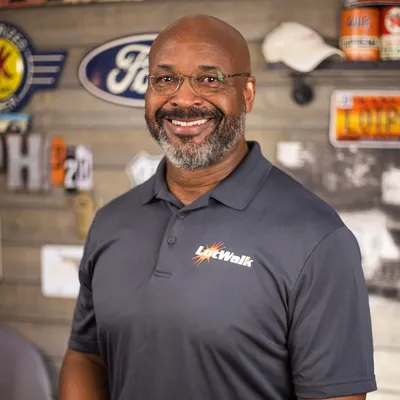
Bryant Love, a retired Army veteran who led 16-plus major planning efforts across 20-plus nations as plans branch chief at U.S. Africa Command, says the number one requirement for leading type A personalities is shared understanding: if ten people interpret the boss's guidance ten ways, the starting pistol fires and the team scatters across the track. His model for leaders is to provide clarity, direction, and inspiration, and when managers say I can't get my people to do that, he calls it a cop out: it is inexcusable for a leader to blame subordinates, so look internally first at your message, your delivery, and whether any leader development exists in the store. He breaks critical thinking into four trainable parts (self-awareness, applied critical thinking, groupthink mitigation, and fostering cultural empathy) and warns that no technology, AI included, speeds up cognition, maturity, or leader development.
What you'll walk away with
- "I can't get my people to do that" is a cop out. Bryant's first reaction to the phrase is, who's leading who? Blaming subordinates is inexcusable: look internally first at your message and delivery, then at whether your store has any leader development program at all.
- Shared understanding comes before execution, every time. Ten people hear the same guidance and interpret it ten ways. If you launch before everyone sees the problem the same way, the starting pistol fires and your team scatters across the track, and you spend your days putting out fires instead of looking up, out, and long.
- Leaders provide three things: clarity, direction, and inspiration. If results are off, start with introspection: is my guidance clear, or vague and aspirational? Lofty vision statements produce the scatter effect. Inspiration is lead from the front, and it gets emulated.
- Critical thinking has four trainable parts. Self-awareness (your hot buttons, mental models, and biases), applied critical thinking (tools, not admiration), groupthink mitigation (keep strong personalities from dominating the room), and fostering cultural empathy (view the problem like a transparent Rubik's cube, from every angle).
- No technology speeds up cognition, and over-relying on AI dulls the knife. AI synthesizes a boatload of information fast, but it should never make decisions for you, and nothing accelerates leader development, maturity, or experience. The more AI you use, the more critical thinking the job demands of you.
Episode chapters
Jump to the part you need. Timestamps match the audio and video.
- 00:01Cold open: a leadership series beginsWhy the hosts brought a non-automotive leader onto a car podcast.
- 06:25Meet Bryant LoveRetired Army veteran, airborne, special operations, plans branch chief at U.S. Africa Command.
- 09:40Shared understanding: the first stepTen people, ten interpretations, and the starting-pistol scatter effect.
- 13:30Clarity, direction, inspirationThe three things leaders provide, and the introspection that comes before any tough conversation.
- 17:30"I can't get my people to do that"John asks the question every manager dreads. Bryant calls the excuse a cop out.
- 24:00Buy-in takes time, and tech shrank our patienceStrategic patience, attention spans, and why nothing speeds up cognition.
- 27:30AI and the dulled knifeThe student who synthesized everything with AI and retained none of it.
- 32:30Put yourself in your front line's bootsChris's five questions: how are they feeling, what are they thinking, where are their obstacles, who are they counting on, why are they here.
- 37:45Military discipline vs. civilian feelingsRenaldo asks how much of the do-what-I-say military is real. Less than you think.
- 43:10The steady hand on the tillerLeaders cognitively manage the team: surge when it's time, stay calm when it's not.
- 50:00The four parts of critical thinkingSelf-awareness, applied critical thinking, groupthink mitigation, fostering cultural empathy.
- 56:20Your job is to extract brainpower, not have answersStructure without being structured, and why a day-one salesperson's perspective matters.
- 58:10Recap and the reading listThe Art of Thinking Clearly, and being willing to destroy a part of yourself to grow.
Why a car podcast brought on a military strategist
This episode kicks off the LotTalk leadership series, and the hosts went outside automotive on purpose. Bryant Love is a retired Army veteran: airborne, special operations and civil affairs, and plans branch chief at U.S. Africa Command in Stuttgart, where he led 16-plus major planning efforts across 20-plus nations. He sat in on Lotpop's quarterly leadership meeting, and the hosts spent the hour translating his playbook into dealership terms. The translation is direct, because as John Anderson put it, everything the show talks about, inventory, follow-up, accountability, ultimately comes back to leadership.
Shared understanding beats strategic alignment buzzwords
Asked for the single most important thing when leading a room of type A personalities, Bryant didn't hesitate: shared understanding. The boss gives guidance, and if there are ten people in the room, there are ten interpretations, which is why the water cooler conversation after every meeting starts with what did he mean? His image for what happens next: everyone lines up at the starting line, the pistol fires, and the team either runs the same direction or scatters across the track. Launch without alignment and you spend your days on what the Army calls 25-meter targets, the fires right in front of you, instead of looking up, out, and long. Getting there requires people willing to question their own assumptions and be wrong, which is exactly what entrenched, successful personalities resist.
"I can't get my people to do that"
John asked the question every performance coach hears weekly: what happens in the military when leaders roll out a plan and the answer comes back, I can't get my people to do that? Bryant's first reaction: who's leading who?
I think it's inexcusable, number one, as a leader to blame your subordinates. You're in charge. That's what the big bucks are for.
His prescription has two parts. First, introspection: is it the message, the delivery, the clarity? Most people with problems in their organization will blame anything but their own leadership. Second, leader development: if your people have no sense of duty, commitment, or loyalty to the store, ask why not. If a new salesperson's onboarding is here's your desk, here's your phone, off you go, sink or swim, you built that outcome. A store with no leader development approach at all is failing, and develop-your-people pays commercially too: people stay for a crew that grows them, even when someone offers more money. This is the same accountability gap behind why most inventory meetings change nothing: the plan is fine, the leadership follow-through is the variable.
No technology speeds up cognition
Bryant is no AI alarmist (he has even done side work helping train a major AI company's models), but he draws a hard line: AI synthesizes a boatload of information quickly, and it should never make decisions for you. There is no technology in the world that speeds up cognition, leader development, maturity, or experience. He told the story of a master's student who ran every article through AI for summaries, produced a flawless paper, and retained none of it when he had to defend the research. The over-reliance dulls the knife. The takeaway for dealers is empowering, not scary: the more AI enters your store, the more valuable a leader who can actually think critically becomes.
The steady hand on the tiller
The compliment Bryant got on his way out of AFRICOM came from one of his intelligence planners: we're going to miss your steady hand on the tiller. His point for dealership managers: you cognitively manage your team. Walk in stressed and everyone senses it. Run a false sense of urgency and your people burn out chasing noise. Surge when it's time to surge, stay deliberate when it's not, and buffer your team from the chaos above them. He pointed the audience to Daniel Kahneman's system one and two thinking: when you answer instantly in a meeting, you're usually rearranging what you already know, moving the deck chairs on the Titanic, instead of doing the slower deliberate thinking that actually changes the ship's direction.
The four parts of critical thinking
Critical thinking is a buzzword until you unpack it. Bryant, who taught the Army's red teaming discipline and now works with Army special operations, breaks it into four trainable components:
- Self-awareness: Know your hot buttons, mental models, and biases. There are around 180 documented cognitive biases, and being aware of yours explains why you react the way you do.
- Applied critical thinking: Tools you actually use to build teams and decisions, not concepts you admire.
- Groupthink mitigation: Keep the strongest personality in the room from dominating thought, so quieter thinkers get heard.
- Fostering cultural empathy: See the problem like a transparent Rubik's cube, turning it to view from every direction, and force disagreement with yourself to test your own theory.
His book recommendation for the biases piece: The Art of Thinking Clearly by Rolf Dobelli. And the line from one of his mentors that stuck with the whole panel: if you're going to grow, you have to be willing to destroy a part of yourself to create it.
The Monday-morning action plan
Put the battlefield playbook to work in your store this week:
- Test shared understanding: After your next sales meeting, ask three people separately what the priority is. If you get three answers, the problem is your message, not your people.
- Retire the phrase: Strike I can't get my people to do that from your vocabulary. Replace it with two questions: was my direction clear, and what development have I given this person?
- Run the five boot questions on every new hire: How are they feeling, what are they thinking, where are their obstacles, who are they counting on, why are they here. Then coach the differences, because every answer will vary.
- Audit your tiller: Ask whether the urgency in your store this week is real or manufactured. Surge when the moment calls for it, and buffer your team the rest of the time.
- Build one development habit: Pick one of the four critical thinking components and work it into your weekly manager meeting, starting with self-awareness and the biases in The Art of Thinking Clearly.
Get insights like this every week
Join the Insider Newsletter. Inventory tactics, podcast recaps, and dealer strategies. No fluff.
Transcript is auto-generated from the episode recording and lightly formatted. It may contain transcription errors.
Chris Keene (00:01): Well, welcome back, folks. We have got a treat for you today in season two, episode twelve. We are going to dive into some leadership. You have tuned back into Lot Talk, powered by Lot Pop. I'm Chris Keene, one of the co-hosts. I'm joined by the infamous John Anderson and the all well-known, well-rounded Mr. Renaldo Leonard. Renaldo, did you get the flat tire fixed? Did you fix it?
Renaldo Leonard (00:31): You know, I don't know, man. Yeah, we're just having a little wax default this morning. Let's get the wax rolling, baby.
Chris Keene (00:40): How can you, of all people, have a wax default? Your wife owns a salon. You can't have wax defaults.
Renaldo Leonard (00:48): I can because my wife owns a salon and has absolutely nothing to do with my follicles. So she says, my name is Bennett and I ain't in it. Good luck.
Chris Keene (00:58): There you go. You better go Supercuts. Do what you have to do. Just don't cut it. Well, gentlemen, John, hey, great move here with the guest that we have coming on today. I mean, what a fantastic move. I am super fired up when you sat there and said, hey, guys, I'm going to have this guy on. I was like, oh, my gosh, that's awesome. So for the viewers and listeners out there today, we're still going to be in automotive. Okay. But you're going to want to get your pen out. You're going to want to get your paper out. You're going to want to subscribe to the Lot Talk podcast. You're going to want to go back and watch this multiple times because we got a treat for you today. Get your pen, get your paper out, buckle in because we're going to run this all the way through the roof today. We have got an amazing leader that is going to bring the heat for us. And really, help us kind of think outside the box because this guy is not from the automotive sector, but he has been strategically leading across the world for quite some time. And when this special guest, when we bring him from backstage, you're going to see a QR code for those that are watching online. OK, if you go back and you watch from your computer, for those that are listening, this gentleman is going to have a QR code right at the top of his profile picture. But you're going to see a QR code that works. OK. And you can learn a whole lot more. Okay, you'll see it on John's, you'll see it on Bryant's, you'll see it on mine. We'll give you access to this gentleman if you want to be able to dive in deeper with him as well. But before we do that, John, share with the viewers, share with the listeners of why you jumped out there and said, hey, we need to have this guy on. Why? Why'd you share that?
John Anderson (03:05): Well, the main reason why is because we spent some time with him. You know, we got to know him at our last quarterly meeting. He sat in on our quarterly meetings and observed and gave us some input. And I just had an opportunity to speak with him and just was extremely impressed with him. And, you know, one of the things that we have talked about numerous times on Lot Talk is about things that have directly to do, let's face it, everything we talk about has to do with leadership. Right. And, you know, I personally feel like that over the last ten years, that's something that has, not only in our industry, we've seen examples from numerous industries. Here, let me bring up a concert video that was put out there, a couple folks were captured on a big screen that didn't intend to be captured, and both leaders at their company, right? So, you know, after spending some time with him, understanding what background he came from, which I know Chris, you're going to address a few of those things and we're going to let him talk to that. It's going to blow you guys away. I just felt like, hey, when we talked about how to start in a leadership series and I thought, you know what, let's reach out to him and see if he'd be willing to jump on. And the other side of the equation is I've spent the last couple of Thursdays speaking with Bryant, you know, and asking some questions and talking about Lot Pop and myself. So I just think, you know, one of the areas that we can all improve upon on a daily basis, on a weekly basis, on a monthly and annual basis is, you know, whether we see ourselves as a leader at our job, guess what? We're leaders in our home. All of us are leaders in areas of our life. And the better we take note of that and improve upon that, the better everybody around us is going to be. So I thought it would be a good time to bring him aboard.
Chris Keene (05:10): No, there's no doubt. And I know, Renaldo, you were pretty dialed in with him in our leadership meeting that we had back at the corporate office. What was it, last month? But you were pretty dialed in with him. You know, I know you were the first to reply in our group message of showing your excitement. You know, why are you excited to have him on?
Renaldo Leonard (05:35): Well, you know, I'm a team guy, I guess, kind of to my core. And, you know, nowhere is leadership more valuable than in a team setting. And so even though, you know, he comes from a different background than the team that I was involved with, the basic principles that he brings to the table, I mean, they are transportable. They travel. And good leaders can change the course of an organization's trajectory. And so that really resonated with me. But then also leadership in stressful situations when he addressed that and talked about it and talked to it. So yeah, I mean, talk about value rich content. Yeah, as soon as I saw that, I was, I'm in. Let's go.
Chris Keene (06:25): There you go. There you have it. Well, there is no better time than right now. Then, Brett, let's bring him up on stage, and let's give this man the warmest introduction that we could possibly give. Mr. Bryant Love, welcome to Lot Talk, powered by Lot Pop. Welcome, sir.
Bryant Love (06:45): Thank you. Thank you very much. Thank you. I greatly appreciate the glowing intro. I hope I live up to the hype. But looking forward to a great conversation with you all.
Chris Keene (06:55): Well, it's going to be a great conversation because, Brett, if you would throw up on screen, I've got some of this man's accolades and I just got to go through some of this. For you viewers and listeners here at Lot Talk powered by Lot Pop, I want you to listen to this. This is Bryant Love. This man is a retired Army veteran. Number one, thank you for the service providing us the freedom we have to do what we get to do today. We appreciate that.
Bryant Love (07:22): Absolutely. Yes, sir. Yes, sir.
Chris Keene (07:25): But he's an educator. He's a strategist. As you can see here, I mean, the man has been around the world. He's been in Berlin. He was born there. Okay. Early Army career, airborne division, which, you know, my dad would love you. Okay. Well, he was special forces, jumped out of the airplanes, did all that fun stuff too, but special operations and civil affairs, strategic planning, you know, brigade operations. But the thing guys that I want everybody to put their focus on, the reason why we have been so attached to Bryant is, listen to this. Strategic planning. U.S. Africa Command. Stuttgart. Plans branch chief, sixteen plus major planning efforts across twenty plus nations, interagency exercises and non-lethal targeting lead. All of that sounds like well above my intellect, but here's what we learned about it because we asked a lot of questions around that. It wasn't about the attack, it was about all the planning that you had to put together in getting multiple different areas within the military and within the country itself. There were so many moving parts that you had to strategize together. And that makes me think about our automotive industry. Brett, you can take that off the screen there because I want to put this focus on Bryant here. Bryant, going directly into talking about that strategic planning and when you shared with us all the integral pieces that went into so many different moving parts to execute one thing. Because at the end of the day, that's what it was. I mean, you were going to execute one thing, but there was seven million parts to it. From a leadership standpoint, I mean, what is the number one thing that is the most important in bringing in a bunch of type A personalities to get to the end result?
Bryant Love (09:40): Oh, what immediately pops into my mind is a thing we called shared understanding. And so, and you've all probably witnessed this, you hear the boss give some guidance, you know, the principal or whomever. And then if there's ten people in the room, the ten people have interpreted it differently. Or they've taken different things away. And so if you, you know, water cooler talk after the meeting, everybody's like, what was that? What did he mean? And so when you've got these large planning efforts, like I said, you've got people from different backgrounds, different disciplines, different countries. And if you're operating internationally, you're dealing with partner nations, international partners, all of which will see what you want to do completely different and have very differing opinions, levels of enthusiasm, how much they're going to dedicate to it. So it sounds easy, it is ridiculously difficult. And so you'll hear, like, buzzwords in the business industry, strategic alignment and all that stuff. Super easy to say, it's ridiculously hard to do, but getting that step one shared understanding of the problem. And that takes some time and you've got to have the right people in the room or people who are open to thinking critically and actually questioning their own assumptions, willing to be wrong. And leaders aren't always down with that. Because you're hitting some ego involved. Like you mentioned the type A personalities, especially people who've been successful and have gotten in their positions in a certain way. And I've had one of my leaders say, hey, my way got me here. Yours got you there. So somebody is very entrenched in their ideas. So that's a critical first step, because if everybody sees it differently, everybody's at the starting line, right? And then, you know, the starting pistol goes off. Either we're going to go in the same direction or you're going to scatter across the track. And that's not good for anybody. That's going to hurt. Ultimately, it's going to hurt, I think, revenue. I mean, you're not going to be as optimal as you could be. You put that in a business sense. And for us, you know, we're effects-driven in the military. Civilians are completely profit-driven. And that's why, like, leadership trickles. It's universal. I mean, as John mentioned earlier, if you don't get that right, you guys are going to feel it. And where ours, you know, if we run out of money in the government, usually you can ask for more. It's catastrophic on the other side, right? So I'll pause there. Anybody got any other questions or inputs there?
Chris Keene (12:25): Renaldo, it sounds like you were about to dive in on that.
Renaldo Leonard (12:30): Well, I mean, it's just drawing the correlation and how it affects businesses, you know, and everything is profit driven and that's how we keep score. When you run into situations and just relying on your past experience, when you run into a situation where that shared understanding isn't there because of the guys that are so entrenched in their thought processes and their experience level, what would you suggest is the easiest way to kind of bring that understanding together that's, you know, noncombative? Because we've all been in a room where you want to just step outside with a guy and, you know, hey, okay, one of us is going to win out here. But what are some of the ways that you recommend that someone would attack that situation?
Bryant Love (13:30): Yeah. So I'll preface it with, as soon as you initiate something, you're executing something and you're not aligned, you're going to spend most of your time with, you know, we say twenty-five meter targets. Those are the ones right in front of you. You're going to spend most of your time putting out fires or things immediate and not looking up and out or long. And so, you know, everything short of like, you're talking about like a come to Jesus moment, you know, where you're pulling somebody aside. You've got to try to reach them and understand. But part of that, like I said, leaders provide clarity, direction, and inspiration, those three things. If you kind of use that as a model, you can unpack those in a bunch of different ways. I think if you're a leader, you've got to be a little self-reflective and think, okay, what am I providing, that clarity or the direction and clarity piece? Inspiration right now, it doesn't matter what we're executing. Inspiration, you lead from the front or by example, and it'll be emulated. But I think step one, you've got to reflect on, okay, my guidance and direction, is it clear or is it too vague or aspirational? And you guys have seen it, like vision statements and mission statements for organizations. You should be able to read that like, okay, this is what they do, this is where they're going. But if they're lofty and just kind of aspirational, they're not very helpful. And that could give you, if a leader's putting that out, you're going to get that scatter effect with that. So I would start there, introspection. Look, okay, how am I doing? What's my piece of this? If I'm on target, and you can gauge that with others, you can discuss that with subordinates, there's ways to do it. And then, I mean, the direct approach, especially if it's critical, if it's affecting profit or performance, and you can narrow that problem. If it's one or two individuals, you pull them aside. And that's definitely a very directed conversation. But that direction has got to be done the right way where it's not personal. It's not emotional. It is strictly, this is what has to be done. This is the direction we're going. And what we call kind of a zealot or martyr situation where you get on board or maybe you go somewhere else. Right? I mean, that's the last straw. You don't want to do that. I'm all about leader development, and if you've got somebody who's executing passionately with the best interest of the firm in mind, you can do something with that. It's easier to, you know, rein somebody in than having to kick them in the rear kind of thing. So yeah, I hope I answered your question there.
Chris Keene (16:25): Yes. But that's a great thing I love about you. You will answer a question. And I have fifteen others that are just coming out of that. Not good for a one hour time limit. But yeah, it's solid gold. I appreciate that. Yeah. John, you obviously, like we talked about, obviously we've credited you with, hey, we're going to start a leadership series here and get leaders, regardless from automotive sector or outside of automotive, onto the podcast to help our viewers, help our listeners hone in on their leadership skills. There's obviously things, John, that have struck with you in your conversations with Bryant individually, in conversations that we had as our leadership team that had Bryant in with us. What are some things that you would like to have Bryant unpack or maybe even additional questions you may have for him to publicly answer to help our automotive vertical out?
John Anderson (17:30): Well, I'll start with a big one. And I'm curious as to Bryant's response. Bryant, in the military, what happens in the military if leaders have spent all the time, effort and energy developing, which I know that's, you know, primarily where you were spending your time, a lot of time doing reconnaissance and research and developing these plans, right? And so what happens when you guys roll out a plan after all that reconnaissance, research, time, effort, and energy, and the people that you roll the plan out to, do you ever hear the words, I can't get my people to do that? I would assume on the military side, if you can't get your people to do that, that equates to death. That's serious. That's what I'd like you to unpack because we hear that a lot from leadership in our industry. That, I can't get my people, I put it in front of them and they tell me they understand it, but I can't get them to do that. So if you could unpack that a little bit, I would appreciate that.
Bryant Love (18:50): Okay. So it's kind of funny where I thought you were going with the question is like, we turn in some of these plans and then present them to senior leaders and they're like, no, it's not what I wanted. But this is definitely a little bit of a departure. So I think underlying, so we say, if soldiers or anybody in the military is not complaining, they're not happy. But there's an underlying sense of, you know, duty, commitment. And so once the decision's made, despite whatever complaints are happening, once the decision's made, you execute. You're given a direction and you go. So I remember we had talked about this a little bit, and that was one of the things where, I can't get my people to do this. It blows my mind a little bit. But that's like, who's leading who, is the first thing that pops into my head. Who's in charge? Obviously, the principals and managers are fiscally liable for the performance of it. So my thought is like, yeah, I can get you to do that. But again, back to the introspection piece. There's two ways I think of. First, back to if the leaders aren't reflective, in a sense, they're like, okay, why is this happening? What's my part in this? I told them to do it. They're not going to do it. Okay, is it the message? Is it my delivery? Is it not clear? Some of the things you mentioned before. Most people, when they have problems in their organization, will not say, yes, it's a leadership problem on my behalf, because they're throwing themselves out there. It's always something else. It's my people not doing it. I think it's inexcusable, number one, as a leader to blame your subordinates. You're in charge. That's what the big bucks are for. A mentor of mine, a long time ago, I first came into my first leadership position, he's like, hey, you're an infantry platoon leader, which for me was amazing. You have thirty-four people you're in charge of. And he says, it's great, but leaders are in the loneliest position you can be. You may have peers, but if you're in the C-suites, you're alone. So you can't look anywhere else. You've got to look internally first and diagnose that. And then secondly, what are you doing developing your leaders? You know, if they don't have the sense of duty or commitment or some kind of loyalty to the organization or to you, why not? And if it's a case where, you know, they show up and, you mentioned, hey, a new salesman comes in and the only guidance you've given, here's your desk, here's your phone, here's whatever paperwork, off you go. Yeah, sink or swim. And by the way, you better deliver or there's the door. It's one of the things that I hit on with my courses, is that you've got to look at things from as many different angles as possible. When you're an organizational leader, you're a tactical expert. Tactical, that's, you know, front line, down there on the ground doing it. And then as an organizational leader, when you're up there, you can't lose that appreciation for that new salesperson walking in day one. Just put yourself there a little bit. Okay, how are they feeling? What are they worried about? How can I mitigate that to make them feel welcome, prepared? Do they have enough trust, have I trust built my organization where they can come and say, hey, I'm struggling, you know, or I'm lost, and be able to have a response other than suck it up, sink or swim kind of thing. So with that, you know, if there's not some kind of leader development program or approach within a dealership, I think you're failing. And that's a clear indicator. Well, I can't get them to do it, they won't do it. That's a cop out. And the thing is, there's some benefits to this. If you're developing your leaders, you're going to build loyalty to the brand. They're going to want to stay. Even if they get offered more money somewhere else. I mean, a good metric is like, I'm going to stay here. I like working with John, Renaldo, and Chris. This is my crew. I'm welcome. I'm being developed. I'm getting feedback on my performance that's not punitive, meaning I'm growing as a leader, as a person, as a human being. People like to say work-life balance. I don't think there's really such a thing. They are merged. And so you can build a team like, you know, Renaldo was saying, when you've got a team that's firing, it's magic and you don't want to leave. And then all that to say, that's going to reflect on your profit margin. I firmly believe that. It may be a short-term investment, take time, but you're going to make some money. And you're going to reach the potential of your market and your organization, I think. So, yeah, I can go on about this. It's kind of blowing my mind, to be honest.
Chris Keene (23:55): That's great. Oh, go ahead. Go ahead, John.
John Anderson (24:00): Sorry about that, Chris. Just real quick, one follow-up. So early on when you were talking, you were talking about clearly defined. In other words, once the gun blows, we all run in the same direction or we all go our different ways, right? Would you say that in your experience, okay, so not so much military-wise, in your experience from the business aspect, would you say that leadership tries to go, I guess for lack of better terminology, tries to go too fast in some of the areas that they're wanting their team to come aboard on? In other words, they talk about it, but they don't spend enough time getting the buy-in. And so, just as you said, and you brought up the example of the new salesperson, right? If I don't spend that time with that person and I don't invest in them, like you mentioned, I could see where that person is constantly looking for the next greatest opportunity, right? Instead of, as you mentioned, no, I'm here. Kind of my experience with Lot Pop, you know, I'm dug in. I'm here. Right? Because I like the people I work around and I like what we're doing. But I guess, somewhat of a follow up, what is your experience and what do you see on the business end, when it comes to the things that we're talking about? Do you feel like that leaders nowadays are spending the time they need to spend? Or because of all the technology that's come about over the last fifteen to twenty years and now we have these attention spans like gnats, do you feel like that's affecting that side of it?
Bryant Love (25:55): Yeah, absolutely. And I think there's an attention span piece, there's an immediate gratification piece. And I'll say strategic patience. Nobody will say, I don't think critically, I'm not a strategic thinker, anything like that. When you say strategic thinker, that means you have an appreciation for time, in my mind, and you can visualize where things are going. And that requires, it's very effortful. Thinking is a skill that you have to constantly develop. And people say, oh yeah, I'm a strategic thinker. I immediately think, probably not, in my mind. But so when it comes to leader development, if you're kind of the person that's truly a good judge of talent or potential, you need to see this person, okay, hey, what's the first year look like? What is the second year and third year? Just a broad view. They may not stick around that long, but if you're communicating that to them and you're patient. Because I'll tell you, there is no technology in the world, there's no AI, nothing that's going to speed cognition, leader development, maturity, or experience. AI is wonderful in a lot of ways, but it also increases your requirement to think critically. You have to think critically more now than ever. It can synthesize a boatload of information quick, but you still need to make decisions. It doesn't make decisions for you, should never make decisions for you.
Chris Keene (27:30): Well, it's interesting you bring that up because literally last night I was watching the local news here in my state. And we had on some local professors from the University of Oklahoma, and they were talking about AI and how students are leveraging and utilizing the ChatGPTs of the world, things of that nature. And they said, it's great. It's fantastic. Use ChatGPT to help you with your time management, break your syllabus down for you, give you direction. And they talked very positively about the AI. And yeah, they talked about how students are attempting to use it to cheat and things of that nature when writing out their thesis for the year. They talked about those things. But the thing that this professor stood on very heavily that I found very interesting was how it's crippling that cognitive thinking.
Bryant Love (28:30): Oh yeah.
Chris Keene (28:32): And that it's dulling that knife of being able to think outside the box and think for yourself. Which I'll translate even back to football. You've got a lot of great programs out there from the Little League through the high school years and into their college years. A lot of great programs out there will grassroot, and they will set their programs to start at that Little League, running those same base formations, same offensive schemes, things of that nature, or defensive schemes. And they learn that inside Little League through middle school through high school. But then when they go into those college days, it becomes a very hard transition for them because it's almost like they've been in that AI mode and they don't know anything different. They don't know how to go outside of it. Is that what you're referencing or alluding to, of AI is great, but it removes some of that cognitive thinking or a lot of that cognitive thinking?
Bryant Love (29:40): Oh, one hundred percent. I'll give you kind of a contemporary example. I've got a colleague of mine who teaches at the military college up here. I won't name the names necessarily, but one of the things, a master's producing program. And they've had students where you have to do a literature review, whatever it is, or study, means that they've got to go through and read, try to read and study as much about that particular subject that they're studying. But with the lit review, part of their examination is that it's a defense and they've got to discuss their research and what they're finding. And one of the students almost used AI exclusively to synthesize everything. He'd take an article, run it through AI and say, hey, give me a summary of the article. And he'd put that in there, but he didn't retain any of it. He produced the product and it was great. No grammatical errors, which is another red flag for AI usage. Seriously, we all have them. But the retention piece, to your point, yeah, it just wasn't there. And so it's the over-reliance on it. And so tying it back to leadership, if you're over-relying on, let's say, AI or your past mental models or whatever it is, something other than critical thought, you're not going to, I won't say you'd be a bad leader necessarily, but certainly not optimal. And there's just a danger to that. And back to, in terms of being a strategic thinker and having a long view, it's difficult. It takes work. And if you hit the easy button with ChatGPT or Grok or any of the myriad of others, it's integrating into everything, as you all know, you're just not going to, you're going to suffer. I mean, I think that business will suffer ultimately from that. And I've done some side work with one of the major AI companies. I can't name it, but helping build their LLMs in terms of, they wanted somebody, a cognitive bias expert, they said. I don't think they exist. But in terms of going through prompts and refining, essentially helping to teach it. And that for me shed a lot of light on AI a little bit and some of the limitations and some of the dangers. Because again, being a student of, the Army calls it red teaming, but applied critical thinking, in a sense, it turns you into kind of, I think, a healthy skeptic, not a total skeptic. But I question everything. But yeah, picking it apart and going like, okay, there's some gaps here, or stuff useful in certain things. But it can be detrimental with, I think, an overall effect on leaders, in my opinion.
Chris Keene (32:30): Yeah. But so going back to what you were talking about a minute ago, when you were talking about clarity and direction and inspiration, but then the question John asked, you know, around that whole strategic planning. You sat in there putting yourself back into, and I'm paraphrasing because this is how I interpret it, but putting yourself back into the front line troops, into their boots. Okay. From a leadership standpoint, and there was, I wrote five things down, and I want to, if I'm on the right path, I definitely want to share this with our viewers and listeners. If I missed this, you know, please correct me. But I thought of the who, where, what, why, how. And when you're talking about putting yourself back as a leader, I've got this new salesperson in. As a leader, I've brought in this new solution to help our business. How are they feeling? Talk about the front line troops. What are they thinking? Where are their obstacles? Who are they counting on? And why are they even here? Are those things that our leaders, when they bring a new solution into their business to help propel the business, to help improve the profitability, to improve the overall business, when they bring a new person into their company that may be new to automotive or maybe just new to their culture, to their business, are those some things that they should be thinking of?
Bryant Love (34:10): No, I think how you describe that is excellent. And I will say that I think that would be incredibly useful with one caveat. For every person, those answers are going to be different. And the response or the approach from the leadership to that person needs to be tailored to that in some way. Because all of those questions will be answered probably a little differently. And we're all different. Like I said, we all interpret, we're going to accept or reject new ideas or information based off our mental models. And everybody on this broadcast is the same way. We interpret things differently. So you've got somebody who's been in business for thirty years and a new person's been in one, a couple hours, they just showed up at the job. So that's, you know, having that principal or general manager, whomever, being able to see the entire picture and have some empathy for that entry-level person, but understand how they fit into the entire enterprise. And that goes beyond the doors, just in the physical location, but up and out. And you start thinking about the market at large, whether it's in whatever city you're in or region or nationally. That's where the big bucks are for. I'm sorry. But we talk about generals in the military or senior leadership, you're paid to win. For us, it's combat or campaigns or whatever the case is. It's the same thing for a principal in my mind. And you guys, correct me if I'm wrong, but I'm off the reservation.
Chris Keene (35:50): You're actually spot on.
Bryant Love (35:52): Okay, good. I value candor. Call it out. I'm good.
Chris Keene (35:57): No, you're spot on. But they're paid to win. Yeah. So listeners and viewers, okay, and I wanted to get that validated by somebody with the credentials of Bryant, that has been leading across the world in various different verticals of business, obviously with a very large background in our military. But strategic planning is strategic planning. And having that shared understanding is having shared understanding, and looking up and out and long. It doesn't matter which vertical you're in, whether it's US military, whether it's houses, real estate, medical sales, it doesn't matter. It's the same. So let's back up to that for just a minute again, one more time. And then I want to flip it over to Renaldo because I know he's got more for us. And I want to make sure that we get as much in as we can. But leaders, put yourself back in the boots of your front line, of your subordinates, of your team. And ask yourself, how is that person feeling right now? Ask yourself, what are they thinking? Ask yourself, where are their obstacles? Who are they counting on? Why are they even here inside your business? But most importantly, the caveat that Bryant talked about, know that every response will have a variation or a difference. And we as leaders, don't miss this part, listeners, viewers, don't miss this. We as leaders need to know how to coach those differences. That's the biggest key thought that I'm taking from this piece here that we're talking about. Renaldo, go. No pressure.
Renaldo Leonard (37:45): Going back to your analogy of starting off at the starting line and everybody scatters. Chris just shot the gun and my head scattered. So, I mean, the thing that, when I have conversations with the clients that we work with and try to figure out the ideal leader who would be able to succeed in any environment. When I look at what our military does and our leaders in that setting, I think, would it be great to just have a group of individuals that you're in charge of, who you give them a directive and they go and execute? There's no questions. You know, everybody's dialed in because they understand what the consequence of them not following through on their role and responsibility is. So they're dialed in there. But then looking at the civilian environment where we talk about people's feelings and we've got emotional intelligence that's weaved into it. What would be the best combination of those two approaches with the varying degrees of dedication or, I guess, commitment from those that you're responsible for on executing what your objective is?
Bryant Love (39:15): Yeah, so just a note on the military side, the actual fear of consequences is actually pretty rare. That's my job, I'm doing it, I'm here for this. So the punitive piece doesn't really come into play necessarily. But it's finding that balance. Because ideally you want, especially I think on the civilian side, if you have buy-in and trust. And somebody, maybe people in the audience hear these things like feelings and trust and that touchy feely stuff. It's actually really important. Do you have trust in your chain that you can actually voice? Can you just say, without repression? That's what I mean by trust. Can you have, up to the point where the decision's made, can you have the discourse? I mean, you're battling out over the idea, nothing personal at all. It's, boss, hey, I think it's the wrong direction. Okay, why? And actually be able to have that. But when the boss says, okay, boom, we're going this way, then everybody's like, okay, got it, let's go. And I think it comes back to, there's a clarity and direction piece, there's the guidance, but the climate, which we've kind of touched on a little bit, is you have to establish a climate where your authority is not going to be questioned. And I try to remove the threat of repercussions like getting fired or anything like that for going down that road. If I have to threaten you, I've failed. If I'm the leader, if I have to do that, there's something I'm not doing right. Worst case, you do have somebody who's not performing that probably needs to go. And that happens occasionally. I don't think it happens all the time.
Renaldo Leonard (41:05): So the perception of being in that military environment, that it's you do what I say, how I say, when I say, without any repercussion of you losing your job or somebody's going to end up losing their life. It's a little more like civilian life than the outside world imagines.
Bryant Love (41:25): I think so. But everybody knows that they're there for a reason and they've got a sense of, again, duty. There's purpose. You're part of something that's bigger than yourself. The military does a great job of getting that through your head from day one. It's like, you're part of a team. You're not an individual. And I think it's wonderful that the Army does a great job of doing that. So it's rare where I've heard somebody say, I'm not going. It's more like you kind of complain about it and all that stuff, and you end up doing it anyway.
Renaldo Leonard (42:05): Yeah, well, and then a lot of times when we come in contact with somebody, I mean, there's a sense of urgency. And so you're kind of trying to embed the importance of slowing down in order to be able to speed up, to get that layer of accountability and training in place. So that, you know, as all of the training and the mindset, getting that entrenched in everybody so that when the plan is laid out, everyone understands exactly how their role affects the overall outcome of what we're trying to achieve. Said that to say, what's been the most effective way that you've uncovered to be able to establish with a leadership group that sometimes we're going to have to back up a little bit before we can make progress in the right direction?
Bryant Love (43:10): So my time at AFRICOM being a planner or leading these planning efforts, there's moments of extreme pressure and there's moments where it's very deliberate, right? But I got paid a really great compliment when I was leaving, and one of my intel planners, intelligence planners, you have people that provide different specialties that come in, and he said, hey, we're going to miss your steady hand on the tiller, is what he said. And so as a leader, I mean, you have a profound effect on the climate, the intensity. More pointedly, you cognitively manage your team in a sense. If you come in stressed, everybody's going to sense that. It's that lead from example piece where they're going to see you like, oh, okay. And is it real or is it a false sense of urgency kind of thing, brought on by, it could be insecurity, it could be a bunch of things from the leader. But you manage that by being, again, calm. And then when it's time to surge, you surge. When you don't, you don't. And there's so much benefit to slowing down your thinking and being deliberate as opposed to reacting. And we talked a little bit about it. If anybody in the audience wants to do a deep dive, Daniel Kahneman, system one and two thinking. And we did that with the kind of small exercise we did in the group. But forcing people to slow down and get into that deep thought. Because when you react, I mean, if you're in a meeting and you get asked a question, the expectation is you answer immediately. Where's that answer coming from? If it's data, that's fine. That's something you should know. But if it's something that requires some thought and you throw it out quick, is that from a past mental model? It's coming from somewhere. It's probably not the right place necessarily. And I had one of my mentors say, we have a tendency to rearrange what we already know. Meaning in those situations, you're just shuffling, you know, moving the deck chairs on the Titanic, right? You're not really changing the direction of the ship at all. So getting down, that's what they call it, system two, that deliberate thought, that critical thought, is critical. And then the leader sets the tone for that. Wherever it is, if it's the principal, the manager, whoever, that hierarchy is, they set that tone for their team. And they shield them from some of the noise from higher, in a sense. If it's crazy up here, hey, I'm going to take care of my folks and at least be that buffer. And again, it's what the big bucks are for. So I've got three new salesmen. They're stressing. And if I've got the hierarchy, right, sales manager, maybe above, I don't know, but he's got constant helmet fire going for no reason. I'm going to buffer that. Hey, you guys do what you do. I'm going to cover you, take your time. But yeah, like I said, that leader is a steady hand on the tiller and you can set that like, hey, everything's good. You know, John Madden rules. Be on time, be engaged. And when it's time to work, you work kind of thing.
Chris Keene (46:35): Anderson, Anderson, I love that. I just wrote a big note down here and I literally, I titled it the mirror slash leader. You know, I love that, what Bryant just shared here, is the steady hand on the tiller. You show calm, you show stress, you show, you know, down speed, you show up speed. Yeah, that right there, I love that, Anderson. And I know you've probably got thirty seven pages of notes there because that's what you always do when we have really good guests on. But, you know, thinking about that mirror, thinking about being that leader in the team, mirroring that leader, you know, what's your thoughts on that and how did you unpack that even more in your head? And what other questions do you have for Bryant here in the last eight and a half minutes that we got?
John Anderson (47:35): I don't want to go in eight and a half minutes. That's the statement I have. Yeah, no. Man, you know, Chris, my response to that is the whole time that Bryant was talking, I had a mirror up in front of my face thinking about myself, right? Because you guys know me, right? And you guys have seen me, I think, on both sides of that. Right. And I, you know, I alluded to this with you guys often, right. There's many times that I react to situations internally with our company and then it never fails. You know, I walk away and an hour later I'm doing a personal assessment and I'm kicking myself going, you know, why did I react the way I reacted? Why didn't I think about what was being talked about more before I reacted? Right. I just, what is it about us, Bryant? I guess, what is it about us as human beings that if we're pushed in a certain area, you know, if somebody pushes a finger into us in a certain area, that triggers a reaction as opposed to, you know, I heard you talk of, you know, I love what you said about, in the military, there really is no, you just can't think of a lot of times where there's dissension. You know, people know their role. But I also think about how much time, effort, and energy is poured into those recruits when they come in, right, and breaking down some of that stuff and rebuilding them back up to where when they get into roles, they know what their assignment is and, you know, there is no other option, right? And so, you know, I think about that from the business world. Everything is about speed nowadays. So, you know, do we really take the time? I know I'm bouncing all over the place, but my mind's going a million miles an hour. Right. And so here, I would love for you to just dig into critical thinking a little bit more. I would love the folks out there to understand just a little bit more, have a little bit deeper drill down on what it means to be a critical thinker and how important it is to your organization.
Bryant Love (50:00): Yeah, absolutely. And so, I mean, just to give you an idea, the Army red teaming school, the only one of its kind, stood down a few years ago for various funding reasons. However, First Special Forces Command at Fort Bragg funded myself, and I have another retired special forces officer that I worked with, funded the two of us to work directly for them, and that's all of Army special operations. So the idea that they value it tremendously. And so when you think of critical thinking, it's another buzzword. It's like strategy and everything else. But if you unpack that a little bit, there's really four areas, subcomponents of that. Really, essentially, self-awareness. And it sounds touchy-feely, but it's a lot of what we've talked about. So you talk about your personalities, what are my hot buttons? It's understanding yourself. And everybody's taken probably a bunch of different personality assessments, if it's Myers-Briggs, MBTI. I use one with clients called Personality Dimensions. But they're data points to give you insights or points of reflection. None of them are definitive because we're all exceptions to the rule in a sense. But that gives you an idea of, why does that bother me when somebody does that? Or, you know, people that think their way through their ideas at a meeting, and it's like, why doesn't this person just get to the point? But that's how they ideate. It's just how their thinking process works. So instead of getting frustrated, like, okay, that's just the process. And again, the self awareness, you get into, what are my mental models? And we confront these in our courses, where it's not just I can tell you about them and you're like, oh yeah, it's really important. Our approach to them is that we do a series of exercises where you're seeing them in other people and you see them in yourself. And the cognitive biases. I think there's one hundred and eighty documented cognitive biases. You want a really good, great book, this is good: The Art of Thinking Clearly. Very small bites into these things. But it's just a boatload. We all have them. We all combat them. But again, being aware of them helps kind of understand why you think the way you do. That's a critical component. I think it's foundational for critical thought. And then you get applied critical thinking, which are tools. How do I actually use this as opposed to just admire it? You know, introspection, which I think most coaching is, introspective and goal setting, which is great. I'm more concerned about the application and how do you build teams and leaders with it. And groupthink mitigation is another one. How do I, as a group, how do I get everybody going the right direction? How do I prevent certain stronger personalities from dominating thought in the group? Because I'm the person who thinks of the great thing to say ten minutes after the fact. That's just, I'm introverted intuiting, and if you look at the Jungian typology or the MBTI stuff, where I'm listening, I'm thinking, and then the conversation is over, and I'm like, boom, and we've moved on. So those type of things, and then managing those groups. And then lastly, fostering cultural empathy. And it's not, I feel you, you feel me. It's understanding somebody. Another colleague described it as looking through a transparent Rubik's cube, in a sense. You're moving it around, but you're looking at everything from different directions. And that's cognitively trying to think. That's where, like, the red team leadership thing, the red part of that is associated with adversary, but it's looking at things from as many different directions as you can and forcing disagreement with yourself, in a sense. It's like, I think this way. Okay, let me take an alternative stance. Let me disprove my theory in order to either invalidate it, be willing to destroy it, or shore it up, or create something new kind of thing. And another, you know, I've been very fortunate, I got some really great mentors, but one of them said, when it comes to self, you know, as a leader, if you're going to grow, you have to be willing to destroy a part of yourself to create it. And I thought it was pretty powerful. I'm like, destroy? But it's absolutely true. Okay, this isn't serving me. Done. I'm doing this. And that takes, back to characteristics, humility. It takes humility. You've got to suspend that ego and be willing to, again, admit fault. Maybe not in a public setting. You don't want to be too self-effacing, like, oh, I'm weak. That doesn't inspire confidence. Internally, or amongst friends and peers, you can confide that kind of stuff.
Chris Keene (55:00): What was that last one again? Actually, just name all four of them again.
Bryant Love (55:05): Self-awareness, applied critical thinking, the application of it, groupthink mitigation, and then fostering cultural empathy. And all of these are applicable to you, but also your team. And that should be, you know, if you're in a planning meeting, like, you know, Lot Pop gets together and you guys are going to strategize on something, you can apply these things. And it's structure without being structured. I hate structure. I hate meetings. I hate lists, checklists. I like guidelines, because I like to see what's going to emerge. You've got to give space for emergent ideas to happen, creativity, innovation, and nothing ruins that like a checklist or a form. But you've got to have some structure. Otherwise you're, you know, free range chickens. You've got to be firm in principle, but flexible in approach. Otherwise, you wind up at the end of this, like, okay, what's next? I have no idea.
Chris Keene (56:10): Oh my gosh. Yeah. Sometimes you're right, Bryant. I mean, we're a bunch of free range chickens with no heads sitting on a hot skillet.
Bryant Love (56:20): But it's artistry, you know, at the end of the day. It's structure. And in our courses, man, I tell you, home run after home run with students. Usually, this is before I stopped teaching with the military there, but we had very mid-grade officers pitching ideas to general, C-suite folks. They're like, we didn't think about that. It was because of applying those four principles and giving them room to just go, and not on a timeline. Allowing, just kind of, let's just see where it goes. And that's hard for certain personality types to do, believe me. Where you want, I've got a timeline, I've got this, we're at five o'clock, we're briefing this. You're going to get a product. You're not going to get innovation or creativity. And then last note, I'm just full of anecdotes, but just stream of conscience. I mean, your job as a leader in these situations, and this is guidance I was given as a new planner, it's not to have all the answers. It's to extract or leverage as much of that intellectual brain power on your team as you can. And it doesn't matter how junior you are or senior you are. Because even the junior ones, the day one salesman coming in has got a different perspective that could be very valuable, especially when it comes to markets and understanding that generation. This is me, I'm a consumer of cars. I'm not on your side of it. But I would think a new person, so your job is like, I've got to extract this intellectual power to my advantage every day. How do I do that? Not, hey, sink or swim. Hey, here's your phone. Get after it. Or we say, row well and live. Go back to Spartacus.
Chris Keene (58:10): Yeah. Oh, wow. Oh, this is good stuff, man. Hey, Renaldo, John, I don't know about you guys. I mean, Brett's probably sitting there in the back screen going, oh, my God, guys. Sorry, Brett. Yeah, right. We say that every week. Sorry, Brett. We go on for hours and hours and hours about this. But here's one thing I want to do. Brett, if you could take Bryant's contact information, his bio, and if you could put that somewhere in the lottalkpodcast.com, a way for our viewers, a way for our listeners to be able to connect with Bryant. For our leaders that are out there that are wanting to maybe look at Bryant to help, you know, come into their businesses and into their dealerships and unpack more leadership. I would love for them to be able to connect with Bryant and dive more into this. But as we recap here, we're a little over the hour mark. And of course, I'm sure Brett will edit some things out to get us closer back to that hour mark. But with that being said, just to recap this here for the listeners, for the viewers, a couple of notes that we've taken, we've expanded upon. Having that shared understanding with your entire team to be able to execute the plan. Be able to look up, look out, look long as a leader. Having clarity, direction, having inspiration. As a leader, you need to provide that. You can lead from the back up. You can lead from the top down. You can lead from the bottom up. It makes no difference. Have clarity, have direction, have inspiration. Putting yourself back into your front line troops, your team, putting yourself back into their boots. How are they feeling? What are they thinking? Where are their obstacles? Who are they counting on? Why are they even here? And understand that every response is going to be completely different. But leaders, don't miss this. As a leader, you need to know how to coach those differences. Very quickly, be that mirror, you know, have that steady hand on the tiller. Four things: have self-awareness, foster cultural empathy, applied critical thinking, groupthink mitigation. I wrote this down because I looked it up while you were talking about it. A book to read, The Art of Thinking Clearly, and that's written by Rolf Dobelli. Please, if I mispronounce that, my apologies. And finally, to grow, you have to be willing to destroy a part of yourself. Bryant, I'm sure I speak for John. I'm sure I speak for Renaldo. This has been freaking amazing. And on the back channel, we sat there and said, we can do this for hours with you. Hours and hours upon hours. John, Renaldo, let's show Bryant some love here. I mean, guys, tell me.
John Anderson (61:15): Amazing. Hey, Bryant. Bryant, I'm going to step forward. Would you, somewhere in the future, would you be willing to join us again?
Bryant Love (61:25): Oh, absolutely. This is fantastic. I thoroughly enjoyed this.
John Anderson (61:30): Yeah. Listen, man, I think we just scratched the surface. I know I feel that way, that we just scratched the surface. Right. So, yeah, we would love to reach out to you and have you join us again. You know, listeners, viewers, I hope you get as much out of this as we have, and to be continued, to be continued.
Chris Keene (61:50): To be continued. Absolutely. Love it. Love it. Well, listen, on behalf of our entire Lot Pop family, you again have tuned into Lot Talk powered by Lot Pop. We've started a leadership series here. We've had Mr. Bryant Love on. We thank you, Bryant, for the insights, for scratching the surface with us, for the wealth of knowledge in a very short amount of time that you've given us. Again, on behalf of Lot Talk powered by Lot Pop, we thank you all for tuning in. We hope that you tune back in with us next week at the same bat time, same bat channel. On behalf of Mr. Anderson, Mr. Leonard, Mr. Bryant Love, thank you for tuning in. Signing off. We'll catch you next week, guys. Bye-bye now.